Swiss Glaciers Record Major Snow Deficit Across Regions

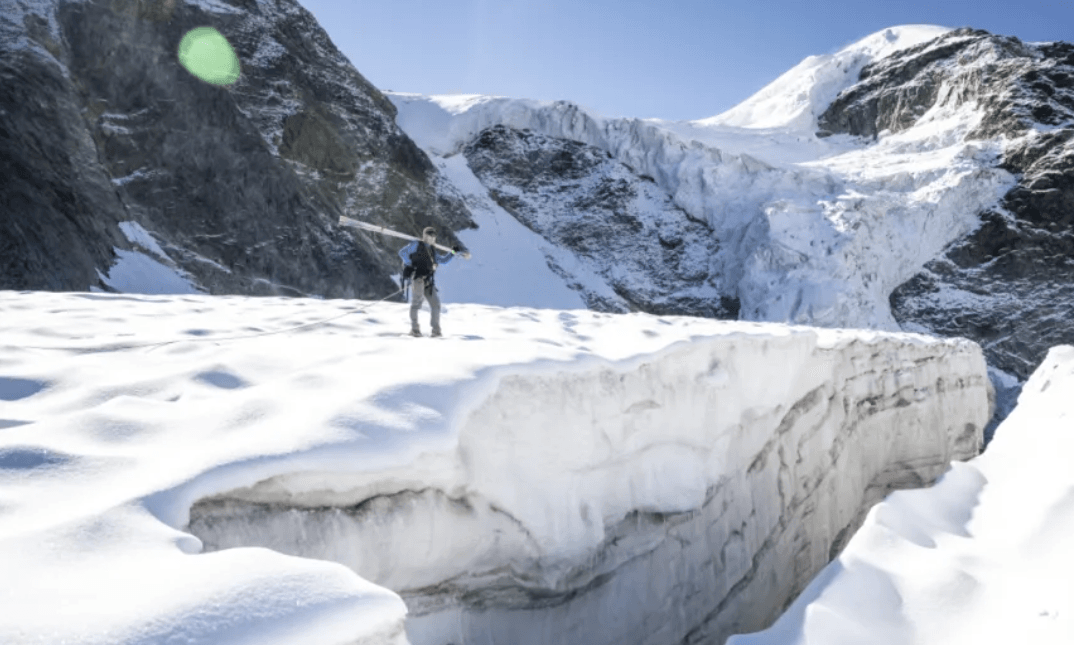
Glaciers across Switzerland are experiencing a significant snow deficit this winter, raising concerns about accelerated melting during the upcoming summer season.

According to the Swiss Glacier Monitoring Network, snowfall levels were substantially below average across several key regions, including Upper Valais, Ticino, and Graubünden.

The monitoring organization reported that winter 2025–26 shows an average 25% snow deficit compared to the 2010–2020 baseline.

GLAMOS collected measurements from 25 glaciers across Switzerland during April, revealing that a warm and unusually dry spring contributed heavily to reduced snow accumulation.

Some regions, such as the Bernese Oberland and central Valais, were less affected and remain closer to long-term seasonal averages. However, other glacier zones show clear signs of reduced snowpack.

Experts warn that low winter snow cover is critical because it acts as a protective layer that slows glacier melt during warmer months. Without sufficient snow insulation, glaciers absorb more heat and lose mass more rapidly.

Scientists now expect that the reduced snow cover could intensify glacier retreat in 2026, continuing the long-term trend of ice loss observed across the Swiss Alps.

Switzerland’s glaciers have already been shrinking for decades due to rising temperatures, and this winter’s deficit may further accelerate the process.

Climate researchers emphasize that continued monitoring is essential to understand how extreme weather patterns are impacting alpine ice reserves.


Swiss Consumer Confidence Rises Slightly but Remains Weak

Consumer confidence in Switzerland has shown a slight improvement in April, but overall sentiment remains weak as households continue to face economic uncertainty and persistent high prices.

According to data released by the State Secretariat for Economic Affairs, the consumer confidence index rose to -40.0 points in April, up from -42.9 in March. In February, the index had already dropped sharply from -30.4, indicating continued volatility in public sentiment.

Despite the monthly improvement, the index remains below the long-term average of -37.5, highlighting ongoing economic concerns among Swiss households.

On a year-on-year basis, consumer confidence improved slightly by 2.4 points, but expectations for the future remain cautious.

A key driver of the slight improvement is the better perception of the overall economic outlook. The sub-index measuring expected economic development rose from -67.9 to -58.0 in April.

However, this figure is still far below its long-term average of -33.6, showing that consumers remain pessimistic about future economic growth.

Experts note that job insecurity, inflationary pressure, and high living costs continue to weigh heavily on household sentiment.

While some stabilization is visible, economists caution that consumer confidence in Switzerland is still fragile and could be affected by global economic conditions, interest rate changes, and geopolitical uncertainty.

EU Jobless Reform Could Cost Switzerland Up to CHF 900 Million

A proposed reform by the European Union on unemployment insurance rules for cross-border workers could significantly increase costs for Switzerland, according to estimates from the State Secretariat for Economic Affairs.

The Swiss government agency warned that the planned changes could result in additional annual expenses ranging between CHF 600 million and CHF 900 million (approximately $771 million to CHF 1.1 billion).

The reform, currently being discussed within the European Union, aims to change the system for paying unemployment benefits for cross-border workers.

Under the new proposal, responsibility for unemployment payments would shift from the worker’s country of residence to the country where the individual last worked before becoming unemployed.

SECO published the cost estimates on its official website, following earlier reporting by the Swiss newspaper Neue Zürcher Zeitung.

However, Swiss authorities stressed that the figures remain highly uncertain due to limited data on unemployed cross-border workers.

Officials stated that a more accurate financial assessment will only be possible once the final version of the EU regulation is approved.

Before implementation, the proposal must be accepted by both the EU Council and the European Parliament. An EU diplomat reportedly expressed confidence that the reform is likely to pass.

The issue is particularly important for Switzerland due to its large number of cross-border workers from neighboring EU countries, especially in regions such as Geneva, Basel, and Ticino.

Experts warn that any change in benefit responsibility could place additional pressure on Switzerland’s unemployment insurance system and federal budget.

Swiss Government Responds to Epstein Property Questions.

The Switzerland government says it cannot confirm whether late American financier Jeffrey Epstein owned property in Switzerland.

The statement came in response to a parliamentary inquiry submitted following growing attention on Epstein’s alleged Swiss connections revealed in recent months.

In its official response, the Swiss Federal Council stated that it has “no knowledge” of any property purchases made by Epstein in Switzerland. However, authorities also acknowledged that they cannot completely rule out the possibility.

The government explained that oversight of foreign property purchases falls under the responsibility of individual Swiss cantons rather than federal authorities.

Swiss officials remained cautious when responding to additional parliamentary questions related to Epstein’s activities and potential financial links within Switzerland.

Interest in Epstein’s international network intensified after United States authorities released approximately 3.5 million declassified pages connected to investigations involving the convicted sex offender, who died in prison in 2019.

According to multiple media reports, Epstein allegedly financed educational opportunities for several young women in Switzerland and maintained connections with influential figures in international finance.

The revelations have renewed public and political discussions about financial transparency, oversight of international wealth, and Switzerland’s historical links to high-profile global figures.

Swiss authorities have not announced any criminal investigation related to the reported property questions.

The case continues to attract international attention due to Epstein’s extensive network of global contacts and the ongoing release of previously classified information connected to his activities.

Swiss Foreign Minister Urges OSCE to Coordinate on Emerging Technologies.

Swiss Foreign Minister Ignazio Cassis has called on member states of the Organization for Security and Co-operation in Europe to develop a common and proactive approach toward emerging technologies.

Speaking at a two-day OSCE conference in Geneva, Cassis emphasized the importance of anticipating scientific and technological developments before they create political, social, or security challenges.

“If no one controls them, they will control us,” Cassis warned while referring to rapidly advancing technologies such as artificial intelligence and quantum computing.

The Swiss foreign minister stressed that the greatest danger today is not technological innovation itself, but political delays in responding to technological change.

According to Cassis, if regulations fail to keep pace with innovation, societies may face mistrust, instability, misjudgements, and rising tensions.

He noted that new technologies already influence all major dimensions of the OSCE, including military security, economic competition, civil liberties, and social cohesion.

Conference participants discussed how artificial intelligence, quantum computers, and advanced digital systems could reshape security and cooperation across Europe.

Delegates also explored how technology could help countries manage scarce resources more effectively and support international collaboration.

Switzerland is seeking to strengthen international cooperation on technology governance following initiatives introduced at the United Nations Security Council during Switzerland’s chairmanship in 2024.

Cassis also highlighted the role of a Geneva-based foundation that has worked for years on identifying technological risks and opportunities before they create wider social problems.

He clarified that the goal is not to regulate every technological development, but rather to focus on the most urgent and high-impact challenges facing societies today.

The conference reflects growing international concern over the global impact of artificial intelligence, cyber threats, digital warfare, and emerging technologies on democracy and security.

Swiss Senate Committee Approves Erasmus+ Funding Support.

A parliamentary education committee in Switzerland has narrowly approved funding to support the country’s participation in the Erasmus+ programme for 2027.

The decision was made by the Education Committee of the Swiss Senate, with the proposal passing after a tied five-to-five vote. The committee chair cast the deciding vote in favor of the funding plan.

Supporters of the measure described participation in Erasmus+ as an important investment in Switzerland’s education system and future workforce development.

Committee members backing the proposal argued that Erasmus+ strengthens opportunities for apprentices, university students, and vocational trainees by improving international learning experiences and professional skills.

They also emphasized that enhanced education and training opportunities ultimately benefit the Swiss economy by preparing a more competitive and globally connected workforce.

However, the proposal faced resistance from a strong minority within the committee, who raised concerns about federal spending and budget pressures.

Opponents argued that Switzerland’s current financial situation and recently approved government cost-cutting measures make additional spending difficult to justify at this time.

Despite those concerns, the committee narrowly supported continued engagement with the European education programme.

Erasmus+ is one of Europe’s largest educational exchange initiatives, supporting international study, training, youth cooperation, and academic partnerships across multiple countries.

Switzerland’s participation in the programme has remained an important topic in discussions about education policy, international cooperation, and economic competitiveness.

The latest committee decision signals continued political support for maintaining educational links between Switzerland and European institutions.

European Court Rules Switzerland Violated Protest Organizer’s Rights.

The European Court of Human Rights has ruled that Switzerland violated the rights of a protest organizer linked to a demonstration held in Geneva in 2019.

The case involved an International Women’s Day protest that had received official authorization from local authorities. Before the event, organizers were informed that they could be held personally responsible if permit conditions were violated during the demonstration.

During the protest, riots and disturbances reportedly occurred, leading Swiss authorities to accuse the organizer of failing to maintain an effective security service.

Swiss courts later convicted the organizer under criminal law and imposed a fine of CHF200.

The organizer appealed the decision to the European Court of Human Rights in Strasbourg, arguing that her fundamental rights had been violated.

In its verdict published on Thursday, the ECHR concluded that Switzerland violated several rights protected under the European Convention on Human Rights, including freedom of assembly, freedom of association, freedom of expression, and the right to a fair trial.

The ruling represents another significant judgment involving Switzerland and human rights protections under European law.

Legal experts say the decision could influence how Swiss authorities manage public demonstrations and assess the responsibilities of protest organizers in future events.

The case also highlights the ongoing balance between maintaining public order and protecting democratic rights such as peaceful protest and freedom of expression.

The ECHR has played a major role in shaping human rights standards across Europe, with its rulings often leading member states to review legal procedures and public policies.

Iran Conflict Raises Concerns Over Swiss Gas and Electricity Supply.

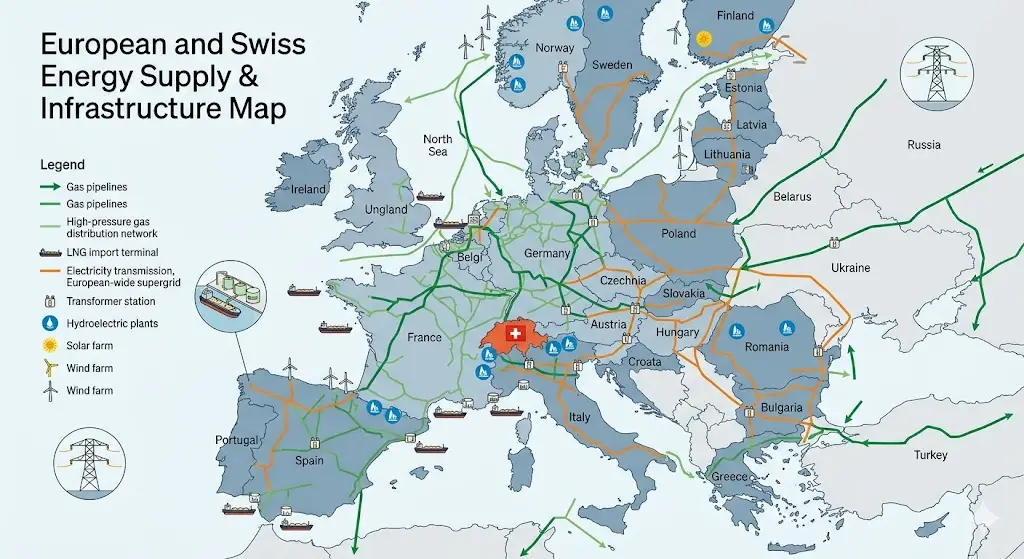
The ongoing conflict involving Iran and growing tensions around the Strait of Hormuz are increasing concerns about energy security in Switzerland ahead of the winter season.

According to Swiss Federal Electricity Commission, the situation could affect Switzerland’s electricity supply and create uncertainty in European gas and electricity markets.

Energy experts warned that gas-fired power plants remain essential for maintaining electricity stability across Europe, especially during winter periods when energy demand rises sharply.

However, European gas storage levels are currently lower than expected, raising concerns about whether reserves can be fully replenished before winter begins.

ElCom stated that the war in Iran and the possibility of disruptions in the Strait of Hormuz — one of the world’s most important oil and gas shipping routes — could significantly impact global energy supplies.

Despite these risks, current gas and electricity prices remain below the extreme levels seen during the 2021–2022 European energy crisis.

Officials explained that Europe now has greater flexibility because liquefied natural gas (LNG) import capacity has expanded significantly in recent years.

In addition, France’s nuclear energy production is currently operating at unusually strong levels, helping stabilize regional electricity supplies.

Still, Swiss authorities warned that energy risks remain if the Strait of Hormuz faces a prolonged closure, if European gas storage remains insufficient, or if Europe experiences an exceptionally cold winter.

The report highlights how geopolitical conflicts in the Middle East continue to influence European energy markets, fuel security, and electricity supply planning.

Switzerland, although not a direct gas producer, depends heavily on European energy networks and imported energy resources during colder months.

Switzerland Imports Record Number of Donor Organs.

Switzerland recorded a record number of imported donor organs in 2025, helping more patients receive life-saving transplants, according to the latest annual report from Swisstransplant.

Last year, 185 deceased individuals donated organs in Switzerland, only slightly below the country’s previous record. However, the number of living kidney and liver donations declined significantly by 16.5%, dropping to 96 cases.

Despite the decrease in donors, Switzerland carried out 643 organ transplants in 2025 — the second-highest number ever recorded in the country and a slight increase compared to the previous year.

Health officials reported notable increases in heart and pancreas transplants during the year.

A major factor behind the rise in transplant procedures was the growing international exchange of donor organs. Switzerland imported a record 69 organs from abroad, meaning nearly one in every eight transplanted organs came from another country.

Lungs were the most commonly imported organs, while Switzerland also exported 25 organs internationally as part of cross-border medical cooperation.

Monaco Fines UBS €6 Million Over Money Laundering Failures.

UBS has been fined €6 million by Monaco’s financial watchdog over serious failures linked to anti-money laundering and counter-terrorism financing controls.

The penalty was imposed by the Monegasque Financial Security Authority, which accused the Swiss banking giant’s Monaco subsidiary of multiple compliance breaches between 2018 and 2023.

According to the regulator, UBS failed to maintain effective internal controls and did not adequately meet legal obligations related to identifying high-risk clients and monitoring suspicious financial activity.

The AMSF stated that the repeated nature of the shortcomings demonstrated a broader failure within the institution’s compliance system.

Investigators found delays in reporting suspicious transactions and weaknesses in the preparation of the bank’s overall risk assessments.

The regulator also criticized UBS for failing to properly verify customer identities, income sources, and beneficial ownership structures — especially in complex corporate arrangements involving multiple ownership layers.

Authorities noted that more than half of UBS Monaco’s client base was classified as medium to very high risk, increasing the importance of strict compliance procedures.

The case highlights growing international pressure on major financial institutions to strengthen anti-money laundering systems and improve transparency in global banking operations.

Switzerland’s banking sector has faced increased scrutiny in recent years regarding financial crime prevention, transparency standards, and international regulatory compliance.

The fine adds to broader concerns across Europe about illicit financial flows, hidden ownership structures, and the role of global banks in preventing money laundering activities.