Massive Crowds Attend 35th Swiss Federal Music Festival in Biel/Bienne

The 35th Swiss Federal Music Festival has drawn massive crowds to Biel/Bienne, transforming the city into a national hub for wind instrument and brass band performances over four days.

Organisers estimate that around 100,000 visitors attended the event, with officials suggesting the actual number may have been even higher due to the overwhelming turnout across venues and streets.

A total of 24,071 musicians from 532 associations participated in competitions held in major venues such as the Palais des Congrès, Maison du Peuple, and Théâtre Nebia. Expert juries evaluated performances across multiple categories, showcasing the depth of Switzerland’s long-standing musical tradition.

Despite challenging weather conditions, most events continued as planned, although one parade competition on Saturday evening had to be cancelled due to heavy rain.

The festival atmosphere remained vibrant throughout, with large audiences lining streets along parade routes. At peak times, central areas such as Rue Centrale became so crowded that movement was extremely difficult.

In the “Brass Band Excellence” category, musicians from the canton of Valais dominated the rankings, securing the top six positions. The Ancienne Cécilia group from Chermignon claimed the top prize, reinforcing Valais’s strong reputation in Swiss brass music.

Beyond competitions, more than 60 additional cultural and entertainment events were held, attracting families, youth groups, and music enthusiasts from across the country.

Organisers also placed strong emphasis on youth participation, collaborating with local cultural collectives and youth centres to encourage younger generations to learn and engage with wind instrument music.

The festival, considered one of the largest of its kind globally, has a history spanning over 200 years, reflecting deep cultural roots dating back to the early Swiss federal era.

Following the success of the 2026 edition, the next Swiss Federal Music Festival is scheduled for 2031 in St. Gallen.


Android Show 2026: Android 17, Gemini & Googlebook Launch

Google has unveiled a major wave of updates during The Android Show 2026 — I/O Edition, introducing the next generation of Android, new AI capabilities, and a surprise platform expansion.

The highlight of the event was the introduction of Android 17, the latest version of the Android ecosystem. Google showcased improved performance, deeper AI integration, and smarter system-level automation designed to enhance user experience across mobile devices.

A major focus of the announcement was Gemini Intelligence, an advanced AI system built to bring more context-aware assistance across Android devices. The system is designed to integrate deeply into apps, system settings, and daily workflows, making AI interactions more natural and useful for users.

One of the biggest surprises of the event was the reveal of Googlebook, a new hybrid platform that combines elements of Android and ChromeOS. This new ecosystem is designed for future laptops and aims to unify mobile and desktop experiences under a single Google-driven system.

According to early details shared during the presentation, Googlebook will support a wide range of applications while offering seamless synchronization with Android devices and cloud services.

The Android team also highlighted improvements in security, battery optimization, and cross-device connectivity, suggesting a stronger push toward an AI-first ecosystem.

Industry observers say these announcements mark one of the most significant shifts in Google’s software strategy in recent years, as the company moves toward tighter integration between operating systems and artificial intelligence.

With Android 17 and Gemini Intelligence, Google appears to be positioning its ecosystem as a central hub for AI-powered computing across smartphones, tablets, and laptops.

WHO Declares Ebola Outbreak in DRC an International Health Emergency

The World Health Organization (WHO) has declared an international health emergency in response to a growing Ebola outbreak in the Democratic Republic of the Congo, triggering its second-highest global alert level known as a Public Health Emergency of International Concern (PHEIC).

WHO Director-General Tedros Adhanom Ghebreyesus confirmed that the outbreak meets the criteria for a PHEIC but not for a full pandemic emergency. This classification highlights the seriousness of the situation while indicating that global spread is still being assessed.

The outbreak involves the Bundibugyo strain of Ebola, a highly dangerous variant for which no widely available vaccine exists. Health experts warn that this strain remains particularly difficult to control compared to other Ebola types.

The affected region, Ituri province in northeastern DRC, has reported multiple suspected and confirmed cases. According to WHO data, at least eight confirmed cases have been identified in laboratories, alongside hundreds of suspected infections and a significant number of suspected deaths.

Additional cases have also been reported in Kinshasa and neighbouring countries, including Uganda, where at least one infected traveller has died after returning from the affected region.

The Africa Centres for Disease Control and Prevention (Africa CDC) has also reported dozens of probable deaths linked to the outbreak, though limited laboratory access in remote areas has made confirmation difficult.

Health officials warn that the outbreak is occurring in a geographically challenging region, making surveillance, testing, and treatment more difficult. As a result, many reported cases remain unconfirmed, increasing uncertainty about the true scale of the spread.

WHO has urged countries in the region and globally to strengthen surveillance, improve preparedness, and support rapid response efforts to prevent further escalation.

Experts emphasize that while vaccines exist for some Ebola strains, the Bundibugyo variant presents additional challenges, making containment efforts more urgent.

‘Smile’ Space Weather Satellite Launches With Swiss Technology Onboard

The international Smile space mission is preparing for launch with important technology developed in Switzerland playing a key role in the satellite’s success.

The Smile satellite — short for Solar wind Magnetosphere Ionosphere Link Explorer — is scheduled to launch on May 19 at 05:52 Swiss time. The mission aims to improve scientific understanding of solar storms and space weather that can affect satellites, navigation systems, and even power grids on Earth.

The project is a collaboration between European and Chinese space agencies and includes contributions from Swiss researchers and technology companies.

According to André Csillaghy from the University of Applied Sciences Northwestern Switzerland (FHNW), the launch is both exciting and stressful for the engineering teams involved.

Swiss researchers developed crucial software systems and a key cooling component for the satellite’s advanced X-ray telescope. Without this technology, the telescope would not function properly in the harsh conditions of space.

The Swiss cooling system, known as the “Rocket Science radiator,” was designed and tested at FHNW in Windisch. Its purpose is to keep the telescope detectors at extremely low temperatures of around -110°C, allowing the instruments to operate accurately.

The satellite’s mission is focused on studying interactions between solar winds and Earth’s magnetic field. Charged particles from the sun travel toward Earth at extremely high speeds and interact with the planet’s protective magnetosphere.

Scientists hope Smile will provide valuable new data about space weather, which can disrupt communication systems, satellites, GPS networks, and electricity infrastructure during strong solar storms.

The spacecraft carries four major scientific instruments, including an X-ray camera, ultraviolet camera, ion spectrometer, and magnetometer. One of the mission’s biggest goals is to create the first detailed visualisation of Earth’s magnetic field using advanced X-ray imaging technology.

The Swiss engineering team has spent nearly eight years working on the mission together with partners from the Zurich University of Applied Sciences, KOEGL Space, and Space Acoustics.

Experts say the Smile mission highlights Switzerland’s growing importance in international aerospace research and advanced scientific technology development.

USA vs Switzerland: How to Watch 2026 Hockey World Championship Match Live

United States men’s national ice hockey team will begin its 2026 IIHF World Championship title defence with a highly anticipated rematch against Switzerland men’s national ice hockey team on Friday.

The opening game recreates last year’s thrilling final, where the United States secured the championship victory after an overtime golden goal from Tage Thompson.

This year’s USA squad looks different due to ongoing NHL playoff commitments and post-Olympic fatigue among several regular players. However, head coach Don Granato still brings a strong lineup featuring experienced NHL stars and emerging young talent.

Key American players expected to feature include Matthew Tkachuk and Justin Faulk alongside prospects from the AHL and college hockey systems.

Switzerland also enters the tournament with an impressive roster led by NHL stars such as Roman Josi, Nico Hischier, Nino Niederreiter, and Timo Meier.

The game will take place at Swiss Life Arena in Zurich and is expected to attract major international attention as both teams begin their 2026 campaign.

Match Details

  • Date: Friday, May 14
  • Time: 2:20 p.m. ET / 8:20 p.m. local Swiss time
  • Venue: Swiss Life Arena, Zurich
  • TV Channel: NHL Network

Fans can also stream the match live through streaming platforms carrying NHL Network coverage.

Google Reduces Free Storage for New Users Without Phone Verification.

Google has announced a major change to its free cloud storage policy, reducing the default free storage allocation for new users from 15GB to 5GB unless they complete phone number verification.

Previously, Google offered 15GB of free storage shared across Gmail, Google Drive, and Google Photos for all users. Under the new policy, new accounts will initially receive only 5GB of free storage space.

According to Google, users can unlock the full 15GB storage limit by verifying their account with a mobile phone number. The company says the decision is aimed at reducing fake accounts, spam activity, and automated bot registrations.

Google explained that stronger verification systems are becoming increasingly necessary as online platforms face rising abuse from fake profiles and malicious automated systems.

However, the update has triggered privacy concerns among some users and digital rights advocates. Critics argue that mandatory phone verification could increase data tracking and raise concerns about personal information security.

Some users have also questioned whether linking mobile numbers to online accounts could lead to greater data collection or targeted advertising practices.

Google clarified that existing accounts will not be affected by the change. The new policy currently applies mainly to newly created Google accounts, which will start with 5GB and later gain access to the remaining storage after completing verification.

The announcement comes as cloud storage demand continues to grow globally, driven by increasing usage of email services, online backups, smartphones, and AI-powered digital tools.

Industry analysts say many major technology companies are tightening account verification policies in order to strengthen security systems and reduce misuse of free online services.

Royal Pop Watches Trigger Massive Queues Across Switzerland

The launch of the new Royal Pop watch collection by Swatch Group created huge excitement across Switzerland, with hundreds of people lining up outside stores in multiple cities.

Large crowds began gathering from Friday night in hopes of purchasing the trendy new watches when sales officially opened on Saturday morning. In Geneva alone, more than a thousand people reportedly filled nearby streets around the Swatch store as police officers monitored the growing crowds.

Hundreds of customers also gathered near the Swatch Group headquarters in Biel/Bienne, while around 400 people queued outside the Zurich store early Saturday morning. Due to the overwhelming demand, the Zurich branch reportedly opened earlier than scheduled.

The situation became tense in some cities as crowd-control problems emerged. Local media reported scuffles and minor clashes in Basel and Lausanne, forcing police to intervene to maintain order and public safety.

Following the incidents, Swatch announced on Instagram that several stores would remain closed temporarily. Branches located on Rue du Marché in Geneva, as well as stores in Lausanne and Basel, were shut down due to safety concerns linked to the large crowds.

The Royal Pop launch quickly became one of the biggest retail events in Switzerland this year. Social media hype, limited availability, and growing collector interest contributed to the massive turnout.

Industry observers say the event highlights the strong global demand for limited-edition Swiss watches and the growing influence of hype-driven fashion culture. Videos and photos of long queues outside stores have already gone viral online, attracting international attention.

The Swiss watch industry continues to remain a major global luxury market, with brands increasingly using exclusive launches and social media marketing to drive consumer excitement.

Switzerland Issues High Alert Over African Swine Fever Risk

The Swiss government has issued a high-risk warning over the possible spread of African Swine Fever (ASF) into Switzerland. The alert was released by the Federal Food Safety and Veterinary Office (FSVO), which warned that the virus could reach the country at any time.

Although Switzerland has not yet recorded any ASF cases, authorities say the threat level has increased following a recent resurgence of infections in neighboring European countries, particularly Italy and Germany. Officials fear the disease could severely damage Switzerland’s pork industry and agricultural economy if it crosses the border.

African Swine Fever is a highly contagious viral disease that affects pigs and wild boars. While the virus does not pose a danger to humans, it can spread rapidly among animals and often results in large-scale livestock losses. Authorities warn that the virus can survive for long periods in meat products, animal carcasses, soil, and contaminated equipment.

The FSVO has strongly advised travelers not to bring pork or wild boar meat products into Switzerland from affected regions. Hunters returning from foreign hunting trips have also been instructed to thoroughly clean and disinfect their clothing, footwear, equipment, and vehicles before re-entering the country.

Swiss officials believe human activity is one of the biggest risks for transmission. A small amount of contaminated food waste or improperly cleaned hunting gear could potentially introduce the virus into local wild boar populations or domestic pig farms.

The government’s national monitoring program is currently conducting early detection testing across the country. Authorities confirmed that all recently tested wild boars have so far returned negative results for ASF. However, officials stress that continued vigilance is essential as the virus continues spreading in several European regions.

Recent setbacks in Germany and increasing cases in Spain have intensified concerns across Europe. Swiss authorities say the situation demonstrates how quickly ASF can return even after periods of apparent control.

Farmers and animal owners are now being urged to immediately report any unusual symptoms in pigs to veterinarians. The Swiss government says rapid reporting, strict hygiene measures, and border precautions are critical to preventing a national outbreak.

5 Simple Ways to Overcome Mobile Phone Addiction

In today’s digital world, many people spend a significant amount of time on their smartphones every day. Excessive mobile phone usage can negatively affect work performance, personal relationships, sleep quality, and overall mental health. Experts recommend several simple methods to reduce mobile addiction and create healthier digital habits.

The first step is to monitor screen time regularly. Understanding how many hours are spent on mobile devices each day helps users identify unhealthy patterns and set realistic goals to reduce usage gradually.

The second recommendation is to limit unnecessary notifications. Constant alerts from apps often encourage people to check their phones repeatedly. Disabling non-essential notifications can significantly reduce distractions and improve focus.

Another effective strategy is creating phone-free periods during the day. Experts advise avoiding smartphone use during meals, family time, and before bedtime. Maintaining device-free moments can improve communication, sleep quality, and emotional wellbeing.

Reducing time spent on social media platforms such as Facebook, Instagram, and TikTok is also considered important. Setting daily time limits for these apps can help users avoid endless scrolling habits.

Finally, choosing alternative activities can make a major difference. Reading books, exercising, spending time outdoors, and having direct conversations with friends and family can naturally reduce dependency on smartphones.

Experts say that small lifestyle changes practiced consistently can help people regain control over their digital habits and maintain a healthier balance between online and offline life.

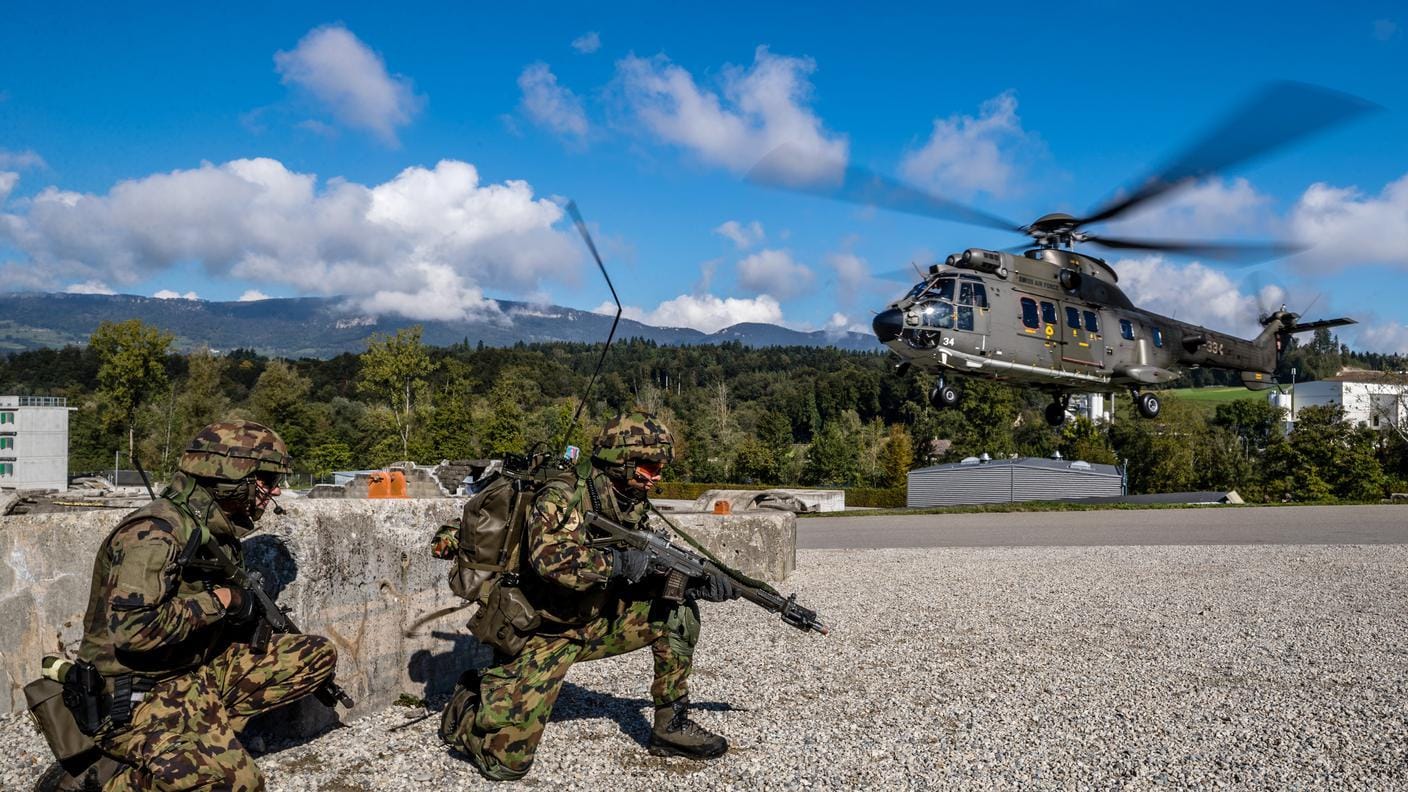
Swiss Army Conducts Helicopter Shooting Training in France.

The Swiss Armed Forces has begun a specialised helicopter shooting exercise in France as part of efforts to strengthen defence capabilities and improve international military cooperation.

According to the Swiss Army, the training exercise is taking place from May 15 to May 22, 2026, in Solenzara, France. A Cougar military helicopter is being used for the operation, with soldiers practising live firing at moving targets while airborne.

The exercise focuses on improving operational procedures and tactical coordination during complex aerial combat situations. Shooting from helicopters is considered highly challenging because helicopters operate as unstable moving platforms while wind conditions continuously change during flight.

Military officials stated that the training follows strict safety regulations and can only be conducted in specially approved zones with clearly defined security areas. Due to Switzerland’s geographical limitations and restricted airspace, similar advanced exercises are difficult to organise within the country.

The Swiss government decided in 2024 to increase international military cooperation in order to modernise defence readiness and overcome domestic operational limitations. Training abroad allows Swiss forces to gain practical experience and learn from international defence partners.

The army also noted that these joint exercises improve interoperability between allied armed forces and help prepare soldiers for realistic operational environments. Defence experts say such international cooperation has become increasingly important as European nations focus more heavily on security and military preparedness.

The training exercise reflects Switzerland’s broader efforts to strengthen national defence capabilities amid changing geopolitical and security conditions across Europe.