93-Year-Old Chinese Widow Ordered to Leave Switzerland.

A 93-year-old Chinese woman has been ordered to leave Switzerland despite receiving intensive care from her daughter living in the country.

The decision was confirmed by the Bern Administrative Court after authorities ruled that the legal requirements for residency based on family dependency had not been sufficiently proven.

The elderly woman’s daughter, who holds a Swiss passport, lives with her family in the Bern region. In 2018, she travelled to China to care for her seriously ill father.

Following his death, she brought her mother to Switzerland in late 2021 on a visa and later applied for a residence permit on humanitarian and family grounds.

According to the appeal documents, the 93-year-old widow suffers from mild dementia and several age-related health conditions.

Her legal representatives argued that she was emotionally and psychologically dependent on her daughter for daily support and care.

However, the Bern Administrative Court ruled that Swiss immigration law requires proof of an “indispensable dependency” to justify a right to remain in the country for family reasons.

The judges concluded that this level of dependency had not been clearly established in the case.

The court also stated that medical diagnoses such as mild dementia do not automatically guarantee residency rights in Switzerland. Judges further argued that appropriate care could still be arranged in the woman’s hometown of Nanjing in China.

Additionally, the court found that the woman lacked sufficiently strong ties to Switzerland to qualify for a pensioner residence permit.

Authorities also rejected claims of humanitarian hardship, stating that there was insufficient evidence proving that returning to China would result in a premature death.

The woman has been ordered to leave Switzerland before June 17, 2026. However, the case may still be appealed to the Swiss Federal Court, leaving a final legal decision pending.

The ruling has sparked discussion among immigration observers and human rights advocates regarding elderly care, family reunification policies, and humanitarian considerations within the Swiss legal system.


Instagram Launches “Instants” for Real-Time Sharing.

The global social media giant Instagram has officially introduced a new feature called “Instants”, aiming to enhance real-time sharing among users. The new feature is designed to allow people to instantly share moments with friends in a faster and more simplified way compared to existing tools like Stories.

According to Instagram’s official blog announcement, Instants enables users to capture and share photos and videos immediately. These shared moments will be visible for 24 hours, similar to Stories, but with a more streamlined and instant sharing experience. Users can simply open the camera, take a photo or video, and share it without additional steps.

Instagram explained that the goal of Instants is to bring users closer to real-time interaction. The platform stated that this feature encourages more natural and spontaneous sharing between friends, making social media communication feel more authentic and less edited.

The feature is currently being tested in selected countries as part of a limited rollout. Early testing allows Instagram to refine the user experience before a global release. The company has confirmed that Instants will be introduced worldwide in the near future after successful testing.

As competition increases among social media platforms, Instagram continues to innovate under its parent company Meta Platforms, focusing on improving user engagement and real-time communication features.

Swiss Immigration Vote Sparks Nationwide Debate Ahead of Referendum

A major political debate is gaining momentum in Switzerland as the country prepares for a crucial national referendum on immigration. The proposal, widely known as “No to 10 Million Switzerland,” aims to limit the country’s population growth by introducing stricter immigration controls. The referendum is scheduled to take place on June 14 and has already attracted nationwide attention unlike any recent public vote in the country.

The proposal was introduced by the Swiss People’s Party, a political group known for its strong stance against large-scale immigration. Supporters of the initiative argue that rapid population growth is increasing pressure on housing, transportation, healthcare, and public infrastructure across Switzerland. They believe tighter immigration policies are necessary to protect the country’s long-term stability and quality of life.

However, strong opposition to the proposal is also growing across the country. Business leaders, economists, and several political groups warn that reducing immigration could create serious labor shortages in key sectors. Industries including healthcare, construction, hospitality, and technology heavily depend on foreign workers to maintain daily operations and economic growth.

Critics of the proposal argue that immigration plays a vital role in strengthening the Swiss economy. They say limiting the number of immigrants could slow economic development, reduce workforce availability, and negatively impact Switzerland’s international competitiveness. Many experts also point out that skilled migrants contribute significantly to innovation, productivity, and tax revenue.

As the referendum date approaches, both supporters and opponents are spending heavily on nationwide campaigns to influence voters. Political advertisements, public debates, social media campaigns, and television discussions have intensified in recent weeks, turning the immigration referendum into one of the most talked-about political issues in Switzerland this year.

The outcome of the vote could shape the future of immigration policy in Switzerland and influence debates across Europe. With public opinion sharply divided, the referendum is expected to become a defining political moment for the country.

Farmers Shocked After Hundreds of Kilograms of Asparagus Stolen in Switzerland

Switzerland has witnessed an unusual agricultural theft after hundreds of kilograms of asparagus ready for harvest were stolen from farmland in the canton of Fribourg.

The incident took place in the village of Delley, where the Ruegsegger family had cultivated asparagus crops on their fields and were preparing for harvest season.

Asparagus is considered a high-value food product in Switzerland due to its nutritional benefits and market demand. The vegetable is rich in vitamins, minerals, and antioxidants and is widely associated with digestive health, blood sugar control, and immune system support.

In Swiss markets, asparagus can sell for between CHF8.50 and CHF20 per kilogram, making it one of the more valuable seasonal agricultural products.

According to reports, unknown individuals harvested and stole around 300 kilograms of asparagus from two separate fields belonging to the family.

The farmers believe the theft was not carried out by opportunistic trespassers. Instead, they suspect experienced individuals with professional knowledge of asparagus harvesting carefully removed the crops using specialised methods.

The incident has left the Ruegsegger family shocked and financially affected, especially at a time when food prices continue to rise internationally due to ongoing geopolitical tensions and supply chain disruptions.

Local farmers say the theft highlights growing concerns over agricultural security and increasing pressure on food production costs across Europe.

Authorities are expected to investigate the incident as the farming community calls for stronger protection measures for valuable crops during harvest periods.

New Report Highlights Anti-Semitic History Linked to Richard Wagner in Lucerne

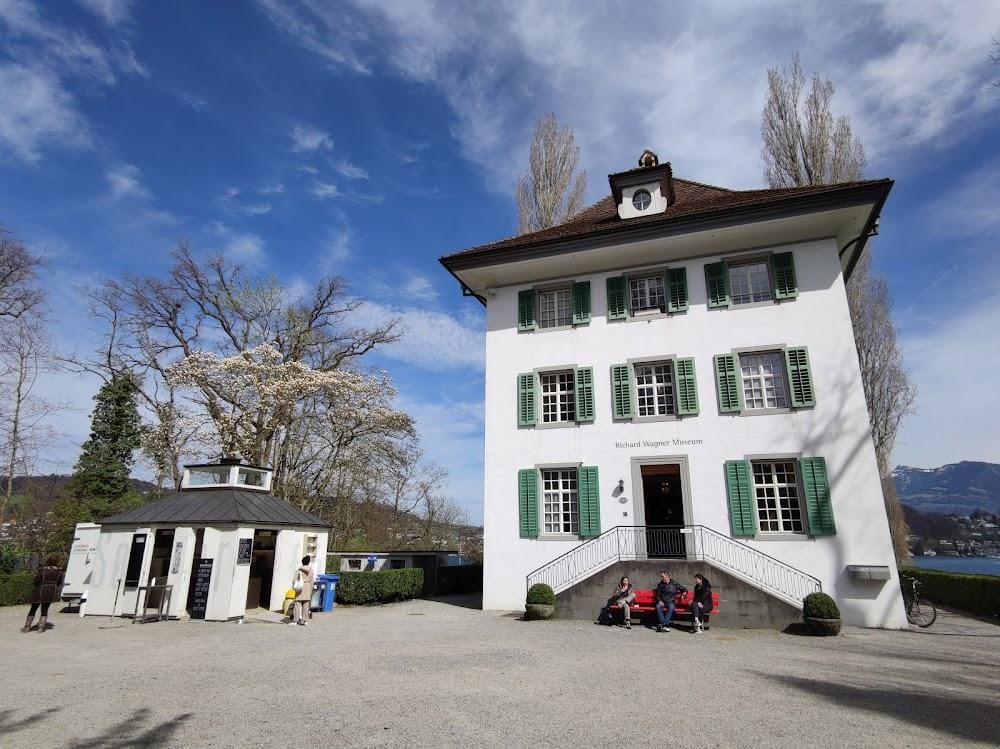
Lucerne has released a new historical report examining the anti-Semitic views of Richard Wagner and the origins of the Richard Wagner Museum. The 58-page investigation concludes that Wagner’s anti-Semitism was “very clear and unmistakable.”

The city of Lucerne and the museum commissioned the research after political parties in the city parliament called for a critical review of the museum’s permanent exhibition in 2023. The study was conducted by the Swiss Society for History with oversight from an independent scientific advisory board.

Wagner lived on the Tribschen peninsula in Lucerne between 1866 and 1872. During this period, he completed major operas including Die Meistersinger von Nürnberg and Siegfried, while also working on Götterdämmerung and composing the Siegfried Idyll.

According to historian Patrik Süess, Wagner strengthened his radical nationalist and anti-Semitic ideology during his years in Lucerne. The report also identified historical links between individuals involved in establishing the museum and Nazi-affiliated circles during the 1930s and 1940s.

In response, Lucerne city officials stated that anti-Semitism is completely incompatible with the city’s values. Authorities emphasized that the Richard Wagner Museum now addresses Wagner’s anti-Semitic statements openly and critically rather than ignoring or minimizing them.

The city announced that the findings will be integrated into future museum projects, including a special exhibition, educational programmes for schools, guided tours, and a revised museum publication beginning in 2027.

The report has reopened discussions across Switzerland and Europe about how cultural institutions should present the legacy of influential historical figures whose works are connected to discriminatory ideologies.