SWISS Flight Diverted to Kazakhstan After Co-Pilot Falls Ill.

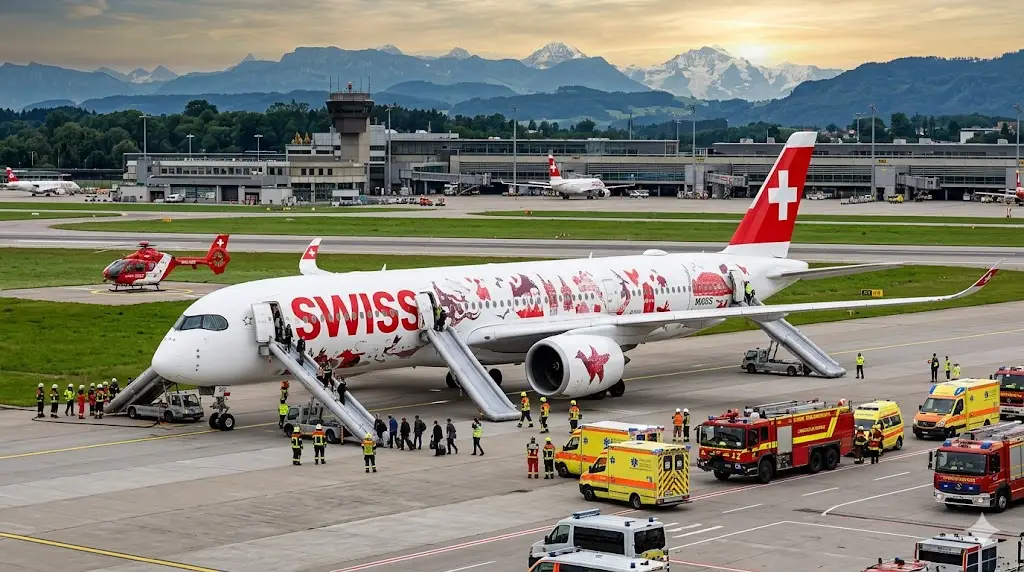
A Swiss International Air Lines (SWISS) flight travelling from Seoul to Zurich made an emergency diversion to Almaty after the co-pilot suffered a medical emergency during the journey.

The airline confirmed that the Airbus A350 safely arrived back in Zurich on Friday morning at 6:45am with 221 passengers on board.

According to SWISS, the incident occurred on Wednesday while the aircraft was flying from Seoul to Zurich. After the co-pilot became unwell, three doctors travelling on the flight provided immediate first aid assistance.

Medical professionals on board later advised the crew to divert the aircraft so the co-pilot could receive urgent medical treatment.

The plane landed safely in Almaty, where emergency services transported the co-pilot to a local hospital for further care.

SWISS stated that the co-pilot remains in Kazakhstan but is currently in good health. Another crew member has stayed behind to support him.

All passengers who returned to Zurich on Friday were originally travelling on the diverted flight. Six passengers reportedly chose alternative travel arrangements from Almaty instead of waiting for the rescheduled service.

The airline also arranged onward travel connections for passengers continuing to other destinations after arriving in Zurich.

SWISS apologised for the disruption caused by the unexpected diversion and emphasized that the health and safety of passengers and crew remain its top priority.

EU Jobless Reform Could Cost Switzerland Up to CHF 900 Million

A proposed reform by the European Union on unemployment insurance rules for cross-border workers could significantly increase costs for Switzerland, according to estimates from the State Secretariat for Economic Affairs.

The Swiss government agency warned that the planned changes could result in additional annual expenses ranging between CHF 600 million and CHF 900 million (approximately $771 million to CHF 1.1 billion).

The reform, currently being discussed within the European Union, aims to change the system for paying unemployment benefits for cross-border workers.

Under the new proposal, responsibility for unemployment payments would shift from the worker’s country of residence to the country where the individual last worked before becoming unemployed.

SECO published the cost estimates on its official website, following earlier reporting by the Swiss newspaper Neue Zürcher Zeitung.

However, Swiss authorities stressed that the figures remain highly uncertain due to limited data on unemployed cross-border workers.

Officials stated that a more accurate financial assessment will only be possible once the final version of the EU regulation is approved.

Before implementation, the proposal must be accepted by both the EU Council and the European Parliament. An EU diplomat reportedly expressed confidence that the reform is likely to pass.

The issue is particularly important for Switzerland due to its large number of cross-border workers from neighboring EU countries, especially in regions such as Geneva, Basel, and Ticino.

Experts warn that any change in benefit responsibility could place additional pressure on Switzerland’s unemployment insurance system and federal budget.

Zurich Hospital Admits Fatal Heart Surgery Failures.

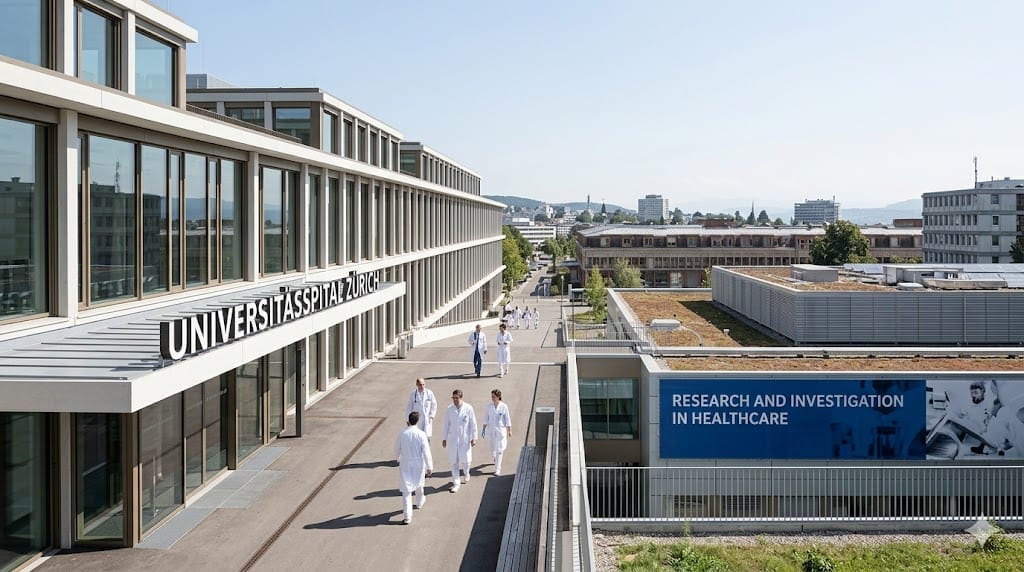
The University Hospital Zurich has confirmed serious medical failures in its cardiac surgery department, following an independent investigation covering the years 2016 to 2020.

The report reveals that between 68 and 74 excess patient deaths may have occurred during this period. Authorities have also identified 11 particularly concerning deaths and 13 cases involving improper use of medical devices, which have been reported to the public prosecutor for further investigation.

Investigators are now examining whether criminal offences were committed, as concerns grow over systemic failures in hospital management and oversight.

According to the findings, the root cause of the issues lies in a major governance breakdown. Former leadership, including cardiac surgery head Francesco Maisano, was appointed in 2014 without sufficient review of qualifications and potential conflicts of interest.

The report also highlights that hospital management at the time failed in its supervisory responsibilities, ignoring warning signs that could have prevented the crisis.

In response to the investigation, three long-standing members of the hospital board have resigned, stating the need for organizational renewal and accountability.

The University Hospital Zurich has issued a formal apology to affected patients and their families and has established a dedicated counselling service to support them.

Despite the scandal, the hospital stated that its cardiac surgery department has since improved under new leadership, with mortality rates returning to normal levels.

To prevent future incidents, the hospital is introducing stricter compliance rules, a conflict-of-interest register, and a whistleblowing system designed to improve transparency and patient safety.

Luxury Car Theft Surges Across Switzerland.

Luxury car theft is rising sharply across Switzerland, with new data highlighting a growing concern for vehicle owners and insurers. According to AXA, the number of reported car theft cases has increased significantly in recent years.

In 2025 alone, nearly 400 vehicle theft cases were reported to AXA. The total financial damage reached approximately CHF 5 million, almost double the losses recorded before the pandemic.

The average cost per car theft has also increased. In 2025, each case resulted in an average loss of around CHF 14,000, marking a steady rise over the past decade. Experts note that the average damage value has increased by about CHF 4,000 over the last ten years.

Certain regions have been more affected than others. The cantons of Geneva, Vaud, and Basel City reported the highest number of car theft cases. Ticino also recorded above-average incidents over the past decade.

In contrast, regions such as Obwalden and Glarus reported the lowest rates of vehicle theft.

Experts suggest that proximity to international borders plays a key role in these trends. Organized criminal groups are increasingly targeting high-value vehicles and transporting them خارج the country. Urban areas, with higher vehicle density, also provide more opportunities for theft.

Insurance officials warn that the trend could continue if preventive measures are not strengthened. Vehicle owners are advised to use enhanced security systems and remain vigilant, especially in high-risk regions.

Geneva May Close Borders Ahead of G7 Summit

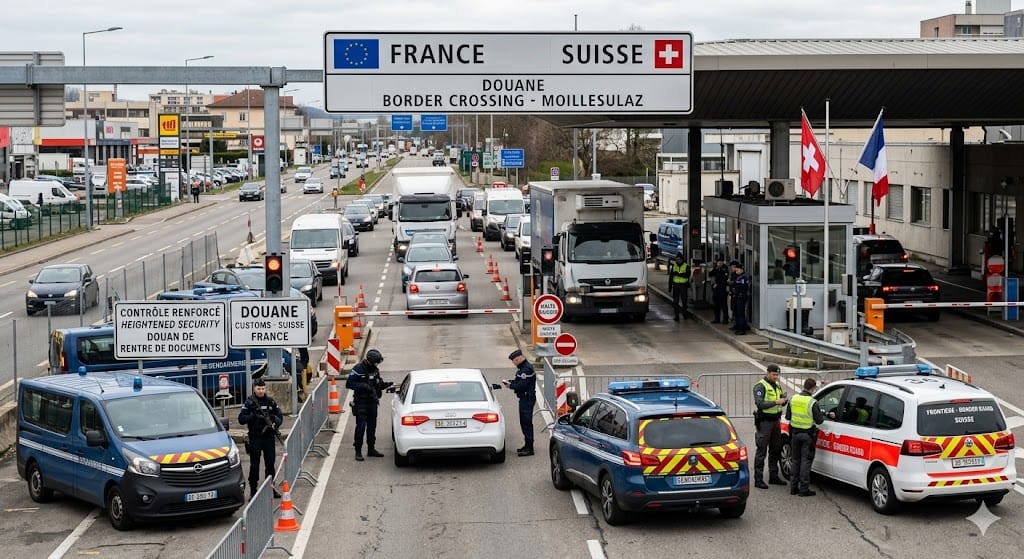
Authorities in Geneva have warned that some border crossings with France may be temporarily closed ahead of the upcoming G7 Summit scheduled next month in Évian.

The announcement comes from Geneva’s police leadership, who emphasized that the move is part of precautionary security planning. Officials aim to prevent potential unrest and ensure public safety during the high-profile international event.

Concerns stem partly from past incidents. During the G8 Summit 2003 held in Évian, protests in Geneva escalated into violent unrest. Demonstrations linked to anti-globalization groups led to vandalism and looting, causing significant damage to shops and luxury stores.

Authorities noted that the memory of those events still influences current security planning. As a result, they are considering stricter measures, including temporary closure of selected border points between Geneva and France.

Police officials stated that these steps are purely preventive. They aim to avoid any repeat of past violence and to maintain order during the summit period.

Residents and travelers are advised to stay updated with official announcements and prepare for possible travel disruptions. Increased police presence and enhanced security checks are also expected across the region.

Swiss Minister Says Migrants Boost Economy

A senior Swiss minister has voiced strong support for migration, highlighting its economic benefits ahead of a key national vote in Switzerland.

The debate comes as the Swiss People’s Party pushes a proposal titled “No to 10 Million Switzerland,” which aims to limit the country’s population growth. The initiative seeks to curb immigration and will be put to a public vote on June 14.

Supporters of the proposal argue that rising immigration contributes to housing shortages and places increasing pressure on transport systems and public services.

However, Swiss Interior Minister Elisabeth Baume-Schneider has publicly defended migration, emphasizing its positive impact on the national economy. She stated that foreign workers play a vital role in strengthening Switzerland’s financial system.

According to the minister, migrants significantly contribute to the country’s pension system. She noted that foreign workers pay more into the pension scheme than they receive, effectively generating a surplus that supports long-term financial stability.

Her remarks come at a critical moment as voters prepare to decide on one of the most debated migration policies in recent years. The outcome of the referendum could shape Switzerland’s future approach to immigration and economic growth.

2.8 Magnitude Quake Near St. Gallen

A minor earthquake measuring 2.8 magnitude struck near Sankt Gallen in eastern Switzerland late night, according to the Swiss Seismological Service.

The tremor occurred on May 5, 2026, at approximately 11:00 PM local time. Seismologists reported that the quake originated at a very shallow depth of just 0.40 kilometers, which increases the likelihood of it being felt near the epicenter.

Experts noted that the magnitude, depth, and exact epicenter may be revised as additional seismic data is analyzed. However, early assessments indicate that the quake was weak and unlikely to have caused any structural damage.

Residents in nearby areas may have experienced light shaking. The town of Flums, located about 4 km from the epicenter, likely felt mild vibrations. Other nearby locations such as Vaduz and Triesen may have experienced very weak tremors.

Further regions including Appenzell and Glarus were unlikely to have felt the quake due to their distance from the epicenter.

Authorities have not reported any injuries or damage. Minor earthquakes of this scale are relatively common in Switzerland and are typically not a cause for concern.

G7 Summit: Geneva Border Controls Possible

Swiss authorities have warned that temporary border restrictions may be introduced in and around Geneva, Switzerland, ahead of the upcoming G7 Summit scheduled next month in Évian, France.

According to Geneva Police Chief Monica Bonfanti, who spoke to RTS media, several preventive security measures are being considered due to heightened risk factors linked to the international event.

Authorities stated that some of the 34 border crossing points between Geneva and France could be temporarily closed or subjected to stricter checks if the security situation worsens. Enhanced border inspections are also under consideration.

Officials are closely monitoring planned protest activities in Geneva during the summit period. Decisions are still being evaluated on whether demonstrations will be permitted, restricted, or fully prohibited depending on risk assessments.

Security agencies have also raised concerns over multiple threats, including potential cyberattacks and public disorder risks. As a result, Swiss police forces from various regions are expected to be deployed to reinforce security in Geneva.

Authorities emphasized that while strict security measures are common during major international events like the G7 Summit, the possibility of border-level restrictions highlights the seriousness of the current risk assessment. Travelers and residents are advised to stay alert and follow official updates.

Europe to Switch to Daylight Saving Time Tomorrow Morning.

European countries will implement Daylight Saving Time (DST) early tomorrow morning, on March 29, 2026. Most nations across Europe, including the United Kingdom, will move their clocks forward by one hour.

At exactly 2:00 AM, clocks will jump forward to 3:00 AM, effectively reducing one hour of sleep. This change allows people to enjoy longer daylight hours in the evening.

Authorities apply this time adjustment every year on the last Sunday of March. The primary goal is to make better use of natural daylight, reduce energy consumption, and improve productivity during longer days.

This summer time schedule will remain in effect until the last Sunday of October 2026, when clocks will move back again to standard time.

Many countries in North America will also follow similar time adjustments during this period, aligning with global daylight-saving practices.