
Samsung Galaxy S26 Series Gets Up to ₹10,000 Discount in India.

Samsung has introduced a major limited-time discount on its latest Galaxy S26 Series smartphones in India. This marks the first significant price drop since the flagship lineup was launched, making it an attractive opportunity for premium smartphone buyers.

The offer applies to all three models in the series, including the Samsung Galaxy S26, Samsung Galaxy S26+, and Samsung Galaxy S26 Ultra. The discount is available until May 27, giving customers a limited window to take advantage of the deal.

Under this promotion, the Galaxy S26+ receives a price cut of up to ₹10,000, while the Galaxy S26 Ultra is available with discounts of up to ₹9,000 across all variants. These price reductions significantly enhance the value proposition of Samsung’s flagship devices in the competitive Indian smartphone market.

The Galaxy S26 Series offers premium specifications across all models. The standard S26 features a 6.3-inch AMOLED display, while the S26+ comes with a larger 6.7-inch AMOLED screen. The Ultra model stands out with a massive 6.9-inch AMOLED display, designed for immersive viewing experiences.

In terms of performance, the devices are powered by either the Snapdragon 8 Elite Gen 5 processor or the Exynos 2600 chipset, depending on the model and region. The Ultra variant exclusively features the Snapdragon chipset, ensuring top-tier performance for demanding users.

The camera system is another highlight, especially on the Ultra model, which boasts an impressive 200MP rear camera. Additionally, the Ultra variant offers up to 16GB RAM and 1TB of internal storage, catering to users who require high performance and storage capacity.

This limited-time discount represents the first major promotional offer since the Galaxy S26 Series launch. Industry experts consider it a strong opportunity for consumers looking to upgrade to a premium smartphone at a reduced price.

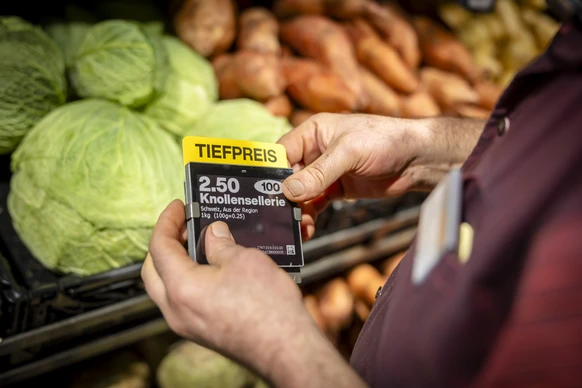
Migros CEO Warns Foreign Workers Are Essential for Switzerland’s Economy

The debate over immigration in Switzerland has intensified as the upcoming “No to 10 million” referendum approaches. Amid this discussion, Mario Irminger, CEO of Migros, has issued a strong warning about the critical role of migrant workers in sustaining the country’s economy.

Speaking ahead of the June 14 national vote, Irminger emphasized that Switzerland’s retail and food sectors depend heavily on foreign labor. He stated that migrant workers play a vital role in maintaining current service standards and ensuring a stable supply of goods across the country.

Switzerland is currently facing a significant labor shortage, and foreign workers have become essential in filling workforce gaps. Irminger highlighted that in Micarna, a major meat processing subsidiary, around 60% of employees are foreign nationals. This statistic clearly demonstrates the extent to which key industries rely on international labor.

He further warned that reducing immigration could directly impact service quality and disrupt supply chains. According to Irminger, the Swiss economy will continue to depend on migrant workers not only in the present but also in the future to maintain operational stability.

The “No to 10 million” proposal aims to limit Switzerland’s population growth by tightening immigration policies. While some political and social groups support the initiative due to concerns about rapid population increase, business leaders fear it could worsen labor shortages, particularly in retail and manufacturing sectors.

This issue has now evolved into a major national debate, balancing population control against economic sustainability. The outcome of the upcoming referendum will play a decisive role in shaping Switzerland’s future immigration policy and its economic stability.

Toxic Chemicals Found in Vegetables Sold in Switzerland, Study Reveals

A recent study has revealed alarming findings about vegetables sold in Switzerland, raising serious concerns about food safety and public health. According to a report published by the Swiss consumer magazine K-Tipp, many vegetables available in supermarkets contain harmful chemical substances that could negatively affect human health.

Researchers tested 25 different vegetable samples as part of the investigation. The results showed that 16 of these samples contained detectable levels of PFAS (per- and polyfluoroalkyl substances), a group of toxic chemicals known for their persistence in the environment and the human body. Scientists have already linked PFAS exposure to several long-term health risks, including hormonal disruptions, immune system damage, and increased risk of chronic diseases.

The study identified higher concentrations of PFAS in commonly consumed vegetables such as carrots and potatoes. Meanwhile, cucumbers, lettuce, and tomatoes also contained traces of these harmful chemicals, although at comparatively lower levels. These findings indicate that contamination is widespread across different types of vegetables.

Interestingly, the study found that organic vegetables were less affected by PFAS contamination. For example, organic carrots sold by Coop and Lidl contained nearly half the level of PFAS compared to conventional carrots from Migros and Aldi. This suggests that organic farming practices may help reduce exposure to harmful substances.

Although Switzerland maintains some of the highest food safety standards in the world, these findings have triggered fresh concerns among consumers. Experts are now urging authorities to strengthen monitoring systems and implement stricter regulations to control chemical contamination in food products.

The issue has sparked a broader debate in Switzerland about environmental pollution, food safety, and consumer protection. As awareness grows, consumers are becoming more cautious about their food choices, with many considering organic alternatives to minimize health risks.

Swiss Rent Shock: Moving Homes Could Raise Costs by Up to 50%

A new study reveals that tenants in Switzerland could face sharp rent increases when moving to a new home, with some regions seeing hikes of up to 50%.

According to research by Wüest Partner, rents for new contracts rose by around 17% between 2016 and 2025. In contrast, existing rental agreements increased by only 5% during the same period.

This growing gap means tenants who change homes often pay significantly higher rent than those who stay. As a result, many residents hesitate to move, even when their current housing no longer meets their needs.

The study highlights major regional variations:

  • Geneva: Over 50% higher rents in new contracts
  • Zug: Around 38% increase
  • Zurich: About 20% rise

These differences show how location plays a key role in rental affordability.

Impact on Tenants and Future Risks

The trend creates financial pressure, especially for middle-income households. Many tenants now avoid moving to escape higher costs.

If this situation continues, analysts warn that the rental market could become increasingly imbalanced, making housing less accessible for many people.

Splash Singapore Set to Debut After Successful Geneva Dry Forum.

After the strong success of Geneva Dry Forum 2026, organisers are preparing to launch a new global shipping conference called Splash Singapore, scheduled for September 24 at the Fairmont Hotel in Singapore.

The event is organised by the team behind maritime news platform Splash and the Geneva Dry forum. It aims to bring senior global shipping leaders together for direct, unscripted discussions on key industry challenges.

A New Style of Maritime Conference

Splash Singapore will follow a unique format with no presentations or sales pitches. Instead, it will focus on open conversations among top industry professionals. The event is supported by the Singapore Maritime Foundation and will feature shipowners, ship managers, and charterers from around the world.

Key Industry Topics

The conference will include several major sessions such as:

  • Global shipping market challenges
  • Tanker and dry bulk sector outlook
  • Future of ship chartering
  • AI and digitalisation in maritime industry
  • Workforce transformation in shipping

A special highlight will be the new “SplashTech Digital Leaders Forum,” focusing on how digital tools and AI are reshaping global shipping operations.

Focus on AI and Maritime Innovation

One of the most anticipated sessions will explore how artificial intelligence and digital systems are transforming shipping efficiency, decision-making, and workforce roles. Industry leaders are expected to debate both the benefits and challenges of rapid digitalisation in maritime operations.

Global Industry Leaders Confirmed

The event will feature CEOs and senior executives from major shipping companies, including leaders from Performance Shipping, Norden, Hafnia, BW Group, Vale, and other global maritime firms. Veteran moderator Tim Huxley will guide discussions, adding expert insight and real-world industry experience.

Strategic Timing in Singapore

The event is strategically scheduled just before the Singapore Shipping Association annual dinner, making it part of a major maritime week in the region. Other global shipping events will also take place during the same period.

Optimus Launches Gemini II: Lighter Swiss Stove With More Power

Switzerland-based outdoor gear company Optimus has launched its next-generation camping stove, Gemini II, delivering more power while reducing weight. The company is part of the Katadyn Group and continues its legacy of designing lightweight expedition cooking systems.

Stronger Performance in a Lighter Design

The new Gemini II improves on the original 2021 Gemini stove by increasing burner output by over 35%. Each burner now delivers up to 4,600 watts of power. Despite the performance upgrade, Optimus has reduced the stove’s weight by a few ounces, making it more portable for outdoor users.

Built for Outdoor Adventures

The Gemini II features a slim, pill-shaped body with two integrated burners and built-in wind protection. It also includes foldable legs that provide stability on uneven surfaces. Users can easily pack the stove into backpacks, bike panniers, or kayak storage compartments.

Dual Burner Cooking Advantage

Unlike ultra-light backpacking stoves, Gemini II allows full meal cooking. It supports two burners, enabling users to cook multiple dishes at the same time. This makes it suitable for camping, motorcycle trips, and lightweight outdoor adventures where real meal preparation is preferred.

Faster Boiling and Better Control

Optimus claims the stove can boil one liter of water in approximately four minutes. Each burner includes precise flame control and a pressure regulation system for consistent performance in different weather conditions.

Award-Winning Innovation

The original Gemini stove won multiple awards, including the ISPO Award in Europe and Outdoor Retailer Innovation Award in the United States, highlighting its design excellence and innovation.

Switzerland Embraces “Slow Travel” Amid Climate Crisis.

The Alpine nation of Switzerland is increasingly shifting towards sustainable and “slow travel” practices as climate change visibly impacts its environment. In the University of Zurich Botanic Garden, experts have observed the severe effects of rising temperatures on long-standing trees. A 170-year-old beech tree is now set to be cut down due to irreversible damage caused by heat stress and fungal infections.

Garden educator Evelin Pfeifer explained that beech trees across Switzerland are suffering from extreme weather conditions, including hot and dry summers. She noted that rising temperatures weaken trees, making them vulnerable to diseases—similar to how a weakened immune system affects humans.

Scientists also report that entire beech forests are declining as climate conditions become less suitable for the species. Researchers highlight that carbon emissions—especially from transport—continue to worsen the climate crisis despite government sustainability efforts.

Some studies suggest introducing tree species from warmer regions like Italy, but experts warn that this is only a partial solution. In response, Switzerland is actively promoting eco-friendly tourism. A group of international journalists recently participated in a one-week “slow travel” journey across Zurich, Interlaken, and Schilthorn.

The program, organized by Switzerland Tourism, showcased destinations that prioritize environmental protection, reduced emissions, and responsible tourism practices. The initiative reflects Switzerland’s broader strategy to balance tourism with environmental protection. Authorities and tourism bodies are encouraging travelers to slow down, stay longer, and reduce their carbon footprint.

Ask.com Officially Shuts Down: A Former Google Rival Ends Its Journey.

The once-popular search engine Ask.com has officially been shut down, marking the end of a platform that once competed with Google in the early days of the internet. Launched in 1997, Ask.com—originally known as Ask Jeeves—was created by Garrett Gruener and David Warthen. It became famous for allowing users to type full questions in natural language, introducing the concept of “conversational search.”

Ask Jeeves was one of the first platforms to understand user queries in a more human-like way. This approach helped it gain global attention during the early internet era. In 2005, the company was acquired by IAC, which later removed the “Jeeves” branding and rebranded the service as Ask.com.

By 2010, the rise of Google’s advanced search algorithms significantly reduced Ask.com’s market share. As a result, the platform shifted away from core search services and focused more on a question-and-answer model.

Eventually, IAC announced the closure of the search division, stating that it was refocusing its business strategy.Ask.com was also known as the official search tool for NASCAR at one point. However, over time, it became more of a nostalgic symbol of the early internet era rather than a competitive search engine.Despite its closure, Ask.com is remembered as a pioneer of conversational search technology. Its approach laid the foundation for modern AI-driven search and virtual assistants. Today, it remains an important part of internet history.

Switzerland Evaluates New Air Defence Systems.

The government of Switzerland has started evaluating alternative air defence systems to strengthen national security and modernize its military capabilities.

According to Armasuisse, officials have contacted authorities in Germany, France, Israel, and South Korea. In addition, five major defence manufacturers have also been approached to provide technical and strategic information.

Armasuisse has sent formal “requests for information” to these countries and companies. The evaluation focuses on key factors such as:

  • Delivery timelines
  • Overall costs
  • System performance
  • European production share

Officials have emphasized that local or European production—preferably within Switzerland—would be a major advantage.

This move reflects Switzerland’s effort to reassess its defence strategy amid evolving global security challenges. By comparing multiple systems, the government aims to identify the most effective and reliable solution.

Authorities will review the responses from partner countries and manufacturers before making any procurement decisions. The final choice will depend on operational efficiency, affordability, and long-term strategic value.

‘King of Switzerland’ Wins Partial Victory in Armoured Vehicle Case

Self-proclaimed “King of Switzerland,” Jonas Lauwiner, has secured a partial legal victory in a dispute over his armoured vehicle in Switzerland.

The Bern Administrative Court ruled that authorities must reassess their decision to revoke the licence and number plates of Lauwiner’s vehicle. The court found that the withdrawal was ordered without a sufficiently detailed evaluation of roadworthiness and operational safety.

The ruling partially overturned a previous decision by the cantonal safety directorate. Judges stated that officials should have conducted a comprehensive technical review before taking action.

This decision means the case is not fully resolved, but it strengthens Lauwiner’s legal position. The case revolves around a decommissioned BRDM-2, which Lauwiner imported from Germany.

  • Initially registered in the canton of Zug
  • Later moved to the canton of Bern
  • Licence revoked due to safety concerns

Authorities cited issues such as sharp edges and potential risks to road users. Lauwiner argued that the vehicle had already passed inspections and met Swiss legal standards when it was first registered. He claimed that Bern authorities relied on assumptions rather than verified technical assessments. The Road Traffic Office must now re-evaluate the case based on proper safety analysis. The final outcome will depend on whether the vehicle meets all regulatory requirements.