Deepfakes and Sextortion Increasing Among Swiss Youngsters

Swiss child protection organizations are raising concerns over a sharp increase in deepfake abuse, sextortion, and other forms of digital sexual violence targeting young people across the country.

According to the online reporting platform clickandstop.ch, incidents involving artificial intelligence-generated deepfakes and online exploitation are becoming more common, creating new risks for children and teenagers in the digital age.

Child Protection Switzerland has called for urgent action to better protect minors from the growing misuse of artificial intelligence and online technologies. The organization warns that digital sexual violence is affecting an increasing number of young people and requires stronger prevention measures.

The clickandstop.ch platform was developed in cooperation with the Guido Fluri Foundation and the Swiss Federal Office of Police (fedpol). It serves as Switzerland’s main national reporting center for illegal online content and child protection concerns.

Since 2022, the platform has received reports involving 9,697 web addresses containing child sexual abuse material. Authorities and child protection experts say these figures highlight the scale of the challenge facing Switzerland and other countries.

Beyond reporting illegal content, clickandstop.ch also provides support services for victims and concerned individuals. Users can access guidance through anonymous reporting tools, telephone support, and online chat services designed to offer advice and prevention information.

Experts warn that deepfake technology is becoming increasingly sophisticated. Criminals can use artificial intelligence to create fake images, videos, or audio recordings that appear real, making it easier to manipulate, blackmail, or exploit victims online.

Sextortion, a form of online blackmail involving intimate images or videos, has also become a growing concern. Young people are particularly vulnerable because of their extensive use of social media and digital communication platforms.

Child protection advocates are urging parents, schools, technology companies, and policymakers to work together to improve digital literacy, strengthen online safety measures, and educate young people about the risks associated with AI-generated content.

As artificial intelligence continues to evolve, Swiss authorities and child welfare organizations emphasize that protecting children online must remain a top priority. Increased awareness, early intervention, and stronger safeguards will be essential in combating digital sexual violence and online exploitation.

Influential Swiss Intellectual Jean Ziegler Dies at 92

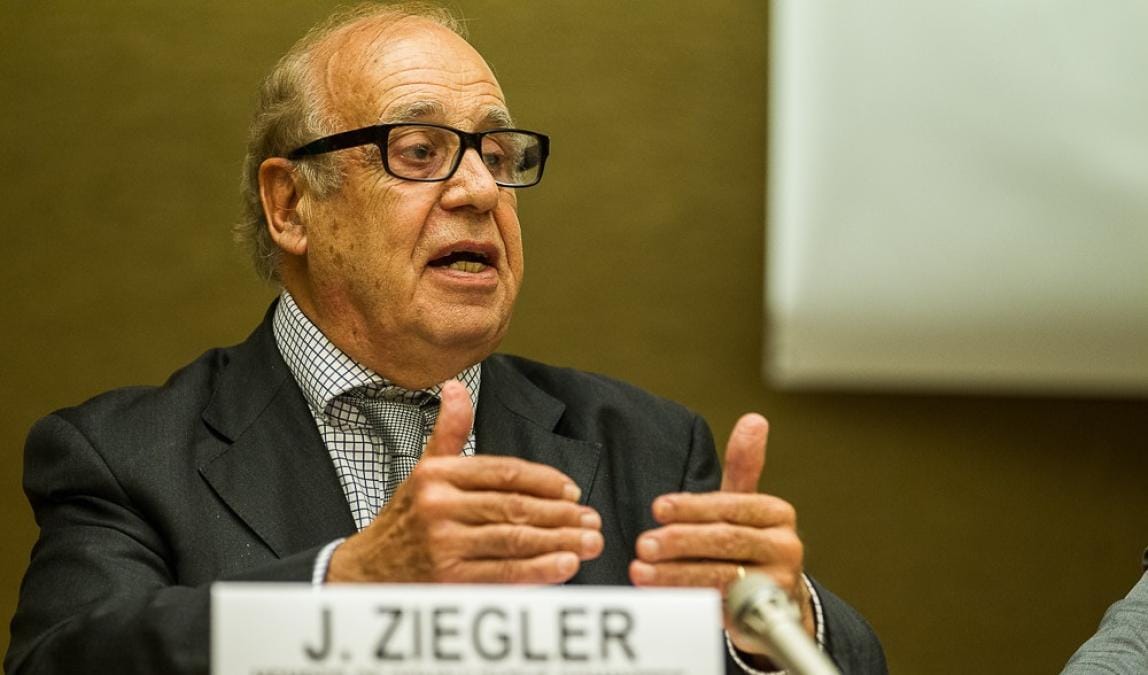
Jean Ziegler, one of Switzerland’s most influential sociologists, authors, and political figures, has died in Geneva at the age of 92. According to his family, the former politician passed away on Wednesday due to complications related to Parkinson’s disease.

For more than five decades, Ziegler played a prominent role in Swiss political and academic life. He became internationally known for his criticism of global inequality, neoliberal economic policies, and the concentration of wealth and power in global institutions.

A committed left-wing thinker, Jean Ziegler spent much of his life advocating for social justice and human rights. His writings and public speeches challenged political and economic systems that he believed contributed to poverty, hunger, and inequality around the world.

Even in his later years, Ziegler remained active in public debate. At the age of 90, he published the book “Where is Hope?”, a work that encouraged resistance against war, famine, injustice, and growing social divisions. The book reflected his lifelong belief that citizens should actively work toward creating a fairer society.

A defining moment in his life came in 1964 when he met revolutionary leader Che Guevara in Geneva. Ziegler later recalled how Guevara advised him not to leave Switzerland to join revolutionary movements abroad, but instead to challenge injustice from within the heart of the system. That encounter shaped his political philosophy and influenced his future career.

Throughout his life, Ziegler remained a controversial figure. Supporters praised him for speaking out against injustice and defending the rights of vulnerable communities. Critics, however, often challenged his political views and strong statements on international affairs.

One of his most debated works was the 1997 book “Switzerland, Gold and the Dead,” in which he criticized the role of Swiss financial institutions during the Second World War. The publication sparked significant public discussion both within Switzerland and internationally.

In 2016, filmmaker Nicolas Wadimoff released a documentary exploring Ziegler’s life and ideas. The film examined both his influence and the controversies that surrounded him, presenting a complex portrait of a man who remained committed to his beliefs throughout his life.

Jean Ziegler leaves behind an extensive body of work, including books, academic contributions, and political activism. His influence on debates surrounding inequality, globalization, and social justice will continue to be discussed long after his passing.

His death marks the end of an era for Swiss intellectual life and for a generation of political thinkers who sought to challenge the established order and inspire social change.

St Gallen Approves Headscarf Ban for Female Teachers

The Swiss canton of St Gallen has taken a significant step toward introducing a ban on headscarves for female teachers in public schools. The cantonal council approved a cross-party motion that will lead to new regulations regarding the wearing of headscarves by teaching staff.

The debate began following a controversial case in the municipality of Eschenbach. During the summer of 2025, several parents objected to the hiring of a young teacher who wished to teach while wearing a headscarf.

The issue sparked public discussion and raised questions about the role of religious symbols in educational institutions. Following the objections, the local school ultimately decided not to employ the teacher.

The incident quickly attracted political attention across the canton. Soon after, members from all four parliamentary groups in the St Gallen cantonal council jointly submitted a motion seeking legal clarification and a clear policy on the matter.

After extensive discussions, the cantonal council approved the proposal, paving the way for a ban on headscarves for female teachers in public schools. Supporters argue that the measure will help maintain religious neutrality within educational settings and provide clear guidelines for schools.

The decision has also generated debate among legal experts, education professionals, and community groups. Critics question whether such restrictions are compatible with individual religious freedoms and equal employment opportunities.

The approved motion marks an important development in Switzerland’s ongoing discussions surrounding religious symbols in public institutions. Further legal and administrative steps are expected before the policy is fully implemented across the canton.

As the issue continues to attract national attention, the St Gallen decision is likely to influence future debates on education policy, religious expression, and public service regulations in Switzerland.

Police Prevent Major Clash During Israel Rally in Basel

Police intervened to prevent a larger confrontation after tensions flared between pro-Israel and pro-Palestinian demonstrators in the Swiss city of Basel.

The authorized rally, organized in support of Israel and against anti-Semitism, attracted around 30 participants. A similarly sized counter-demonstration gathered nearby, leading to a tense atmosphere as both groups expressed opposing views.

According to reports, members of the counter-demonstration chanted anti-Israeli slogans toward the rally participants. The situation escalated when an individual from the pro-Palestinian group allegedly attempted to take an Israeli flag, triggering a physical altercation between members of the two groups.

Swiss police quickly intervened to separate those involved and prevent the confrontation from spreading. Authorities briefly detained one counter-demonstrator before releasing him at the scene.

The pro-Israel demonstration later moved from Elisabethenanlage to Basel’s Market Square under police supervision. Security forces maintained a strong presence throughout the event to ensure public safety and prevent further incidents.

Apart from the brief scuffle on Falknerstrasse, police successfully prevented direct clashes between the two groups. Organizers were also allowed to continue their demonstration along an alternative route to avoid further tensions.

The “Silent Walk,” during which participants carry Israeli flags, has been held in several Swiss cities in recent years. Basel previously hosted a similar event in December 2025, which also attracted a counter-demonstration. On that occasion, police likewise intervened to keep opposing groups apart and prevent violence.

Authorities have not reported any serious injuries following the latest incident. The event highlights the ongoing sensitivity surrounding international conflicts and their impact on public demonstrations across Europe, including Switzerland.

Nespresso to Cut 178 Jobs in France.

Nespresso, the premium coffee brand owned by Swiss multinational Nestlé, has announced plans to cut up to 178 jobs in France as part of a wider global cost-reduction strategy.

The job cuts will mainly affect marketing and customer service operations in France. However, the company confirmed that its sales network and retail boutiques will not be impacted by the restructuring.

Nespresso currently employs around 1,300 people in France. As part of the reorganization, customer relations services will be consolidated at the company’s Paris headquarters, resulting in the closure of its Lyon site dedicated to this activity.

The company stated that the restructuring will be implemented through internal mobility, voluntary departures, and end-of-career schemes. Nespresso also emphasized that no forced redundancies are planned before 2027.

This move is part of a broader restructuring plan announced in October 2025 by Nestlé’s new CEO, Philipp Navratil. The global strategy aims to eliminate around 16,000 jobs worldwide and achieve more than €1 billion in cost savings by 2027.

Management explained that the changes are necessary due to rapid shifts in the global coffee market. They stated that the company must adapt its organization to remain competitive and support long-term growth.

Earlier, Nestlé also announced additional job reductions in France, including support functions at its headquarters in Issy-les-Moulineaux and research centers in Tours and Lisieux.

While the restructuring reflects significant operational changes, Nespresso confirmed that its retail boutiques and customer-facing sales teams in France will continue to operate without disruption.

Swiss Report Highlights Key Role in Commodity Trading.

A new report highlights Switzerland’s central position in global commodity trading, emphasizing both its economic importance and its environmental impact. The study suggests that Switzerland is not only a trading hub but also a key player capable of influencing how global commodity markets evolve.

The report, published by the Swiss Academy of Sciences (SCNAT), brings together experts from 11 research institutions. It concludes that modern trading companies are no longer simple intermediaries but are deeply involved in multiple stages of global supply chains.

According to the findings, trading houses now actively finance extraction projects, manage logistics such as ports and warehouses, and in some cases even operate mines. They also increasingly participate in financial markets linked to commodities, giving them significant control over entire value chains.

This expanded role has raised concerns about environmental and social impacts. The report links commodity trading activities to deforestation, high water consumption, and biodiversity loss in resource-rich regions around the world.

Despite these concerns, Switzerland remains one of the most important global centers for commodity trading. The study estimates that around 60% of copper, aluminium, and iron ore trade passes through Swiss-based traders. In addition, 53% of global coffee trade and 39% of crude oil trade are handled through Switzerland.

Researchers argue that this dominant position gives Switzerland a unique responsibility. Because of its influence in global markets, the country is in a strong position to shape more sustainable trading practices and encourage greater environmental accountability across supply chains.

The report also emphasizes that commodity trading has evolved into a highly complex system that connects financial markets, raw material extraction, and global consumption. As a result, decisions made in Switzerland can have wide-reaching effects on ecosystems and communities worldwide.

Experts from SCNAT conclude that Switzerland’s role in commodity trading is both an opportunity and a challenge. While it strengthens the country’s economy, it also places it at the center of debates on sustainability, transparency, and global responsibility in resource management.

Swiss Firms Cited in Oxfam Report on Rising Corporate Inequality

Several major Swiss multinational companies have been named in a new Oxfam report that examines how large European corporations contribute to global economic inequality. The report claims that many firms prioritize shareholder returns and executive compensation over fair wages, social equality, and environmental sustainability.

The study covers the 100 largest European companies and highlights that, between 2022 and 2024, these firms distributed around 70% of their profits to shareholders on average. In some cases, companies even paid out more to shareholders than they earned in profit, raising concerns about long-term economic balance.

Swiss companies such as Zurich Insurance, Swiss Re, and Glencore are specifically mentioned in the report. Oxfam highlights Zurich Insurance as an example, noting that the company consistently increased dividend payouts over recent years, even during periods of profit decline.

In 2022, Zurich Insurance raised its dividend per share despite an 11.5% drop in profit. In the following years, as profits recovered and grew significantly, shareholder payouts also increased steadily, reaching CHF28 per share by 2024.

Swiss Re and Glencore are also cited for maintaining strong shareholder returns even during challenging financial periods. Glencore, despite reporting a loss of $1.6 billion in 2024, still proposed dividend payments and share buyback programs. Swiss Re also continued to increase shareholder rewards despite earlier profit declines.

Oxfam has called for stricter rules to limit dividend payouts until companies ensure fair wages across their entire supply chains and adopt stronger climate strategies. The organization argues that corporate responsibility must go beyond profit distribution to include social and environmental obligations.

The report also examines gender equality in corporate leadership. It finds that women’s representation in management remains low across major companies, rising only slightly from 25% in 2022 to 27% in 2024. However, Swiss companies Roche and Zurich achieved 50% female representation at top leadership levels.

On pay equality, companies such as Nestlé and Novartis were highlighted for showing a negative gender pay gap, which suggests relatively favorable conditions for female employees compared to industry norms.

Environmental performance remains a major concern. According to Oxfam, only a small number of companies have made strong commitments to carbon neutrality. Roche is among the few firms actively engaging suppliers to reach net-zero targets.

The report also found that only Nestlé managed to reduce emissions across all major categories over the study period. However, 58% of the companies increased their emissions, while only 41% recorded reductions.

The findings have intensified debate across Europe about corporate responsibility, fair wealth distribution, and the role of multinational companies in addressing climate change and social inequality.

Swiss Companies Featured in Oxfam Report on Rising Economic Inequality.

Several leading Swiss multinational corporations have been highlighted in a new Oxfam report examining the role of Europe’s largest companies in widening economic inequality. The report argues that many major corporations continue to prioritize shareholder returns and executive rewards over employee wages, social equality, and environmental sustainability.

According to Oxfam, the 100 largest European companies distributed an average of 70% of their profits to shareholders between 2022 and 2024. The organization claims that this approach contributes to growing wealth disparities while limiting progress toward fairer wages and stronger climate action.

Among the Swiss companies mentioned are Zurich Insurance, Swiss Re, and Glencore. Oxfam notes that some companies rewarded shareholders with amounts exceeding their annual profits.

Zurich Insurance was highlighted as an example of increasing shareholder payouts despite fluctuations in profitability. The insurer raised its dividend payments over several years, even during periods when profits declined. As profitability improved, shareholder rewards continued to increase further.

Swiss Re and Glencore were also cited for providing significant shareholder returns. Oxfam noted that Glencore continued to propose dividend payments and share buyback programs despite reporting a financial loss in 2024. Similarly, Swiss Re increased shareholder rewards during a period when profits were significantly reduced.

The report calls for stricter limits on shareholder distributions until companies can ensure fair wages throughout their supply chains and implement stronger climate commitments. Oxfam argues that sustainable business growth should balance investor interests with employee welfare and environmental responsibilities.

The study also examined gender equality within corporate leadership. While female representation in management positions improved slightly across Europe, women still occupied only 27% of leadership roles in 2024. However, Swiss companies Roche and Zurich achieved gender parity at the executive level, with women representing 50% of leadership positions.

On the issue of equal pay, Oxfam highlighted Nestlé and Novartis as examples where compensation structures appear to favor female employees, resulting in a negative gender pay gap.

Environmental performance was another key focus of the report. Oxfam stated that only four of the 100 companies analyzed have established strong carbon neutrality commitments. Roche was recognized for actively involving suppliers in efforts to achieve net-zero emissions.

Nestlé received special recognition for reducing greenhouse gas emissions across all three major reporting categories during the three-year study period. Overall, however, the report found that 58% of the companies increased their emissions, while only 41% achieved reductions.

The findings have reignited debate over corporate responsibility, sustainable finance, and the role major multinational companies play in addressing social and environmental challenges across Europe.

Swiss Sustainable Investments Climb to CHF1.94 Trillion in 2025.

Switzerland’s sustainable investment market continued its impressive growth in 2025, reinforcing the country’s position as a global leader in responsible and environmentally conscious finance. Despite challenges faced by sustainable investment markets in several other countries, Switzerland maintained strong momentum throughout the year.

According to a new study published by Swiss Sustainable Finance (SSF), the total value of sustainable investments in Switzerland increased by 3% and reached an impressive CHF1.94 trillion by the end of 2025.

The report highlights a significant shift in the financial industry. Sustainability considerations are no longer limited to specialized investment products. Instead, environmental, social, and governance (ESG) principles are increasingly being integrated into standard investment and business processes, making sustainable finance a mainstream practice across the Swiss market.

Financial institutions are also paying closer attention to climate-related risks. Extreme weather events are now considered one of the most significant threats to financial performance. Investors recognize that natural disasters can affect company profits, reduce asset values, and disrupt global supply chains.

At the same time, the transition toward a greener economy is creating new opportunities. Demand for resilient infrastructure, renewable energy projects, and climate-friendly business models is attracting growing investment from both institutional and private investors.

The study also reveals a rapid increase in the use of artificial intelligence across the financial sector. Many AI-powered tools have moved beyond the testing stage and are now actively supporting investment analysis, risk assessment, portfolio management, and the development of innovative financial products.

Industry experts believe that the combination of sustainable finance and advanced technologies will play a crucial role in shaping the future of Switzerland’s financial sector. As investors increasingly seek long-term value and resilience, sustainable investments are expected to remain a key growth area in the years ahead.

The latest figures demonstrate that Switzerland continues to strengthen its reputation as a leading hub for sustainable finance, innovation, and responsible investment strategies in Europe and beyond.

Swiss Study Reveals Stinging Nettles Are Replacing Orchids Across Europe

A major Swiss-led scientific study has revealed a significant shift in Europe’s plant biodiversity. Researchers have found that nitrogen-loving plants, such as stinging nettles, are increasingly replacing rarer species like orchids across forests, meadows, and other natural habitats.

The study, supported by the Swiss National Science Foundation (SNSF), provides one of the most comprehensive analyses of changes in European plant life over the past six decades. Scientists examined approximately 650,000 plant records collected between 1960 and 2020 from a large European biodiversity database.

Researchers identified a clear increase in plant species that thrive in nitrogen-rich environments. According to the study, excessive use of artificial fertilizers, intensive livestock farming, and nitrogen emissions from traffic and industry have significantly altered soil conditions across Europe.

As nutrient levels rise, plants adapted to poor soils are struggling to survive. Orchids, known for their beauty and ecological importance, are among the species being displaced by fast-growing plants such as stinging nettles.

Interestingly, Switzerland appears to be showing some positive signs. Ecologist Jürgen Dengler of the Zurich University of Applied Sciences (ZHAW) noted that the trend is slightly weaker in Switzerland, suggesting that regional efforts to reduce fertilizer use may be producing results. However, similar improvements have not yet been observed across much of Europe.

The study also found an increase in shade-loving plant species in grasslands. Scientists believe this is linked to denser vegetation caused by nutrient enrichment and reduced land management practices.

Surprisingly, researchers discovered that climate change currently has a smaller impact on plant diversity than expected. Vegetation appears to be responding more slowly to rising temperatures than many experts predicted.

The Swiss Alps represent an important exception. In mountainous regions, scientists have already observed warmth-loving plant species migrating from lower elevations to higher altitudes as temperatures continue to rise.

Researchers warn that protecting biodiversity will require continued efforts to reduce nitrogen pollution, improve land management, and preserve habitats for vulnerable plant species. Without action, Europe could see further declines in some of its most unique and valuable native plants.