

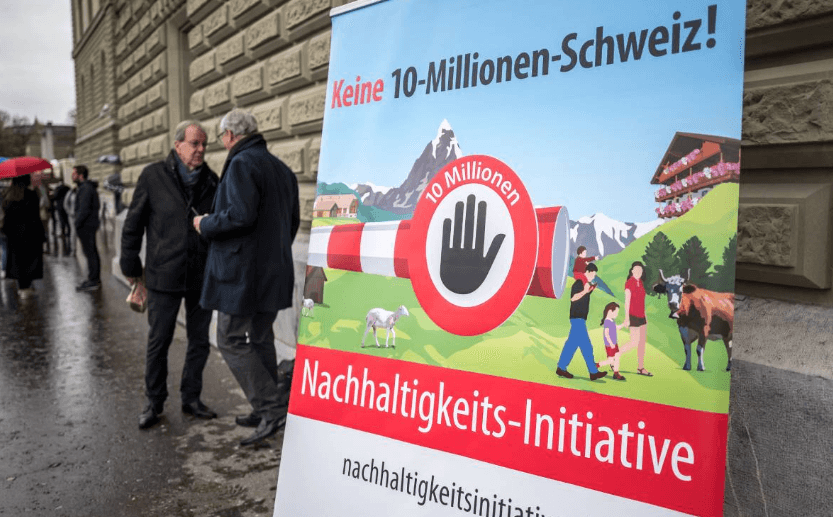
Swiss Voters Show Support for Anti-Immigration Proposal Ahead of Referendum.

Swiss Voters Back Anti-Immigration Proposal

A majority of voters in Switzerland have expressed support for a new anti-immigration proposal introduced by the Swiss People’s Party. The proposal aims to limit the country’s population growth and reduce the impact of migration.

The initiative, titled “No to 10 Million Switzerland,” seeks to prevent the national population from exceeding 10 million. Supporters argue that controlling immigration will help maintain economic stability and protect infrastructure. Authorities have scheduled a nationwide referendum on June 14 to decide the proposal’s future.

Recent opinion polls show that 52% of Swiss voters support the proposal, while 46% oppose it. Only 2% of respondents remain undecided. The survey also highlights that women show slightly higher support for the initiative compared to men.

Supporters believe that rising immigration increases pressure on housing availability, transportation systems, and public services. They argue that limiting population growth will help ease these challenges and improve living conditions.

The proposal has sparked intense debate across Switzerland. While supporters emphasize sustainability and infrastructure concerns, critics warn that strict limits on immigration could affect economic growth and workforce availability.

As the referendum approaches, the outcome will play a key role in shaping Switzerland’s future immigration policy and demographic direction. The vote reflects growing public interest in balancing population growth with national resources.

Man Declares Himself King of Switzerland, Sparks Political Outrage

A man has declared himself the “King” of Switzerland, claiming authority over a private land area measuring approximately 117,000 square meters. The unusual announcement has quickly drawn attention across the country and triggered strong reactions from political leaders.

The individual reportedly marked his privately owned land as an independent kingdom. He claimed sovereign status and attempted to establish symbolic control over the area. While the land legally belongs to him, Swiss law does not recognize any form of monarchy or self-declared sovereignty.

Swiss politicians have openly criticized the move. Officials described the declaration as misleading and potentially harmful to public understanding of national laws. They emphasized that Switzerland operates under a federal democratic system, where no individual can claim royal authority.

Authorities are now reviewing whether the man’s actions violate any legal frameworks. Experts highlight that declaring a kingdom within Switzerland has no legal standing and may lead to consequences if it causes public confusion or administrative issues.

The incident has sparked widespread discussion online and in media circles. Some view the act as symbolic or attention-seeking, while others see it as a serious misuse of legal boundaries. The situation continues to attract public curiosity and debate.

This unusual case highlights the limits of private ownership and the importance of legal structures in modern democracies. Swiss authorities continue to monitor the situation closely as discussions around sovereignty and law gain momentum.