
Swiss Church Frescoes Face Major Conservation Effort.
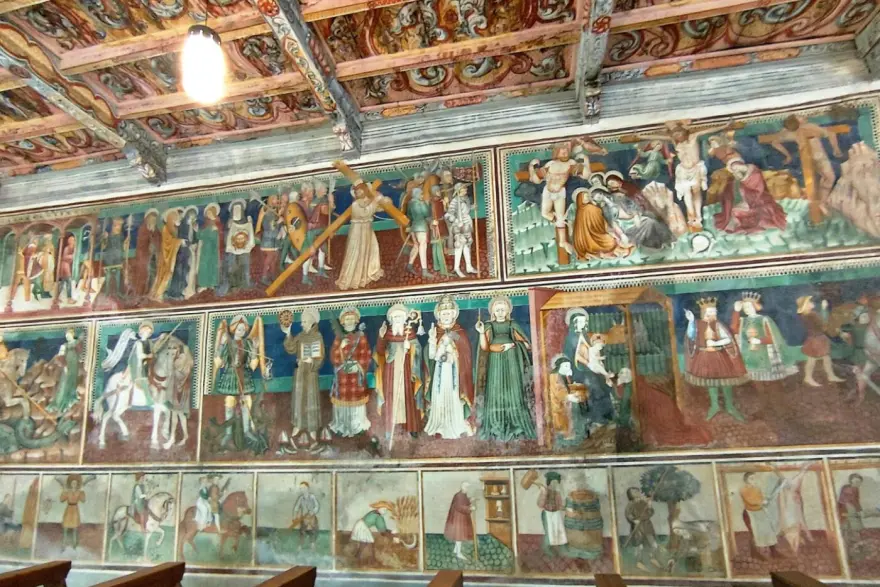
Swiss conservation experts have launched a major study and restoration project to preserve valuable 15th-century frescoes inside the Church of Santa Maria del Castello in southeastern Switzerland.
The historic frescoes, located in Church of Santa Maria del Castello, are undergoing scientific analysis in collaboration with SUPSI and its Conservation and Restoration programme.
Researchers identified the large fresco on the church’s north-western wall as the highest conservation priority. The artwork, created by Lombard painters from the Seregnesi workshop during the 15th century, measures nearly 12 metres wide and has shown visible signs of deterioration.
Recent inspections discovered salt deposits, paint lifting, moisture damage, and possible biological activity affecting the lower sections of the painting. Experts also noted that restoration work completed in 1923 altered parts of the original artwork.
Conservation specialists have now begun a new phase of environmental monitoring inside the church. Teams are examining humidity, temperature, and potential water infiltration to better understand the causes of degradation.
Restorer Stefania Luppichini explained that the current investigations aim to determine the seriousness of the damage before a detailed conservation study begins in spring 2027.
The upcoming restoration research will analyze the fresco’s materials, painting techniques, and overall condition as part of a bachelor’s programme in Conservation and Restoration.
An international conference held in Soazza also highlighted new historical research that may challenge traditional interpretations surrounding the frescoes and their original commission.
The project is considered an important step in protecting Switzerland’s cultural and artistic heritage for future generations.