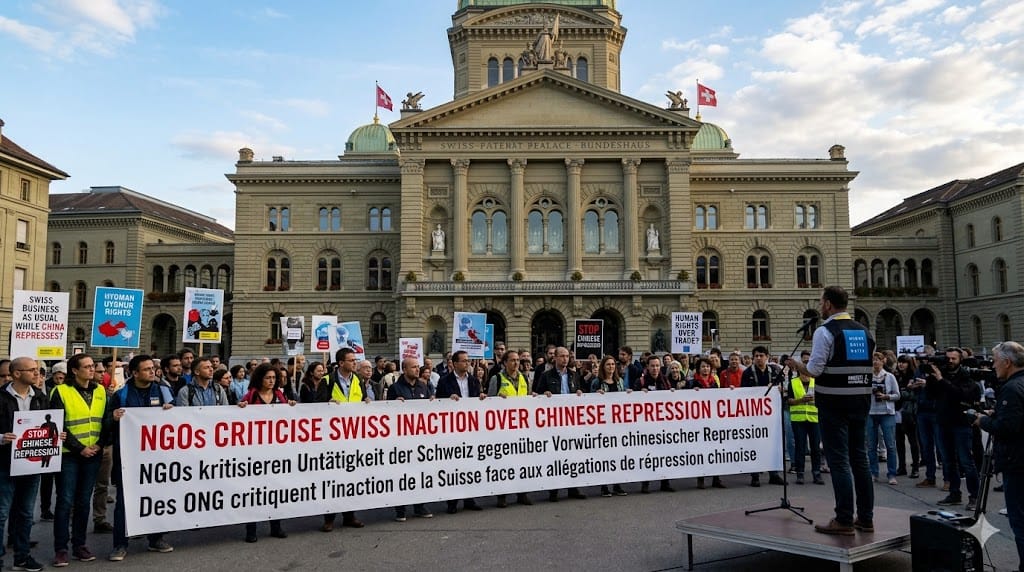

NGOs Criticise Swiss Inaction Over Chinese Repression Claims
Human rights organisations have criticised Switzerland for failing to take concrete action against alleged transnational repression targeting Tibetan and Uyghur communities.
According to NGOs, including Voices, there has been little progress since the Federal Council acknowledged last year that individuals in Switzerland were being affected by pressure and surveillance linked to Chinese authorities.
Selina Morell, programme manager at Voices, expressed disappointment, stating that expectations for stronger protection measures have not been met. She noted that victims continue to face intimidation despite official recognition of the issue.
Experts describe this phenomenon as transnational repression, where governments attempt to influence or silence critics living abroad. Such actions can include surveillance, threats, and indirect pressure through family members.
Although there are no precise figures for incidents in Switzerland, observers report that the trend is increasing. Data from Freedom House indicates that at least 1,375 serious cases of transnational repression have been documented globally since 2014. These include incidents such as abductions, arbitrary detention, and physical assaults.
However, many forms of intimidation—such as monitoring and psychological pressure—are not included in these statistics, suggesting the true scale may be significantly higher.
The issue continues to raise concerns about the protection of human rights within Switzerland and the country’s response to international political pressures.