Switzerland Reintroduces French Border Checks for G7 Summit

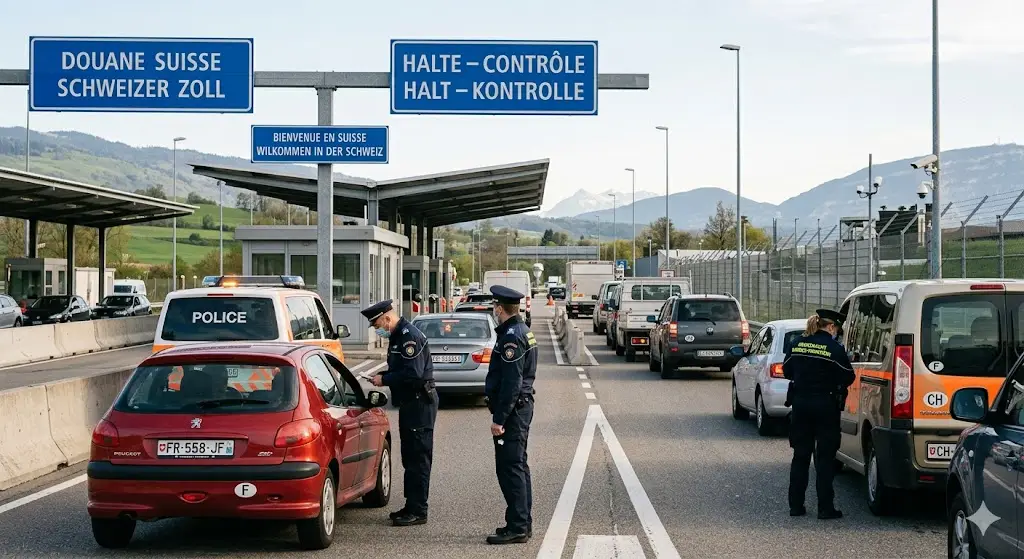
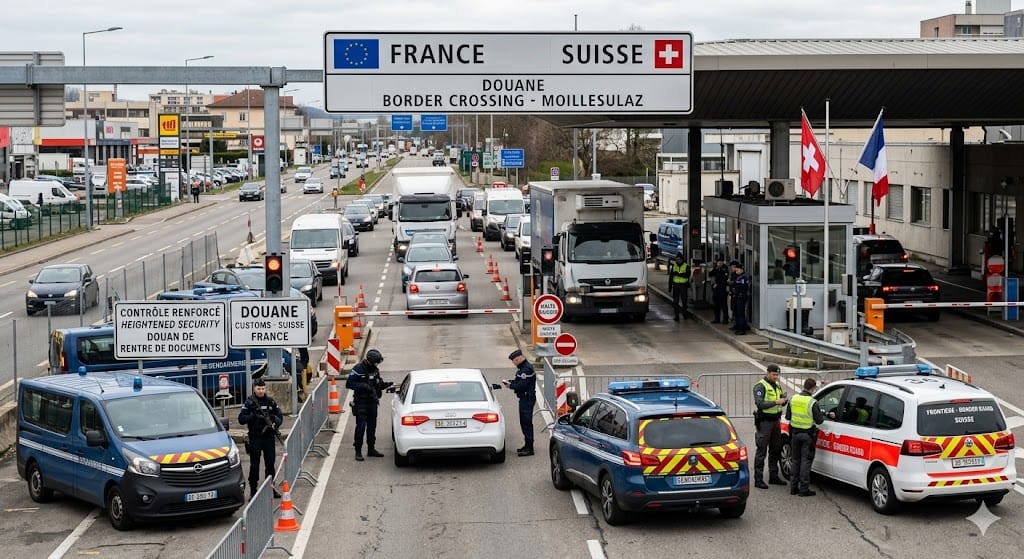
Switzerland will temporarily reintroduce border checks along parts of its border with France ahead of the upcoming G7 Summit 2026 in Évian.

The Swiss government confirmed on Wednesday that the temporary controls will remain in effect from June 10 to June 19 as part of heightened security measures surrounding the summit.

Although the G7 meeting will take place in Évian, Swiss authorities stated that nearby regions including Geneva, Lausanne, and the wider Lake Geneva area face increased security risks during the international gathering.

Officials noted that previous G7 summits have sometimes resulted in violent protests, acts of sabotage, public disorder, and property damage. Authorities also highlighted concerns linked to the current geopolitical climate and the large concentration of international organizations based in Geneva.

The request to temporarily restore border controls was submitted by the Canton of Geneva, reflecting growing concerns about public safety and regional security during the summit period.

The G7 Summit is scheduled to take place from June 15 to June 17, bringing together leaders from major industrialized nations to discuss global political, economic, and security issues.

Swiss authorities are expected to increase police presence and strengthen monitoring around border crossings, transportation hubs, and sensitive areas during the event.

Luxury Car Theft Surges Across Switzerland.

Luxury car theft is rising sharply across Switzerland, with new data highlighting a growing concern for vehicle owners and insurers. According to AXA, the number of reported car theft cases has increased significantly in recent years.

In 2025 alone, nearly 400 vehicle theft cases were reported to AXA. The total financial damage reached approximately CHF 5 million, almost double the losses recorded before the pandemic.

The average cost per car theft has also increased. In 2025, each case resulted in an average loss of around CHF 14,000, marking a steady rise over the past decade. Experts note that the average damage value has increased by about CHF 4,000 over the last ten years.

Certain regions have been more affected than others. The cantons of Geneva, Vaud, and Basel City reported the highest number of car theft cases. Ticino also recorded above-average incidents over the past decade.

In contrast, regions such as Obwalden and Glarus reported the lowest rates of vehicle theft.

Experts suggest that proximity to international borders plays a key role in these trends. Organized criminal groups are increasingly targeting high-value vehicles and transporting them خارج the country. Urban areas, with higher vehicle density, also provide more opportunities for theft.

Insurance officials warn that the trend could continue if preventive measures are not strengthened. Vehicle owners are advised to use enhanced security systems and remain vigilant, especially in high-risk regions.

Geneva May Close Borders Ahead of G7 Summit

Authorities in Geneva have warned that some border crossings with France may be temporarily closed ahead of the upcoming G7 Summit scheduled next month in Évian.

The announcement comes from Geneva’s police leadership, who emphasized that the move is part of precautionary security planning. Officials aim to prevent potential unrest and ensure public safety during the high-profile international event.

Concerns stem partly from past incidents. During the G8 Summit 2003 held in Évian, protests in Geneva escalated into violent unrest. Demonstrations linked to anti-globalization groups led to vandalism and looting, causing significant damage to shops and luxury stores.

Authorities noted that the memory of those events still influences current security planning. As a result, they are considering stricter measures, including temporary closure of selected border points between Geneva and France.

Police officials stated that these steps are purely preventive. They aim to avoid any repeat of past violence and to maintain order during the summit period.

Residents and travelers are advised to stay updated with official announcements and prepare for possible travel disruptions. Increased police presence and enhanced security checks are also expected across the region.

G7 Summit: Geneva Border Controls Possible

Swiss authorities have warned that temporary border restrictions may be introduced in and around Geneva, Switzerland, ahead of the upcoming G7 Summit scheduled next month in Évian, France.

According to Geneva Police Chief Monica Bonfanti, who spoke to RTS media, several preventive security measures are being considered due to heightened risk factors linked to the international event.

Authorities stated that some of the 34 border crossing points between Geneva and France could be temporarily closed or subjected to stricter checks if the security situation worsens. Enhanced border inspections are also under consideration.

Officials are closely monitoring planned protest activities in Geneva during the summit period. Decisions are still being evaluated on whether demonstrations will be permitted, restricted, or fully prohibited depending on risk assessments.

Security agencies have also raised concerns over multiple threats, including potential cyberattacks and public disorder risks. As a result, Swiss police forces from various regions are expected to be deployed to reinforce security in Geneva.

Authorities emphasized that while strict security measures are common during major international events like the G7 Summit, the possibility of border-level restrictions highlights the seriousness of the current risk assessment. Travelers and residents are advised to stay alert and follow official updates.

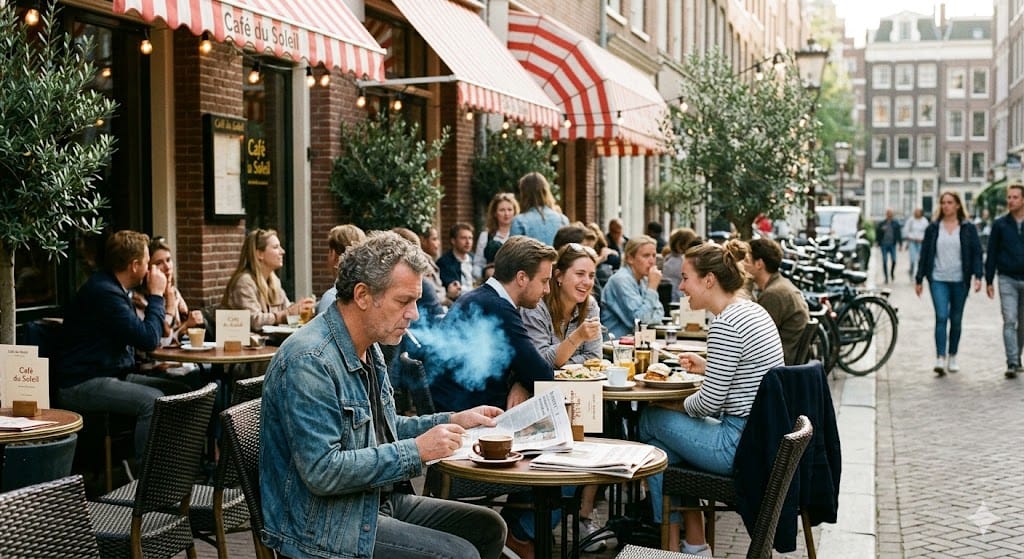
Geneva Launches Campaign to Reduce Smoking in Outdoor Cafés.

Authorities in Geneva have launched a new public awareness campaign aimed at reducing secondhand smoke exposure in outdoor areas of cafés and restaurants. The initiative focuses on encouraging responsible behavior rather than imposing strict legal bans.

Under the new campaign, smokers are advised to ask for consent from nearby individuals before lighting a cigarette in shared outdoor spaces. To reinforce this message, reminders will soon be displayed on tables across cafés and restaurants throughout the city.

The initiative has received mixed reactions from the public and business owners. Some restaurant operators believe the approach may be difficult to enforce in real-world situations. Others worry that this soft approach could eventually lead to stricter regulations or even a complete ban on smoking in outdoor dining areas.

At the same time, authorities are reportedly considering a proposal that would fully prohibit smoking during mealtimes. This reflects growing concern over the health risks associated with secondhand smoke and the need to protect public health.

The campaign represents a gradual policy approach, prioritizing awareness and social responsibility. Officials have confirmed that the effectiveness of the initiative will be evaluated in 2027. Based on the results, stricter measures could be introduced if necessary.

This move highlights Switzerland’s ongoing efforts to balance individual freedom with public health concerns, particularly in shared social spaces like cafés and restaurants.

Swiss Rent Shock: Moving Homes Could Raise Costs by Up to 50%

A new study reveals that tenants in Switzerland could face sharp rent increases when moving to a new home, with some regions seeing hikes of up to 50%.

According to research by Wüest Partner, rents for new contracts rose by around 17% between 2016 and 2025. In contrast, existing rental agreements increased by only 5% during the same period.

This growing gap means tenants who change homes often pay significantly higher rent than those who stay. As a result, many residents hesitate to move, even when their current housing no longer meets their needs.

The study highlights major regional variations:

  • Geneva: Over 50% higher rents in new contracts
  • Zug: Around 38% increase
  • Zurich: About 20% rise

These differences show how location plays a key role in rental affordability.

Impact on Tenants and Future Risks

The trend creates financial pressure, especially for middle-income households. Many tenants now avoid moving to escape higher costs.

If this situation continues, analysts warn that the rental market could become increasingly imbalanced, making housing less accessible for many people.

Geneva Hosts Weekend Events to Celebrate the Red Cross

A series of public events will take place in Geneva this weekend to celebrate the humanitarian values of the International Red Cross and Red Crescent Movement.

Organisers announced that the theme of “Unity,” one of the movement’s seven fundamental principles, will be highlighted throughout the celebrations. A special musical evening is scheduled for May 7 to honour volunteers from national Red Cross societies.

During the event, the choir of the International Red Cross and Red Crescent Movement will perform, focusing on humanitarian themes that reflect the organisation’s global mission.

The following day, visitors will have the opportunity to explore the International Red Cross and Red Crescent Museum at a reduced entry price. In addition, attendees will be able to purchase extra tickets to support access for vulnerable individuals, enabling them to visit the museum as well.

Organisers say the weekend aims to promote solidarity, humanitarian awareness, and appreciation for the work of Red Cross volunteers worldwide.

WHO Extends Pandemic Virus and Vaccine Sharing Talks by One Year

Negotiations led by the World Health Organization on a global system for sharing viruses and vaccines during pandemics have been extended by one year after member countries failed to reach a consensus.

Talks held in Geneva highlighted ongoing disagreements between high-income and developing nations over how pandemic resources should be shared. Despite a week of intensive discussions, key differences prevented a final agreement.

The extension decision, reached late Friday, will require formal approval at the upcoming World Health Assembly, scheduled to open in Geneva on May 18. The next round of negotiations is expected to take place in July.

Tedros Adhanom Ghebreyesus acknowledged the progress made so far but emphasized that significant challenges remain. He noted that while countries have shown strong commitment, major differences still need to be resolved before a global framework can be finalized.

The proposed system aims to improve the sharing of virus samples and ensure fair access to vaccines during global health emergencies, an issue that gained urgency following recent pandemic experiences.