Financial Pressure Growing Among Switzerland’s Middle Class.

Financial pressure is increasing for many middle-class families in Switzerland, according to new data released by the Federal Statistical Office.

Although the majority of people in Switzerland are classified as middle income, many households are struggling with financial insecurity and rising living costs.

The Federal Statistical Office reported that around one in four people in the lower middle class would be unable to cover an unexpected expense of CHF 2,500 (approximately $3,200).

The findings are based on Switzerland’s household budget survey and research into income and living conditions.

According to the FSO, approximately 4.9 million people in Switzerland belonged to the middle-income category in 2024.

The classification includes single adults earning between CHF 4,228 and CHF 9,061 per month, as well as couples with two children earning a combined gross monthly income between CHF 8,800 and CHF 19,028.

However, the data show that financial difficulties are especially severe among the lower middle class, which represents roughly 2.3 million residents.

This category includes single individuals earning below CHF 6,041 monthly and families with two young children earning less than CHF 12,685 combined income.

Experts say rising housing costs, healthcare expenses, inflation, and everyday living costs continue to place increasing pressure on middle-income households across Switzerland.

The report highlights growing concerns over financial vulnerability even among people traditionally considered economically stable.

Economists warn that continued increases in living expenses could further weaken household purchasing power and long-term financial security for many Swiss residents.


Switzerland Plans Real-Time Tracking for Domestic Violence Offenders.

Switzerland is preparing to strengthen its response to domestic violence by introducing real-time electronic monitoring systems for offenders.

According to reports from 24 heures and Tribune de Genève, Canton Vaud plans to begin a pilot project during the second half of 2026.

Swiss authorities aim to implement a nationwide active monitoring system by 2027 through the Electronic Monitoring (EM) association, which includes 24 Swiss cantons.

Currently, most Swiss cantons use passive monitoring methods, where authorities review violations only after incidents occur. The new system will instead provide continuous, real-time supervision.

The initiative is being led by Vassilis Venizelos, president of the Electronic Monitoring association.

Under the proposed system, courts will define restricted safety zones around victims or protected locations. Offenders wearing electronic ankle bracelets will then be monitored through GPS geolocation technology.

If an offender enters a prohibited area, the system will immediately trigger an alert to a central monitoring center.

Authorities will first contact the offender and order them to leave the area. If the individual refuses to comply, police officers will intervene directly.

Supporters of the project say the new monitoring system could significantly improve victim protection and help prevent repeat domestic violence incidents.

Several cantons are expected to begin testing the technology in the coming months before broader implementation across Switzerland.

Swiss officials believe the initiative represents a major modernization of public safety measures and victim protection policies.

Switzerland Continues US Trade Talks Despite Tariff Court Ruling.

The Switzerland government says it will continue trade negotiations with the United States despite a recent US court ruling against tariffs introduced under former President Donald Trump.

According to Swiss officials, reaching a long-term trade agreement with the United States remains a top priority for the Swiss Federal Council.

The statement came after a US trade court ruled on Thursday that the latest 10% temporary global tariffs introduced under Trump’s trade policy were unjustified under a 1970s trade law.

However, Swiss authorities stressed that the ruling will not affect the ongoing Swiss-US trade discussions.

A spokesperson for the Swiss economics ministry stated that the main objective of the negotiations is to secure fair and non-discriminatory access for Swiss companies to the American market.

Swiss officials also highlighted the importance of long-term legal certainty and stable trade conditions for businesses operating internationally.

The US court decision reportedly blocks the tariffs only for two private importers and the State of Washington, meaning broader tariff policies remain under legal and political debate.

Economic experts say Switzerland is seeking stronger economic ties with the US to protect exports, investment opportunities, and market competitiveness.

The United States remains one of Switzerland’s most important trading partners, especially in sectors such as pharmaceuticals, finance, machinery, and technology.

Both countries are expected to continue negotiations as global trade tensions and tariff disputes continue to shape international economic policy.

SWISS Flight Diverted to Kazakhstan After Co-Pilot Falls Ill.

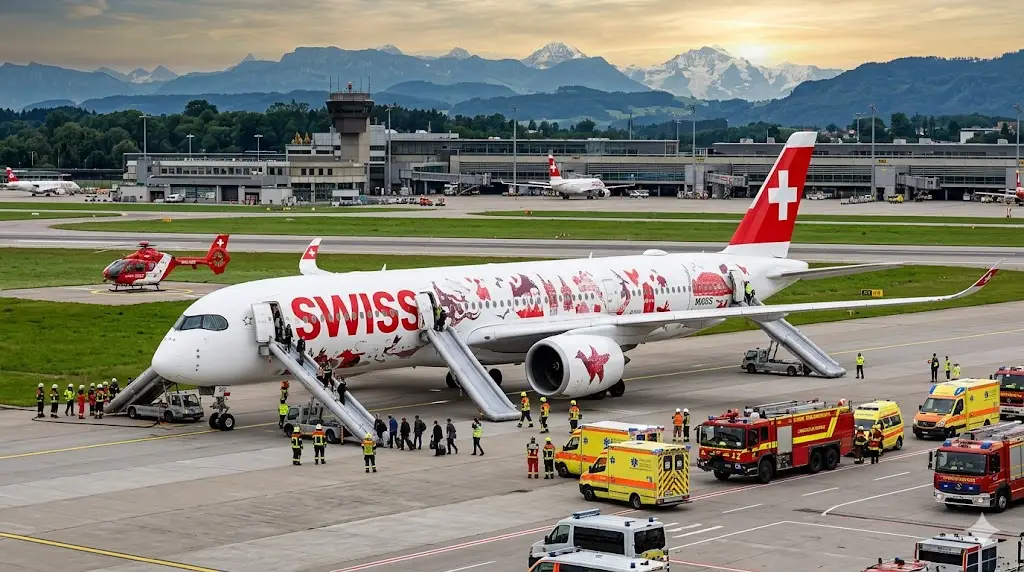
A Swiss International Air Lines (SWISS) flight travelling from Seoul to Zurich made an emergency diversion to Almaty after the co-pilot suffered a medical emergency during the journey.

The airline confirmed that the Airbus A350 safely arrived back in Zurich on Friday morning at 6:45am with 221 passengers on board.

According to SWISS, the incident occurred on Wednesday while the aircraft was flying from Seoul to Zurich. After the co-pilot became unwell, three doctors travelling on the flight provided immediate first aid assistance.

Medical professionals on board later advised the crew to divert the aircraft so the co-pilot could receive urgent medical treatment.

The plane landed safely in Almaty, where emergency services transported the co-pilot to a local hospital for further care.

SWISS stated that the co-pilot remains in Kazakhstan but is currently in good health. Another crew member has stayed behind to support him.

All passengers who returned to Zurich on Friday were originally travelling on the diverted flight. Six passengers reportedly chose alternative travel arrangements from Almaty instead of waiting for the rescheduled service.

The airline also arranged onward travel connections for passengers continuing to other destinations after arriving in Zurich.

SWISS apologised for the disruption caused by the unexpected diversion and emphasized that the health and safety of passengers and crew remain its top priority.

EU Jobless Reform Could Cost Switzerland Up to CHF 900 Million

A proposed reform by the European Union on unemployment insurance rules for cross-border workers could significantly increase costs for Switzerland, according to estimates from the State Secretariat for Economic Affairs.

The Swiss government agency warned that the planned changes could result in additional annual expenses ranging between CHF 600 million and CHF 900 million (approximately $771 million to CHF 1.1 billion).

The reform, currently being discussed within the European Union, aims to change the system for paying unemployment benefits for cross-border workers.

Under the new proposal, responsibility for unemployment payments would shift from the worker’s country of residence to the country where the individual last worked before becoming unemployed.

SECO published the cost estimates on its official website, following earlier reporting by the Swiss newspaper Neue Zürcher Zeitung.

However, Swiss authorities stressed that the figures remain highly uncertain due to limited data on unemployed cross-border workers.

Officials stated that a more accurate financial assessment will only be possible once the final version of the EU regulation is approved.

Before implementation, the proposal must be accepted by both the EU Council and the European Parliament. An EU diplomat reportedly expressed confidence that the reform is likely to pass.

The issue is particularly important for Switzerland due to its large number of cross-border workers from neighboring EU countries, especially in regions such as Geneva, Basel, and Ticino.

Experts warn that any change in benefit responsibility could place additional pressure on Switzerland’s unemployment insurance system and federal budget.

Swiss Government Responds to Epstein Property Questions.

The Switzerland government says it cannot confirm whether late American financier Jeffrey Epstein owned property in Switzerland.

The statement came in response to a parliamentary inquiry submitted following growing attention on Epstein’s alleged Swiss connections revealed in recent months.

In its official response, the Swiss Federal Council stated that it has “no knowledge” of any property purchases made by Epstein in Switzerland. However, authorities also acknowledged that they cannot completely rule out the possibility.

The government explained that oversight of foreign property purchases falls under the responsibility of individual Swiss cantons rather than federal authorities.

Swiss officials remained cautious when responding to additional parliamentary questions related to Epstein’s activities and potential financial links within Switzerland.

Interest in Epstein’s international network intensified after United States authorities released approximately 3.5 million declassified pages connected to investigations involving the convicted sex offender, who died in prison in 2019.

According to multiple media reports, Epstein allegedly financed educational opportunities for several young women in Switzerland and maintained connections with influential figures in international finance.

The revelations have renewed public and political discussions about financial transparency, oversight of international wealth, and Switzerland’s historical links to high-profile global figures.

Swiss authorities have not announced any criminal investigation related to the reported property questions.

The case continues to attract international attention due to Epstein’s extensive network of global contacts and the ongoing release of previously classified information connected to his activities.

Swiss Foreign Minister Urges OSCE to Coordinate on Emerging Technologies.

Swiss Foreign Minister Ignazio Cassis has called on member states of the Organization for Security and Co-operation in Europe to develop a common and proactive approach toward emerging technologies.

Speaking at a two-day OSCE conference in Geneva, Cassis emphasized the importance of anticipating scientific and technological developments before they create political, social, or security challenges.

“If no one controls them, they will control us,” Cassis warned while referring to rapidly advancing technologies such as artificial intelligence and quantum computing.

The Swiss foreign minister stressed that the greatest danger today is not technological innovation itself, but political delays in responding to technological change.

According to Cassis, if regulations fail to keep pace with innovation, societies may face mistrust, instability, misjudgements, and rising tensions.

He noted that new technologies already influence all major dimensions of the OSCE, including military security, economic competition, civil liberties, and social cohesion.

Conference participants discussed how artificial intelligence, quantum computers, and advanced digital systems could reshape security and cooperation across Europe.

Delegates also explored how technology could help countries manage scarce resources more effectively and support international collaboration.

Switzerland is seeking to strengthen international cooperation on technology governance following initiatives introduced at the United Nations Security Council during Switzerland’s chairmanship in 2024.

Cassis also highlighted the role of a Geneva-based foundation that has worked for years on identifying technological risks and opportunities before they create wider social problems.

He clarified that the goal is not to regulate every technological development, but rather to focus on the most urgent and high-impact challenges facing societies today.

The conference reflects growing international concern over the global impact of artificial intelligence, cyber threats, digital warfare, and emerging technologies on democracy and security.

Swiss Senate Committee Approves Erasmus+ Funding Support.

A parliamentary education committee in Switzerland has narrowly approved funding to support the country’s participation in the Erasmus+ programme for 2027.

The decision was made by the Education Committee of the Swiss Senate, with the proposal passing after a tied five-to-five vote. The committee chair cast the deciding vote in favor of the funding plan.

Supporters of the measure described participation in Erasmus+ as an important investment in Switzerland’s education system and future workforce development.

Committee members backing the proposal argued that Erasmus+ strengthens opportunities for apprentices, university students, and vocational trainees by improving international learning experiences and professional skills.

They also emphasized that enhanced education and training opportunities ultimately benefit the Swiss economy by preparing a more competitive and globally connected workforce.

However, the proposal faced resistance from a strong minority within the committee, who raised concerns about federal spending and budget pressures.

Opponents argued that Switzerland’s current financial situation and recently approved government cost-cutting measures make additional spending difficult to justify at this time.

Despite those concerns, the committee narrowly supported continued engagement with the European education programme.

Erasmus+ is one of Europe’s largest educational exchange initiatives, supporting international study, training, youth cooperation, and academic partnerships across multiple countries.

Switzerland’s participation in the programme has remained an important topic in discussions about education policy, international cooperation, and economic competitiveness.

The latest committee decision signals continued political support for maintaining educational links between Switzerland and European institutions.

European Court Rules Switzerland Violated Protest Organizer’s Rights.

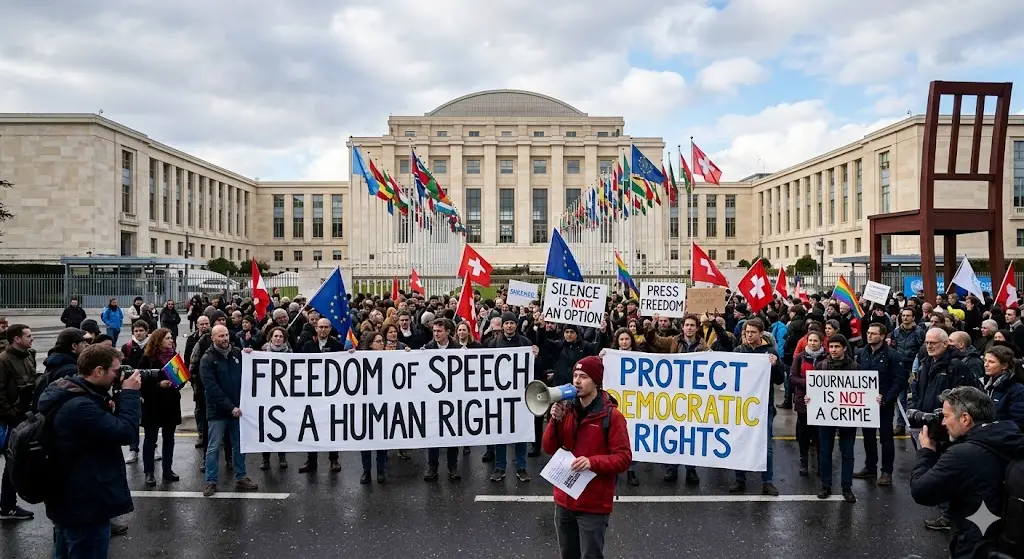
The European Court of Human Rights has ruled that Switzerland violated the rights of a protest organizer linked to a demonstration held in Geneva in 2019.

The case involved an International Women’s Day protest that had received official authorization from local authorities. Before the event, organizers were informed that they could be held personally responsible if permit conditions were violated during the demonstration.

During the protest, riots and disturbances reportedly occurred, leading Swiss authorities to accuse the organizer of failing to maintain an effective security service.

Swiss courts later convicted the organizer under criminal law and imposed a fine of CHF200.

The organizer appealed the decision to the European Court of Human Rights in Strasbourg, arguing that her fundamental rights had been violated.

In its verdict published on Thursday, the ECHR concluded that Switzerland violated several rights protected under the European Convention on Human Rights, including freedom of assembly, freedom of association, freedom of expression, and the right to a fair trial.

The ruling represents another significant judgment involving Switzerland and human rights protections under European law.

Legal experts say the decision could influence how Swiss authorities manage public demonstrations and assess the responsibilities of protest organizers in future events.

The case also highlights the ongoing balance between maintaining public order and protecting democratic rights such as peaceful protest and freedom of expression.

The ECHR has played a major role in shaping human rights standards across Europe, with its rulings often leading member states to review legal procedures and public policies.

Iran Conflict Raises Concerns Over Swiss Gas and Electricity Supply.

The ongoing conflict involving Iran and growing tensions around the Strait of Hormuz are increasing concerns about energy security in Switzerland ahead of the winter season.

According to Swiss Federal Electricity Commission, the situation could affect Switzerland’s electricity supply and create uncertainty in European gas and electricity markets.

Energy experts warned that gas-fired power plants remain essential for maintaining electricity stability across Europe, especially during winter periods when energy demand rises sharply.

However, European gas storage levels are currently lower than expected, raising concerns about whether reserves can be fully replenished before winter begins.

ElCom stated that the war in Iran and the possibility of disruptions in the Strait of Hormuz — one of the world’s most important oil and gas shipping routes — could significantly impact global energy supplies.

Despite these risks, current gas and electricity prices remain below the extreme levels seen during the 2021–2022 European energy crisis.

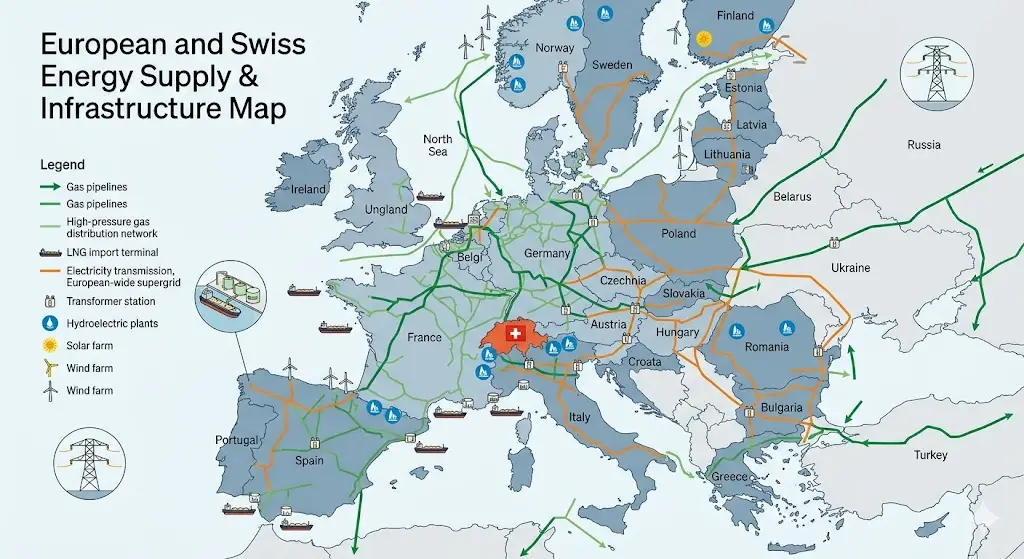
Officials explained that Europe now has greater flexibility because liquefied natural gas (LNG) import capacity has expanded significantly in recent years.

In addition, France’s nuclear energy production is currently operating at unusually strong levels, helping stabilize regional electricity supplies.

Still, Swiss authorities warned that energy risks remain if the Strait of Hormuz faces a prolonged closure, if European gas storage remains insufficient, or if Europe experiences an exceptionally cold winter.

The report highlights how geopolitical conflicts in the Middle East continue to influence European energy markets, fuel security, and electricity supply planning.

Switzerland, although not a direct gas producer, depends heavily on European energy networks and imported energy resources during colder months.