Swiss Police Stop French Customs Vehicle in Geneva

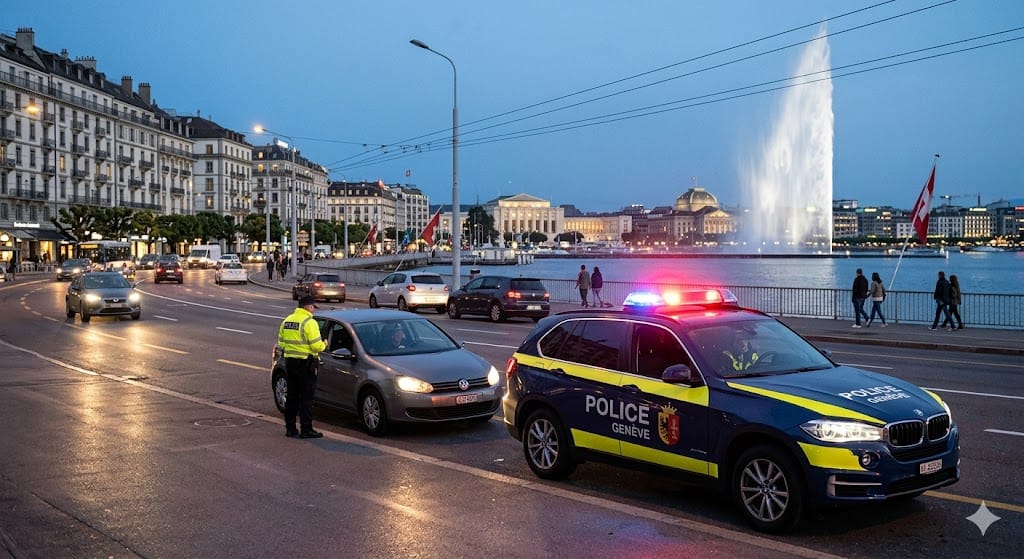
Swiss police in Geneva stopped a vehicle carrying French customs officers after noticing it was using flashing blue lights similar to an emergency police vehicle.

Authorities observed the vehicle traveling with prominent blue emergency-style lights activated, which prompted immediate action from Swiss law enforcement. The vehicle was registered in France, leading officers to conduct a detailed inspection.

During the investigation, police confirmed that the passengers were French customs officials returning from a training session held near an airport. Although they were on official duty, the use of blue flashing lights in Swiss territory without authorization violated local traffic regulations.

Swiss authorities reminded the officials that all road users, including foreign government personnel, must strictly follow Swiss traffic laws while operating within the country. The officers were issued a formal warning and allowed to continue their journey after the check.

Swiss police emphasized their strict enforcement of road safety rules, noting that even minor misuse of emergency-style signals is taken seriously to ensure public safety and order.
Swiss May 1 Protests Planned Across 50 Locations Over Living Costs.

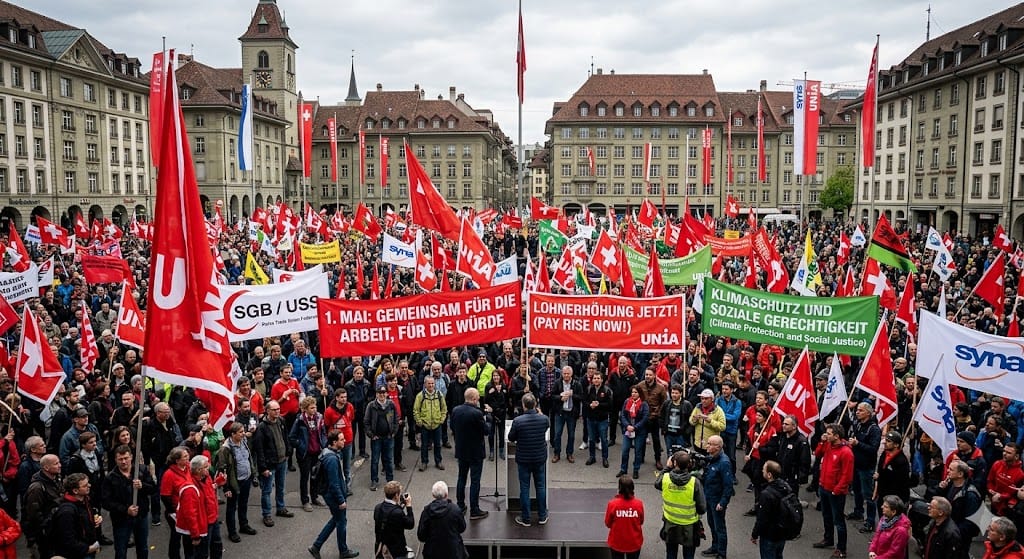
Trade unions across Switzerland are preparing large-scale May 1 demonstrations in response to rising living costs and stagnant wages. Organizers confirm that protests will take place in around 50 locations nationwide, with strong participation expected from workers and union leaders.

The Swiss Trade Union Federation stated that low real wages combined with high living expenses are pushing workers to take to the streets. Union representatives will deliver speeches throughout the day, highlighting concerns over income inequality and social pressure on households.

The largest demonstration will take place in Sechseläutenplatz, where a major rally is scheduled to begin at midday. Zurich’s event is traditionally the biggest May 1 gathering in the country, attracting thousands of participants each year.

Several high-profile political figures are also expected to attend. Swiss government ministers Beat Jans and Elisabeth Baume-Schneider will appear at different rallies, where they are expected to address key social and economic concerns.

Organizers emphasize that the protests aim to draw attention to wage stagnation, housing costs, and inflationary pressure affecting Swiss households. Union leaders are calling for stronger government action to protect purchasing power and improve working conditions.

Authorities are preparing for large crowds across multiple cities, as May 1 remains one of the most significant dates for labor movements in Switzerland.

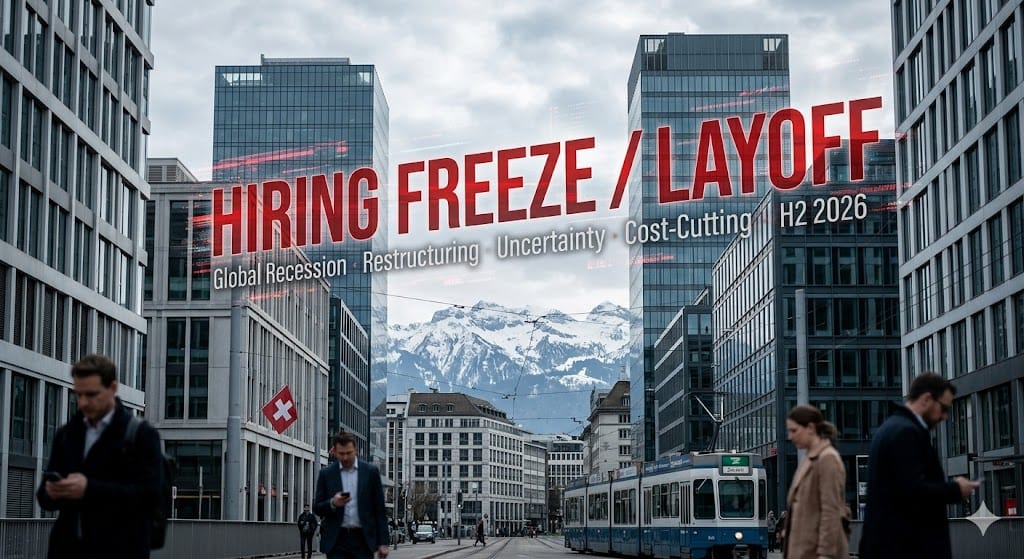
Swiss Job Market Shock: Major Layoffs Hit Leading Companies.

Switzerland’s job market is experiencing growing pressure as several major companies announce significant layoffs. Recent decisions by firms operating in Lucerne and other regions have raised concerns about employment stability across the country.

In Lucerne, two companies have confirmed workforce reductions this week. Andritz Beutler AG has announced that it will lay off 50 employees. Meanwhile, Serge Ferrari Tersuisse SA will cut 62 jobs in Emmenbrücke. Both companies stated that their foreign parent organizations in Germany and France made the final decisions.

Earlier, credit card provider Swisscard also revealed plans to reduce 40 positions in its Zurich office starting May 1. These announcements reflect a wider trend of restructuring across Switzerland’s corporate sector.

Between 2025 and 2026, several major companies are expected to eliminate thousands of jobs. Insurance giants Helvetia Insurance and Baloise Group plan to cut between 1,400 and 1,800 jobs after their merger process. Global banking group UBS is also reducing around 3,000 positions as part of its restructuring strategy. Logistics leader Kuehne + Nagel is planning to remove approximately 2,000 roles worldwide.

International organizations in Geneva, including United Nations agencies, are also implementing job cuts. Funding reductions from the United States have heavily impacted their operations. Additionally, companies are restructuring and shifting operations abroad to reduce costs and improve efficiency.

Experts say the Swiss labor market is entering a challenging phase as global economic pressures, mergers, and digital transformation reshape employment structures.

Switzerland Records Lowest Tax Burden in Europe, Says OECD Report.

Switzerland continues to offer one of the lowest tax burdens in Europe, according to a new report by the Organisation for Economic Co-operation and Development. The findings highlight a major financial advantage for residents despite the country’s high cost of living.

The OECD report, released on April 22, reveals that Switzerland ranks among the lowest-taxed countries within its 38 member nations. Only a few countries, including Colombia, Chile, New Zealand, and Mexico, report lower overall tax contributions.

On average, individuals in Switzerland pay around 22.9% of their income in taxes and social security contributions. This figure stands well below the OECD average of 35.1%, making Switzerland the lowest-tax country in Europe.

Families with children enjoy even greater financial advantages. Tax deductions vary across cantons, but dual-income households with two children see their tax burden drop from 22.9% to approximately 17.1%. Larger families benefit from even higher reductions.

Residents can expect additional tax relief in 2026. Local governments across several cantons have approved tax reductions and adjustments linked to lower inflation. These changes aim to reduce financial pressure on households.

Tax savings vary by region. Residents in Geneva can expect savings of at least 1,000 Swiss francs. In Zurich, St. Gallen, Graubünden, and Ticino, savings range between 500 and 1,200 francs. Areas such as Lucerne, Aargau, and Schwyz also report significant reductions.

Several factors explain Switzerland’s low tax rates. The country maintains a very low unemployment rate, allowing more people to contribute to tax revenue. In addition, Switzerland spends less on social welfare programs compared to countries like Sweden, promoting a system where individuals remain financially independent.

For many residents, including members of the Tamil community living and working in Switzerland, these lower taxes provide financial relief. However, experts advise careful financial planning due to the country’s high living costs.

Switzerland’s low tax structure continues to strengthen its economic appeal. With further tax reductions expected in 2026, residents are likely to experience improved financial stability despite rising living expenses.

Swiss Government Faces Criticism Over Actions Against Nurses Amid Shortage.

Labor unions in Switzerland have raised concerns over government actions affecting nurses, despite a severe shortage in the healthcare sector. The situation has triggered criticism and growing tension between healthcare workers and authorities.

Switzerland currently faces a shortage of approximately 14,000 nurses. Many hospitals and healthcare facilities struggle to fill vacancies, putting pressure on existing staff and reducing service efficiency.

Nurses have requested a reduction in weekly working hours from 50 to 45 hours. However, the Swiss National Council has rejected this demand. Instead of easing workloads, authorities continue to enforce existing policies, which unions argue worsen working conditions.

The government has also delayed proposals for higher pay on Sundays and public holidays. Officials have indicated that only a 25% increase in pay will apply, disappointing many healthcare workers who expected better compensation.

Labor unions warn that these decisions could deepen the crisis. They argue that failing to support nurses may lead to increased resignations and further shortages in the healthcare system.

The ongoing dispute highlights serious challenges in Switzerland’s healthcare sector. As pressure mounts, the government faces growing calls to take immediate action to support nurses and stabilize the system.

Swiss Voters Show Support for Anti-Immigration Proposal Ahead of Referendum.

Swiss Voters Back Anti-Immigration Proposal

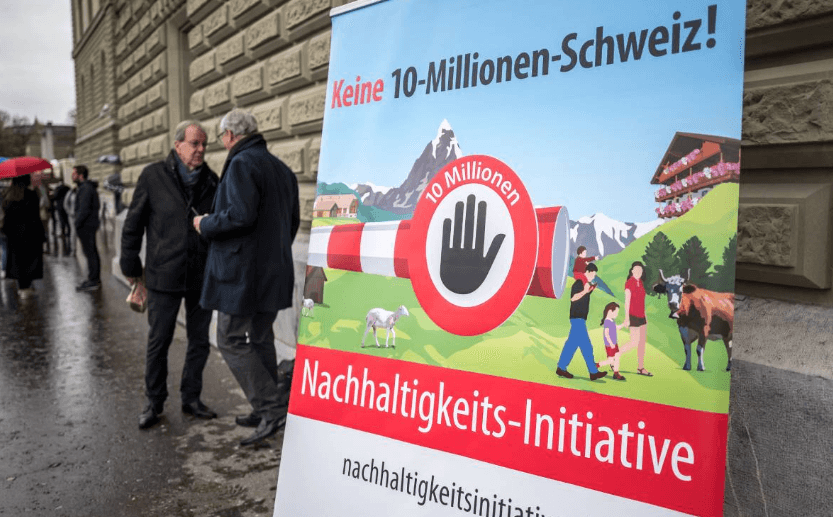
A majority of voters in Switzerland have expressed support for a new anti-immigration proposal introduced by the Swiss People’s Party. The proposal aims to limit the country’s population growth and reduce the impact of migration.

The initiative, titled “No to 10 Million Switzerland,” seeks to prevent the national population from exceeding 10 million. Supporters argue that controlling immigration will help maintain economic stability and protect infrastructure. Authorities have scheduled a nationwide referendum on June 14 to decide the proposal’s future.

Recent opinion polls show that 52% of Swiss voters support the proposal, while 46% oppose it. Only 2% of respondents remain undecided. The survey also highlights that women show slightly higher support for the initiative compared to men.

Supporters believe that rising immigration increases pressure on housing availability, transportation systems, and public services. They argue that limiting population growth will help ease these challenges and improve living conditions.

The proposal has sparked intense debate across Switzerland. While supporters emphasize sustainability and infrastructure concerns, critics warn that strict limits on immigration could affect economic growth and workforce availability.

As the referendum approaches, the outcome will play a key role in shaping Switzerland’s future immigration policy and demographic direction. The vote reflects growing public interest in balancing population growth with national resources.

Man Declares Himself King of Switzerland, Sparks Political Outrage

A man has declared himself the “King” of Switzerland, claiming authority over a private land area measuring approximately 117,000 square meters. The unusual announcement has quickly drawn attention across the country and triggered strong reactions from political leaders.

The individual reportedly marked his privately owned land as an independent kingdom. He claimed sovereign status and attempted to establish symbolic control over the area. While the land legally belongs to him, Swiss law does not recognize any form of monarchy or self-declared sovereignty.

Swiss politicians have openly criticized the move. Officials described the declaration as misleading and potentially harmful to public understanding of national laws. They emphasized that Switzerland operates under a federal democratic system, where no individual can claim royal authority.

Authorities are now reviewing whether the man’s actions violate any legal frameworks. Experts highlight that declaring a kingdom within Switzerland has no legal standing and may lead to consequences if it causes public confusion or administrative issues.

The incident has sparked widespread discussion online and in media circles. Some view the act as symbolic or attention-seeking, while others see it as a serious misuse of legal boundaries. The situation continues to attract public curiosity and debate.

This unusual case highlights the limits of private ownership and the importance of legal structures in modern democracies. Swiss authorities continue to monitor the situation closely as discussions around sovereignty and law gain momentum.

Swiss Parliament Rejects Proposal to Simplify Citizenship Process

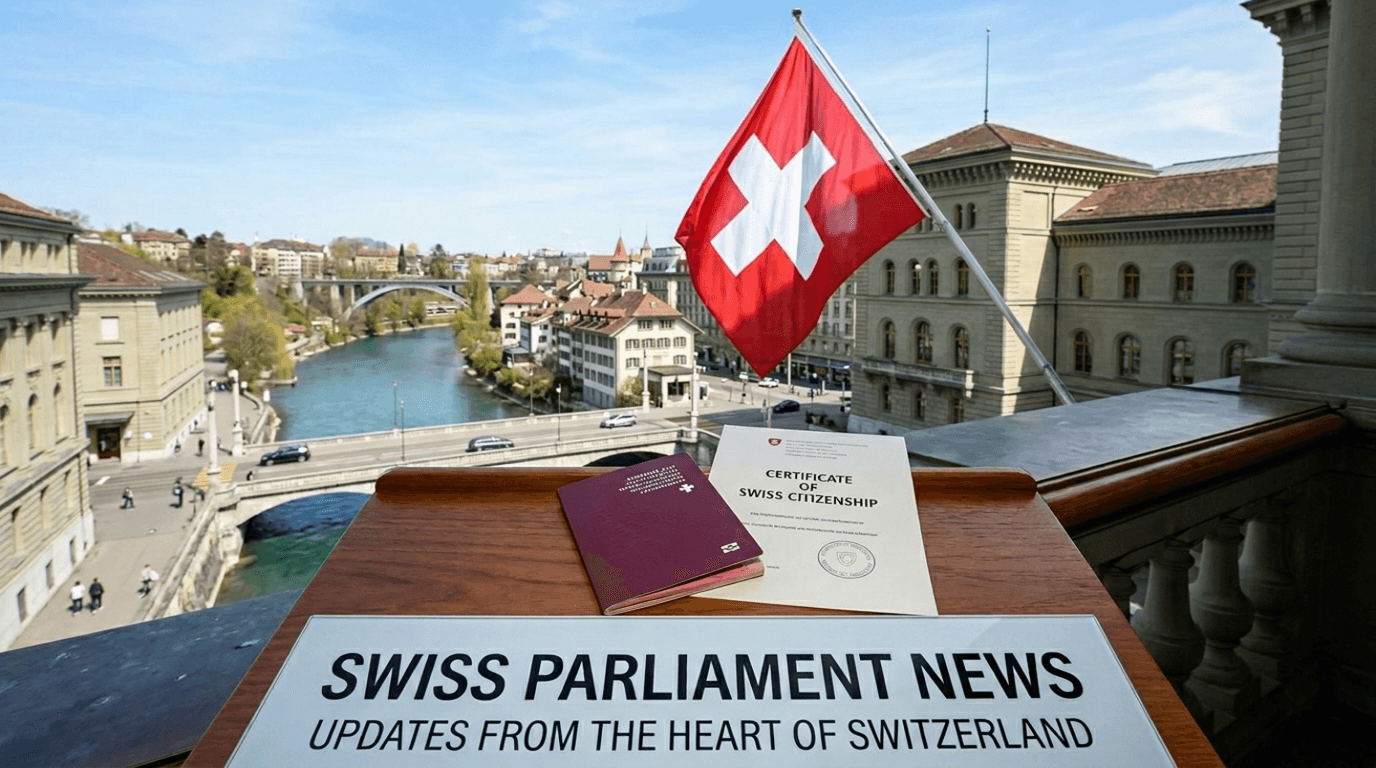
The Swiss House of Representatives has voted against a proposal that aimed to simplify the citizenship process for foreigners living in Switzerland. The proposal was rejected with a two-thirds majority vote in Parliament.

The initiative had been introduced to make naturalisation easier for long-term foreign residents, including families, workers, and students who have been living in Switzerland for many years.

Supporters of the proposal argued that the current process is complicated and time-consuming. They believed that immigrants who are well integrated into Swiss society should receive easier access to Swiss citizenship.

However, a majority of Swiss lawmakers opposed the proposal and decided to keep the existing naturalisation system unchanged. Counter-proposals suggested by minority members of Parliament were also rejected during the voting process.

At present, applicants seeking Swiss citizenship must continue to meet several requirements, including residency duration, language ability, social integration, and a clean legal record.

The decision is expected to be closely followed by immigrant communities across Switzerland, including the Tamil diaspora.

WTO Minister Conference Fails After Brazil Blocks U.S.

The WTO minister conference in Yaoundé was concluded without a conclusive outcome, as consensus on key trade measures was not reached. A major moratorium that prevents taxation on electronic transmissions — covering services such as streaming, downloads, digital files, and emails — has now lapsed immediately after Brazil opposed the United States’ proposal.

The United States, joined by Switzerland, had pursued a permanent resolution to extend the moratorium. This moratorium was significant for global digital trade, as it ensured that digital content and electronic transmissions remained exempt from customs duties. However, the U.S. delegation withdrew its support for another two‑year extension and instead pushed for a longer‑term solution. A compromise proposal for a five‑year extension was reportedly on the table and was believed to be acceptable to most World Trade Organization (WTO) members.

Despite this apparent consensus, Brazil blocked the proposal, demanding concessions in agricultural trade. As a result, the moratorium was unable to be adopted, and the negotiations collapsed. Observers described Brazil’s stance as retaliation related to separate tariff disputes with the United States.

The United States had aggressively lobbied member states in the weeks leading up to and during the conference. Some participants noted criticism from civil society and individual countries about U.S. tactics. A representative from a western delegation remarked that many nations attended discussions considering “what concessions they could make to the United States.” Another diplomat reported that the United States viewed the moratorium issue as a test of institutional influence after years of friction under former U.S. leadership.

The breakdown of talks in Yaoundé meant that no roadmap for WTO reform was finalized. Cameroon’s trade minister and conference chair, Luc Magloire Mbarga Atangana, attributed the lack of progress to insufficient time for negotiation. Symbolically, lightning struck near the venue on Sunday as failure became increasingly apparent, underscoring how tense negotiations had become.

In a draft agreement, WTO members committed to continuing discussions, with interim progress reports scheduled for July and December, and biannual reviews in 2027. The goal is to develop concrete reform recommendations by 2028, though details remain uncertain.