Cassis Says EU Agreements Are a Strategic Necessity for Switzerland.

Ignazio Cassis has described Switzerland’s relationship with the European Union as a “strategic necessity,” emphasizing the importance of a stable and structured partnership with the EU.

He made the remarks during the general assembly of European Movement Switzerland, where he served as guest of honour on Saturday.

In his speech, Cassis stated that Switzerland’s relationship with the EU goes far beyond technical negotiations and institutional frameworks, calling it a key strategic issue for the country’s future.

He highlighted that Switzerland and its European neighbours are closely connected in areas such as security, economic prosperity, innovation, rule of law, and institutional stability.

Cassis also referred to the recently negotiated package of agreements with Brussels, explaining that it involves mutual concessions from both sides.

He warned that long-term stability in relations with the EU is not guaranteed automatically but must be actively maintained through continuous cooperation.

According to the foreign minister, stable relations with the EU are the result of joint effort and shared responsibility between Switzerland and its European partners.

The speech reflects ongoing Swiss political debate about how the country should manage its relationship with the EU while maintaining sovereignty and economic competitiveness.

Observers say the comments underline the importance Switzerland places on maintaining strong ties with Europe amid global geopolitical and economic uncertainty.


Switzerland Marks 25 Years of Baby Hatches, 31 Newborns Safely Left.

Swiss Organisation for Mother and Child marked the 25th anniversary of Switzerland’s first baby hatch on Saturday, highlighting its long-term impact on child protection and safe anonymous birth options.

The first baby hatch in Canton Schwyz opened at Einsiedeln Hospital on May 9, 2001, following the tragic discovery of two abandoned newborns in 1999 in different parts of Switzerland.

Since its introduction, baby hatches—also known as “baby boxes”—have allowed mothers in extreme distress to safely and anonymously place newborns into medical care.

The system uses a heated cot installed in a hospital wall. Once a baby is placed inside, a silent alarm alerts medical staff within minutes, ensuring immediate care.

Over the past 25 years, 31 newborns have been safely left at eight baby hatch locations across Switzerland.

Hospital staff, including midwives, take responsibility for the newborns immediately after alert activation. The babies are then placed in foster care within days.

Adoption can take place after at least one year, while biological parents retain the right to reclaim their child until legal adoption is completed.

The foundation noted that before the introduction of baby hatches, Switzerland recorded several cases of abandoned or deceased newborns. Between 1997 and 2001, there were 13 such cases.

However, in the last five years (2021–2026), no cases of newborn abandonment or infanticide have been recorded in the country, according to the foundation.

Supporters say baby hatches provide a life-saving alternative in crisis situations, while critics continue to debate legal and ethical implications.

Despite the debate, the system is considered an important part of Switzerland’s child protection framework and has inspired similar initiatives in other countries.

Zurich Hospital CEO Praises Whistleblower in Heart Surgery Scandal.

University Hospital Zurich CEO Monika Jänicke has publicly thanked the whistleblower who exposed serious irregularities within the hospital’s heart surgery clinic.

In an interview with SonntagsZeitung, Jänicke praised the former heart surgeon who first raised concerns about patient safety and unusual practices at the clinic.

She stated that the whistleblower’s actions “deserve all our respect” because he repeatedly brought attention to the alleged problems despite facing professional consequences.

The whistleblower reportedly lost his job after exposing the irregularities, although Jänicke declined to comment directly on his dismissal, noting that it happened before she became CEO in 2023.

The scandal emerged after an independent administrative investigation uncovered serious failures in the hospital’s cardiac surgery department between 2016 and 2020.

Investigators found that the clinic recorded between 68 and 74 more patient deaths than statistically expected during approximately 4,500 heart surgeries performed over the four-year period.

At the centre of the controversy is Francesco Maisano, who led the clinic during that time before leaving the hospital in 2020.

The investigation highlighted concerns surrounding the use of the Cardioband device, a heart valve implant developed by a company in which Maisano reportedly held financial interests.

Officials are examining whether the use of the device may have contributed to the unusually high mortality rate identified in the report.

Jänicke said discussions regarding compensation for victims and affected families are still premature but acknowledged that the issue could become part of future legal and administrative proceedings.

The scandal has sparked major public debate in Switzerland regarding patient safety, hospital oversight, medical ethics, and transparency in healthcare institutions.

University Hospital Zurich has since introduced stricter compliance systems and governance reforms aimed at preventing similar incidents in the future.

Zurich Hospital CEO Praises Whistleblower in Heart Surgery Scandal

University Hospital Zurich CEO Monika Jänicke has publicly thanked the whistleblower who exposed serious irregularities within the hospital’s heart surgery clinic.

In an interview published by SonntagsZeitung, Jänicke praised the former heart surgeon who first raised concerns about patient safety and alleged misconduct at the clinic.

She stated that the whistleblower deserved “respect” for bringing attention to the problems and repeatedly pushing for investigations into the controversial practices.

The case centers around major failures uncovered at the hospital’s cardiac surgery department between 2016 and 2020.

An independent investigation found that the clinic recorded an unusually high mortality rate during that period, with an estimated 68 to 74 additional deaths above statistically expected levels among approximately 4,500 surgeries.

Jänicke declined to directly comment on the dismissal of the whistleblower, noting that the events occurred before she became CEO in 2023.

However, she confirmed that questions regarding possible compensation and accountability will form part of the hospital’s ongoing review process.

The scandal has largely focused on Francesco Maisano, the former head of the Zurich heart surgery clinic who left the hospital in 2020.

Investigators examined the use of the controversial Cardioband device, which was developed by a company in which Maisano reportedly held financial interests.

Authorities are currently investigating whether the use of the device contributed to the excess number of patient deaths identified in the report.

The scandal has triggered widespread debate in Switzerland over medical oversight, hospital governance, patient safety, and whistleblower protection within the healthcare system.

University Hospital Zurich stated that reforms have since been introduced to strengthen compliance measures, improve transparency, and restore trust in the hospital’s cardiac surgery department.

Royal Enfield Plans to Launch Two New 750cc Motorcycles

Royal Enfield is preparing to strengthen its position in India’s premium motorcycle market by launching two new 750cc motorcycles in the 2027 financial year.

The company plans to introduce the highly anticipated Continental GT750 and Himalayan 750 as part of a broader expansion strategy.

With these upcoming models, Royal Enfield aims to move beyond its successful 650cc platform and enter the premium 750cc motorcycle segment.

The company also plans to update 13 existing motorcycle models while introducing a total of five new bikes in the coming years.

Industry experts say the new 750cc motorcycles will create a natural upgrade path for riders currently using 350cc bikes and looking for more powerful touring and performance-focused machines.

Royal Enfield currently dominates India’s 500cc to 800cc motorcycle market with nearly 90% market share.

During the 2026 financial year, the company produced approximately 1.24 million motorcycles and achieved record sales of 1.2 million units.

Out of these sales, more than 1.1 million motorcycles were sold within India, while around 130,000 units were exported to international markets.

For the 2027 financial year, Royal Enfield has set a production target of 1.32 million units as competition in the mid-size motorcycle segment continues to grow.

Global brands including Harley-Davidson, Honda, and Triumph are increasing their focus on the segment.

Indian manufacturers such as Hero MotoCorp, TVS Motor Company, and Bajaj Auto are also expanding aggressively.

The growing partnership between Bajaj and Triumph has already intensified competition in Royal Enfield’s popular 350cc category.

Meanwhile, Royal Enfield is also strengthening its electric vehicle ambitions through the launch of the Flying Flea C6 electric motorcycle.

The company hopes to maintain its dominance by expanding both its traditional petrol-powered lineup and its future electric mobility portfolio.

Hantavirus Case Confirmed in Switzerland After Luxury Cruise Outbreak

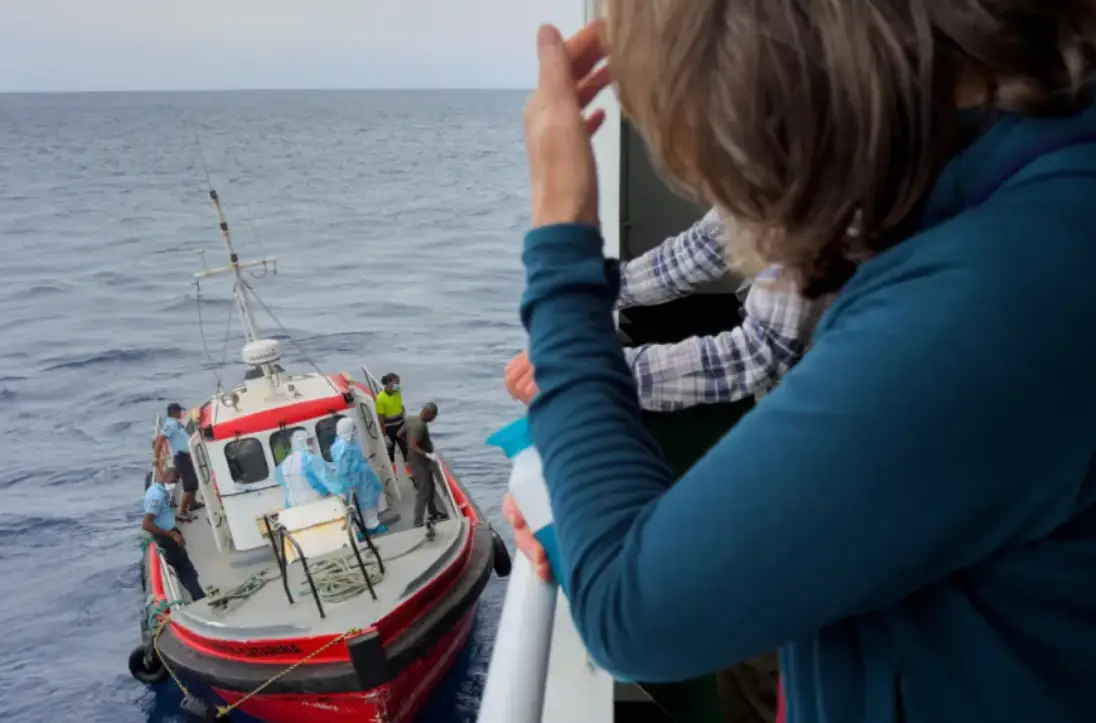
Hantavirus infection has now been confirmed in Switzerland after a Swiss passenger who travelled on the luxury cruise ship MV Hondius tested positive for the virus.

The passenger had been travelling on the expedition cruise from Argentina toward Cape Verde when several passengers and crew members reportedly became infected.

Authorities confirmed that three people connected to the outbreak have already died, raising international concern over the rare virus outbreak aboard the vessel.

After returning to Switzerland, the Swiss passenger developed symptoms and later tested positive for hantavirus following medical examinations.

The patient is currently receiving treatment at University Hospital Zurich, where he was immediately isolated as a precautionary measure.

Officials also confirmed that the patient’s wife has voluntarily entered self-isolation, although she has not shown symptoms of the virus.According to Swiss health authorities, the current risk to the public remains low, and there is no immediate danger to the Swiss population.

Health experts explained that hantavirus infections are relatively rare in Switzerland and are most commonly linked to exposure abroad.

The outbreak aboard the MV Hondius has attracted international attention after multiple passengers from different countries became infected during the long expedition cruise.

Authorities continue to monitor the situation closely while investigations into the spread of the virus remain ongoing.

Switzerland Plans Tougher Punishments for Bicycle Theft

Switzerland is preparing stricter legal measures to combat rising bicycle theft cases across the country, where nearly 50,000 bicycles are reportedly stolen every year.

The proposed legal changes have received support from the Swiss Federal Council following a proposal introduced by Lukas Reimann of the Swiss People’s Party.

Under current Swiss law, offenders can sometimes avoid serious punishment by claiming they only intended to use a bicycle temporarily. In many cases, this results in only minor fines or light penalties.

The new proposal aims to remove this loophole, especially for thefts involving expensive bicycles and e-bikes.

If approved, high-value bicycle theft would no longer be treated as a minor offence, and offenders could face stronger criminal penalties under Swiss law.

Authorities indicated that limited exceptions may still apply in specific situations, such as disputes within families or cases where previous permission to use the bicycle existed.

However, cycling advocates argue that tougher punishments alone will not fully solve the growing problem.

Experts say many Swiss cities still lack secure bicycle parking infrastructure, making bicycles easier targets for theft.

Traditional inverted-U bicycle racks often protect only the main frame while leaving wheels and other components vulnerable.

Cycling organisations point to safer systems used in cities such as New York City, where closed-loop locking stations offer better protection for the entire bicycle structure.

Advocates are calling for Switzerland to combine stronger laws with improved urban cycling infrastructure and modern secure parking facilities.

The issue has gained increasing public attention as cycling and e-bike usage continue to grow rapidly across Switzerland.

Swiss Crew Member Identified on Hantavirus-Hit Cruise Ship

A Swiss national has been identified among the crew members aboard the MV Hondius, which recently experienced a hantavirus outbreak during an expedition voyage.

According to Anne Lévy, the Swiss crew member had contact with infected individuals but is currently not showing any symptoms.

Speaking to Swiss public broadcaster SRF, Lévy confirmed that the man remains onboard the ship and is being monitored as a precautionary contact case.

The outbreak aboard the Hondius has already resulted in multiple confirmed hantavirus infections and several deaths, attracting international health attention.

The World Health Organization has now taken responsibility for coordinating the public health response connected to the ship.

Officials stated that once the vessel arrives in Tenerife, WHO experts will decide on further medical procedures and patient management.

Cruise operator Oceanwide Expeditions said that no passengers or crew members are currently displaying symptoms onboard the ship.

According to the company, the MV Hondius is expected to arrive at the port of Granadilla in Tenerife on Sunday morning.

Swiss authorities continue to monitor the situation closely while maintaining that the public health risk in Switzerland remains low.

Health experts say hantavirus infections are rare and are usually linked to contact with infected rodents, although limited human-to-human transmission has been reported in certain virus variants.

International health agencies are continuing contact tracing and precautionary monitoring efforts following the outbreak.

WHO Reassures Public Over Hantavirus Cases Linked to Cruise Ship Outbreak

The World Health Organization has moved to calm growing public concern over recent hantavirus infections linked to a cruise ship outbreak, stressing that the situation is not developing into an epidemic or pandemic.

Health officials confirmed that eight hantavirus cases have been identified so far, including five laboratory-confirmed infections. Three people — a Dutch couple and a German national — have died following the outbreak connected to the MV Hondius expedition cruise.

Speaking at a press conference in Geneva, WHO officials emphasized that the virus behaves very differently from COVID-19 and currently presents a low public health risk.

Maria Van Kerkhove, WHO Director for Epidemic and Pandemic Management, stated that hantavirus is far less contagious than coronavirus and insisted that the current situation should not be compared to the global pandemic experienced in 2020.

WHO Director-General Tedros Adhanom Ghebreyesus also confirmed that health authorities are closely monitoring people who had contact with infected individuals and are showing symptoms.

Experts believe the outbreak may remain limited if countries continue applying strict public health measures and maintain international cooperation.

Hantavirus is typically transmitted through infected rodents and their excretions. However, certain variants, including the Andes virus, can occasionally spread through close human contact in rare situations.

WHO officials warned that additional infections could still emerge because the incubation period can last up to six weeks.

Authorities in several countries are continuing retrospective contact tracing efforts to identify and monitor individuals who may have been exposed during the cruise.

In Switzerland, contact tracing measures were launched after an infected patient was admitted to Zurich University Hospital.

Despite international attention surrounding the outbreak, WHO continues to classify the overall risk to the general public as low.

Health experts are encouraging people to remain informed while avoiding unnecessary panic, noting that hantavirus outbreaks remain rare and typically limited in scale.

Last Swiss Victim of Crans-Montana Fire Set to Return Home

Only one Swiss national injured in the devastating Crans-Montana fire tragedy remains hospitalised abroad and is expected to return to Switzerland next week, according to Swiss authorities.

The tragic fire at the Le Constellation bar on New Year’s Eve claimed the lives of 41 people and left 115 others injured, making it one of Switzerland’s deadliest recent disasters.

Swiss officials confirmed that 38 victims are still receiving specialist medical treatment or remain hospitalised in Switzerland.

The Federal Office for Civil Protection (FOCP) announced that it will no longer publish weekly updates on the number of hospitalised victims linked to the tragedy.

According to the FOCP, the primary purpose of collecting nationwide injury data was to coordinate medical repatriations and manage hospital capacity across Switzerland.

Authorities stated that this process has now largely been completed, reducing the need for ongoing public reporting.

The latest available figures showed that six victims were receiving treatment at Lausanne University Hospital (CHUV), while four others remained under care in Zurich hospitals.

The fire disaster deeply shocked Switzerland and triggered national mourning, particularly within the Crans-Montana community and among families affected by the tragedy.

Investigations into the cause of the fire and safety conditions at the venue continue as authorities work to prevent similar incidents in the future.

The return of the final Swiss patient marks an important moment in the country’s long recovery process following the devastating incident.