


WSL Study Outlines Five Possible Futures for Switzerland

Researchers at the Swiss Federal Institute for Forest, Snow and Landscape Research have developed five possible future scenarios for Switzerland, exploring how society, the economy, and the climate could evolve by the year 2100.

The study highlights that it is impossible to predict Switzerland’s exact future. However, understanding different development paths is crucial because social, political, and economic changes directly affect resource use, infrastructure, and climate impact.

To build these scenarios, researchers collaborated with around 60 scientists from 20 institutions. A computer model was used to generate consistent projections based on global climate frameworks developed by the Intergovernmental Panel on Climate Change.

Three of the five scenarios are based on global Shared Socioeconomic Pathways, ranging from a highly technological, renewable-energy-driven society to a fragmented future marked by inequality and weakened state structures.

In the most divided scenario, society splits between a wealthy elite and a disadvantaged majority, while another scenario predicts long-term reliance on fossil fuels, resulting in severe environmental damage and high economic costs later in the century.

Two additional Switzerland-specific scenarios were also developed. One describes a country that prioritizes economic growth through fossil fuels before facing environmental consequences. The other focuses on social cohesion and well-being over pure economic expansion.

Lead researcher Lena Gubler emphasized that none of the scenarios are considered more likely than the others. Instead, they are designed as “if-then” models to explore possible outcomes rather than predict the future.

The National Centre for Climate Services (NCCS) has also released new data showing projected greenhouse gas emissions for each scenario up to 2100, providing a foundation for long-term climate planning and policy decisions.
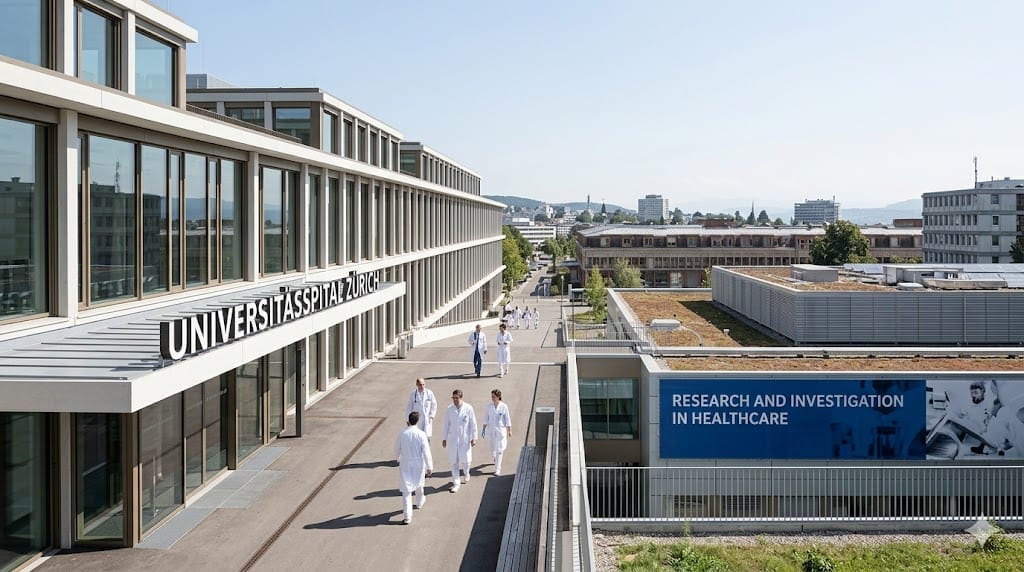

Zurich Hospital Admits Fatal Heart Surgery Failures.

The University Hospital Zurich has confirmed serious medical failures in its cardiac surgery department, following an independent investigation covering the years 2016 to 2020.

The report reveals that between 68 and 74 excess patient deaths may have occurred during this period. Authorities have also identified 11 particularly concerning deaths and 13 cases involving improper use of medical devices, which have been reported to the public prosecutor for further investigation.

Investigators are now examining whether criminal offences were committed, as concerns grow over systemic failures in hospital management and oversight.

According to the findings, the root cause of the issues lies in a major governance breakdown. Former leadership, including cardiac surgery head Francesco Maisano, was appointed in 2014 without sufficient review of qualifications and potential conflicts of interest.

The report also highlights that hospital management at the time failed in its supervisory responsibilities, ignoring warning signs that could have prevented the crisis.

In response to the investigation, three long-standing members of the hospital board have resigned, stating the need for organizational renewal and accountability.

The University Hospital Zurich has issued a formal apology to affected patients and their families and has established a dedicated counselling service to support them.

Despite the scandal, the hospital stated that its cardiac surgery department has since improved under new leadership, with mortality rates returning to normal levels.

To prevent future incidents, the hospital is introducing stricter compliance rules, a conflict-of-interest register, and a whistleblowing system designed to improve transparency and patient safety.

Darren Aronofsky to Receive Leopard of Honour at Locarno.

American filmmaker Darren Aronofsky will receive the prestigious Leopard of Honour (Pardo d’Onore) at the Locarno Film Festival during its 79th edition in Locarno. The award ceremony will take place on August 14 at the iconic Piazza Grande.

Aronofsky is widely recognized for his distinctive filmmaking style and critically acclaimed works. His recent film The Whale, starring Brendan Fraser, gained global attention after premiering at the Venice Film Festival in 2022.

Earlier in his career, Aronofsky received an Academy Award nomination for his psychological thriller Black Swan. He also directed The Wrestler, which earned the Golden Lion at the Venice Film Festival in 2008, further cementing his reputation in international cinema.

His diverse filmography includes projects such as Noah, starring Russell Crowe, and the experimental film Mother!, which sparked mixed reactions from audiences and critics alike.

Aronofsky began his journey with his debut film Pi in 1996, winning the Best Director award at the Sundance Film Festival in 1998. Over the years, he has built a reputation for pushing creative boundaries and exploring complex themes such as faith, obsession, and human desire.

According to Giona A. Nazzaro, Aronofsky’s work consistently challenges cinematic conventions and avoids conforming to mainstream expectations. The festival described his films as provocative, spiritual, and formally daring.

As part of the 2026 festival program, Aronofsky’s films The Fountain (2006) and Mother! will be screened, celebrating his contribution to modern cinema.

The Leopard of Honour, supported by Manor since 2017, has previously been awarded to renowned filmmakers including Jane Campion and Alexander Payne.

Mental Health Costs Rise Sharply in Switzerland.

Mental health treatment costs are continuing to rise across Switzerland, with new data highlighting growing pressure on the healthcare system. A recent report by the Swiss Health Observatory shows a significant increase in spending during 2024.

According to the report, mental healthcare costs increased by 6.1% in 2024 compared to 2023, reflecting a steady upward trend in demand for services. Despite rising costs, around 72% of the population reported feeling happy most or all of the time, indicating stable overall well-being.

The data reveals notable differences among age groups and genders. In outpatient care, treatment costs for boys under 18 rose by 8.9%, surpassing the 4.9% increase for girls for the first time. However, over the longer term between 2012 and 2023, the average annual cost increase for girls was nearly double that of boys.

In inpatient care, gender disparities remain significant. The hospitalization rate for girls in psychiatric clinics was approximately twice as high as for boys, indicating a higher level of severe mental health challenges among young females.

Experts continue to identify girls and young women as a high-risk group, calling for targeted interventions and stronger mental health support systems. The findings underline the importance of early prevention, accessible care, and increased awareness to address the growing mental health burden.

Study Links Childhood Bullying to Conspiracy Beliefs

A long-term study in Zurich has found that childhood bullying can significantly increase the likelihood of believing in conspiracy theories later in life. Researchers say early experiences of mistrust and emotional stress can shape how individuals view the world as adults.

The study, known as the Zurich Project on Social Development from Childhood to Adulthood, has followed around 1,500 participants since 2004. Conducted by the University of Zurich and supported by the Swiss National Science Foundation, the research tracks individuals from age seven into adulthood.

According to Hanne Duindam, people who experience bullying during childhood may develop a worldview shaped by fear and mistrust. These individuals are more likely to see the world as dangerous and believe in hidden plots or conspiracies.

The findings show that participants who suffered higher levels of bullying and emotional distress were more prone to conspiracy thinking and even extremist attitudes by the age of 24. The results were published in the Journal of Youth and Adolescence.

Researchers emphasize that these beliefs should not be dismissed as irrational without understanding the underlying experiences. Instead, they highlight the importance of empathy and context when addressing such views.

The study also offers hope. Some individuals who lost trust early in life were able to recover over time, showing that intervention and support can make a difference.

Experts recommend strengthening mental health support systems in schools and families to prevent long-term psychological effects. Promoting safe environments and emotional well-being during childhood could help reduce susceptibility to harmful beliefs later in life.

Luxury Car Theft Surges Across Switzerland.

Luxury car theft is rising sharply across Switzerland, with new data highlighting a growing concern for vehicle owners and insurers. According to AXA, the number of reported car theft cases has increased significantly in recent years.

In 2025 alone, nearly 400 vehicle theft cases were reported to AXA. The total financial damage reached approximately CHF 5 million, almost double the losses recorded before the pandemic.

The average cost per car theft has also increased. In 2025, each case resulted in an average loss of around CHF 14,000, marking a steady rise over the past decade. Experts note that the average damage value has increased by about CHF 4,000 over the last ten years.

Certain regions have been more affected than others. The cantons of Geneva, Vaud, and Basel City reported the highest number of car theft cases. Ticino also recorded above-average incidents over the past decade.

In contrast, regions such as Obwalden and Glarus reported the lowest rates of vehicle theft.

Experts suggest that proximity to international borders plays a key role in these trends. Organized criminal groups are increasingly targeting high-value vehicles and transporting them خارج the country. Urban areas, with higher vehicle density, also provide more opportunities for theft.

Insurance officials warn that the trend could continue if preventive measures are not strengthened. Vehicle owners are advised to use enhanced security systems and remain vigilant, especially in high-risk regions.

Geneva May Close Borders Ahead of G7 Summit

Authorities in Geneva have warned that some border crossings with France may be temporarily closed ahead of the upcoming G7 Summit scheduled next month in Évian.

The announcement comes from Geneva’s police leadership, who emphasized that the move is part of precautionary security planning. Officials aim to prevent potential unrest and ensure public safety during the high-profile international event.

Concerns stem partly from past incidents. During the G8 Summit 2003 held in Évian, protests in Geneva escalated into violent unrest. Demonstrations linked to anti-globalization groups led to vandalism and looting, causing significant damage to shops and luxury stores.

Authorities noted that the memory of those events still influences current security planning. As a result, they are considering stricter measures, including temporary closure of selected border points between Geneva and France.

Police officials stated that these steps are purely preventive. They aim to avoid any repeat of past violence and to maintain order during the summit period.

Residents and travelers are advised to stay updated with official announcements and prepare for possible travel disruptions. Increased police presence and enhanced security checks are also expected across the region.

Swiss Minister Says Migrants Boost Economy

A senior Swiss minister has voiced strong support for migration, highlighting its economic benefits ahead of a key national vote in Switzerland.

The debate comes as the Swiss People’s Party pushes a proposal titled “No to 10 Million Switzerland,” which aims to limit the country’s population growth. The initiative seeks to curb immigration and will be put to a public vote on June 14.

Supporters of the proposal argue that rising immigration contributes to housing shortages and places increasing pressure on transport systems and public services.

However, Swiss Interior Minister Elisabeth Baume-Schneider has publicly defended migration, emphasizing its positive impact on the national economy. She stated that foreign workers play a vital role in strengthening Switzerland’s financial system.

According to the minister, migrants significantly contribute to the country’s pension system. She noted that foreign workers pay more into the pension scheme than they receive, effectively generating a surplus that supports long-term financial stability.

Her remarks come at a critical moment as voters prepare to decide on one of the most debated migration policies in recent years. The outcome of the referendum could shape Switzerland’s future approach to immigration and economic growth.

Basel Life Sciences Hub Partners with Korean Biopharmas

The Basel Area is strengthening its global position as a leading biotech hub through a new partnership with major South Korean biopharma organizations. Basel Area Business & Innovation announced a strategic collaboration aimed at helping Korean biotech companies expand into international markets.

The initiative brings together key partners including Roche Korea, Korea Health Industry Development Institute, and Korea Technology Finance Corporation. The collaboration focuses on accelerating growth opportunities for high-potential biopharma companies, particularly targeting expansion into the United States and other global markets.

Officials described the partnership as a new model of international ecosystem building. It combines market access, industry expertise, and funding support to create faster pathways for innovation-driven companies. The program will officially launch in May 2026 as a joint open innovation initiative.

Each partner will play a distinct role in the program. Roche Korea will lead company selection and explore opportunities for mentorship and collaboration. KHIDI will identify promising companies and support program operations, while KIBO will evaluate participants and facilitate access to financing. Meanwhile, Basel Area Business & Innovation will connect selected firms with infrastructure and networks within the region.

The collaboration will also provide access to the Switzerland Innovation Park Basel Area, one of Europe’s most concentrated life sciences ecosystems. This infrastructure offers startups and scaleups the resources needed to grow rapidly in a competitive global environment.

Industry leaders emphasized that innovation is increasingly global, and partnerships like this help bridge regions. By linking Korean biotech innovators with Basel’s established ecosystem, the initiative aims to accelerate breakthroughs and strengthen international cooperation.

The program is expected to evolve into a flagship initiative, deepening ties between South Korea and global biotech markets while positioning Basel as a gateway for life sciences innovation.

2.8 Magnitude Quake Near St. Gallen

A minor earthquake measuring 2.8 magnitude struck near Sankt Gallen in eastern Switzerland late night, according to the Swiss Seismological Service.

The tremor occurred on May 5, 2026, at approximately 11:00 PM local time. Seismologists reported that the quake originated at a very shallow depth of just 0.40 kilometers, which increases the likelihood of it being felt near the epicenter.

Experts noted that the magnitude, depth, and exact epicenter may be revised as additional seismic data is analyzed. However, early assessments indicate that the quake was weak and unlikely to have caused any structural damage.

Residents in nearby areas may have experienced light shaking. The town of Flums, located about 4 km from the epicenter, likely felt mild vibrations. Other nearby locations such as Vaduz and Triesen may have experienced very weak tremors.

Further regions including Appenzell and Glarus were unlikely to have felt the quake due to their distance from the epicenter.

Authorities have not reported any injuries or damage. Minor earthquakes of this scale are relatively common in Switzerland and are typically not a cause for concern.