Zurich Riots Leave Police Officer Injured.

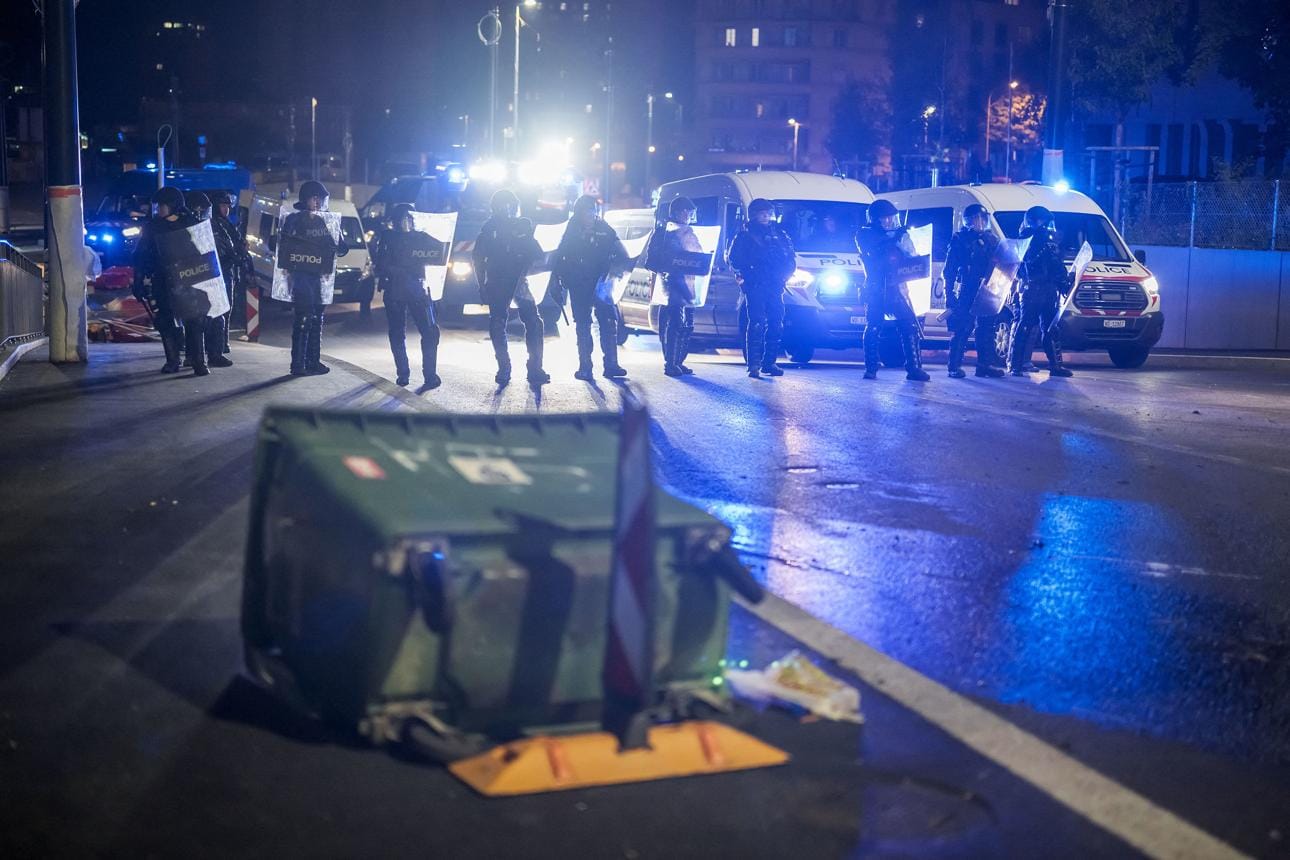
A police officer was slightly injured during overnight unrest in Zurich after officers came under attack from a large group during a disturbance that escalated into violent clashes.

According to Swiss police, officers responded to reports of excessive noise shortly after 2:30am on Sunday. When a patrol arrived at the scene, individuals in the crowd allegedly threw bottles and stones at the police officers.

The situation quickly intensified, forcing officers to temporarily withdraw and request reinforcements. Authorities later used rubber bullets and pepper sprays in an effort to regain control of the area.

Additional police units deployed water cannons and police dogs to disperse and contain the rioters as tensions continued to rise.

During the confrontation, one police officer was struck by an object and sustained minor injuries. A police vehicle was also damaged during the unrest.

Officials stated that the crowd eventually dispersed after police intervention restored order.

The incident has renewed concerns about public safety and violent disturbances during large gatherings in Swiss urban areas, especially during weekend nightlife hours.

Authorities have not yet released information regarding arrests or possible criminal charges linked to the incident.


Swiss Aromat Spice Remains Popular in South Africa.

The famous Swiss seasoning Aromat may face an uncertain future in Switzerland, but in South Africa it continues to play an important role in everyday cooking and local food culture.

For more than 70 years, Aromat has remained a favorite flavor enhancer across South African communities, especially in township restaurants and street food stalls.

In Cape Town’s historic Langa township, the spice continues to be widely used alongside grilled meats, roasted corn, and local dishes served in busy neighborhood eateries.

At Jordan Ways of Cooking, a popular local restaurant, chef Ntlalo Jordan keeps a large container of Aromat ready in the kitchen because customers frequently request it with their meals.

Jordan, who previously worked in luxury hotels across Dubai, Liberia, and Sudan before opening his own restaurant, says he personally prefers fresh herbs and homemade marinades. However, he acknowledges that Aromat has become deeply connected to local taste preferences.

The seasoning’s popularity reflects how international food products can become part of regional culinary identity over time. In South Africa, Aromat is often used to add flavor to meats, vegetables, fries, and traditional township-style meals.

The story of Aromat also highlights the cultural connection between Switzerland and South Africa through food traditions that have crossed continents and generations.

Swiss Home Ownership Dream Faces Housing Crisis.

The dream of owning a home in Switzerland remains difficult for many residents due to rising property prices and limited housing supply, according to a new survey published by MoneyPark and Helvetia.

The study found that nearly 70% of people aged between 25 and 40 want to own their own property, especially detached houses located in quieter rural areas. However, only 16% of current homeowners said they are considering selling their homes, creating major supply pressure in the market.

The survey also highlighted differences in housing satisfaction across Switzerland. Only one-third of tenants reported being satisfied with their current homes, compared to 54% of apartment owners and 89% of detached house owners.

According to MoneyPark CEO Lukas Vogt, many Swiss residents would prefer to live in rural environments but continue moving toward cities due to better job opportunities, infrastructure, and social connections.

This trend is contributing to continued urbanisation across the country rather than a movement back toward rural living.

Housing affordability has also become a major political issue. On June 14, voters in Zurich will vote on initiatives aimed at improving tenant protections and increasing the supply of affordable housing.

The ongoing housing shortage remains one of the biggest economic and social challenges in Switzerland, especially for younger generations trying to enter the property market.

Lawyer Criticises Swiss Response to Gaza Flotilla Detentions.

A lawyer representing Swiss participants in the recent Gaza flotilla mission has strongly criticised the response of Swiss authorities following the activists’ detention by Israel.

Speaking to Swiss public broadcaster RTS, Claire Dechamboux accused the Federal Department of Foreign Affairs (FDFA) of failing to act despite prior warnings and testimonies describing violence allegedly experienced by the activists.

Seven of the eight Swiss flotilla participants returned to Geneva on Saturday, where they were welcomed by family members, supporters, and humanitarian activists at the airport.

According to Dechamboux, the activists are physically stable but remain deeply affected by the experience. She stated that they appeared psychologically exhausted and traumatised after the detention.

“They are trembling; you can see it was a very difficult experience,” the lawyer explained while describing the emotional condition of the returning activists.

The flotilla mission, which aimed to reach Palestinian territory with humanitarian intentions, was intercepted by Israeli authorities earlier this week. Participants were reportedly detained before later being released and transported back to Europe.

The controversy has intensified political debate in Switzerland over the country’s diplomatic responsibilities and response to citizens involved in international humanitarian missions.

Human rights organisations and supporters are now calling for greater transparency and stronger diplomatic engagement regarding the treatment of activists detained during the operation.

Swiss Gaza Flotilla Activists Return Home.

Seven Swiss participants involved in the international Gaza flotilla mission returned to Geneva on Saturday after being detained by Israeli authorities earlier this week.

The activists arrived at Geneva Airport wearing keffiyehs and were welcomed by family members and supporters, including people who had participated in earlier flotilla missions.

The flotilla boats, which were heading toward Palestinian territory with humanitarian intentions, were intercepted by the Israeli military on Monday. Following the operation, hundreds of participants were reportedly detained aboard ships before later being transferred to detention facilities in Israel.

According to statements made by some of the returning activists, participants experienced physical, psychological, and sexual violence during detention. They described the alleged treatment as extremely serious and called for international attention to the issue.

The activists also criticised the response of the Federal Department of Foreign Affairs (FDFA), accusing Swiss authorities of providing insufficient support during the incident.

One activist stated that Switzerland had been informed in advance about the risks faced by participants but allegedly failed to take stronger diplomatic action. Several supporters present at the airport accused both Swiss officials and sections of the media of failing to adequately address the situation.

Legal and medical support for the activists is now being organised in Switzerland. Lawyer Claire Dechamboux explained that doctors in Lausanne are preparing to assess the physical and psychological condition of the returning participants.

She noted that many of those involved may be traumatised and will require time and professional care before fully discussing their experiences.

The incident has added to growing international debate surrounding humanitarian missions to Gaza, human rights concerns, and diplomatic responses by European governments.

Former Raiffeisen CEO Faces CHF1 Million Tax Penalty.

Former Raiffeisen Switzerland CEO Pierin Vincenz has reportedly been ordered to pay nearly CHF1 million in fines linked to tax evasion, according to reports published by Swiss newspaper SonntagsZeitung.

The report states that the Swiss Federal Supreme Court confirmed the sentence in a judgment that recently became legally binding. Swiss tax-related court proceedings are generally not public, which is why the case had remained largely unknown until now.

Authorities allege that Vincenz failed to declare approximately CHF3.4 million in taxable income. In addition to the financial penalty, he could also be required to pay significant backdated taxes.

During the proceedings, Vincenz denied the allegations against him.

The investigation reportedly began after tax authorities in Appenzell Ausserrhoden reviewed a criminal indictment connected to an ongoing case in Zurich and identified suspicious financial transactions.

In 2022, Vincenz and several associates were found guilty of fraud and embezzlement in a separate criminal case involving acquisitions made during his leadership at Raiffeisen. However, appeals against those convictions are still ongoing.

A February 2025 ruling by Switzerland’s highest court reportedly upheld parts of the earlier legal findings, making the latest tax penalty enforceable.

Vincenz continues to face legal scrutiny over accusations that he personally benefited from business deals conducted while serving as chief executive of Raiffeisen. Another appeal hearing in the broader case is expected to take place in August.

The case remains one of the most closely followed financial and corporate governance scandals in modern Swiss banking history.

Historic Organ Restored at Geneva’s Saint Peter’s Cathedral.

Visitors in Geneva will soon be able to experience the newly restored Metzler organ at Saint Pierre Cathedral as part of celebrations marking the 490th anniversary of the Reformation in Geneva.

The restoration project highlights the importance of preserving Switzerland’s religious and cultural heritage while bringing new life to one of the cathedral’s iconic musical instruments.

According to the Protestant Church of Geneva, special inauguration concerts are scheduled for May 29 and May 31, with an additional performance planned the following week.

The celebrations will also include several cultural events linked to the Church Assembly. On May 30, audiences will experience a performance titled “Black Church,” combining music and public discussion around cultural and spiritual themes.

Another artistic event will feature a theatrical adaptation of the book The Walking Man, exploring themes of movement, stillness, and human experience through live performance.

The restored Metzler organ is expected to become a major attraction for music lovers, tourists, and cultural visitors interested in Geneva’s historical and religious landmarks.

Saint Peter’s Cathedral remains one of Switzerland’s most significant historic churches and played a central role during the Protestant Reformation led by John Calvin in the 16th century.

Switzerland Surpasses 18,000 Public EV Charging Points

Switzerland continues to strengthen its electric vehicle infrastructure, with more than 18,000 publicly accessible charging points now available across the country.

According to the Swiss Federal Office of Energy, there were 18,284 charging points operating at 8,535 locations nationwide as of April 2026. On average, each charging location offers just over two charging points.

Canton of Zurich leads the country in total charging infrastructure, with 2,692 public charging points. It is followed by Canton of Bern with 1,891 charging points and Canton of Vaud with 1,590.

Smaller cantons reported significantly fewer public charging facilities. Appenzell Innerrhoden recorded only 31 charging points, while Appenzell Ausserrhoden had 77 and Obwalden had 109.

The report also highlighted major differences in charging point usage across Switzerland. Canton of Zug showed the highest concentration of battery electric vehicles (BEVs) per charging point, with 53 EVs sharing each public charger.

Canton of Thurgau followed with 27 BEVs per charging point, while Appenzell Ausserrhoden recorded 24.

In contrast, Graubünden had the lowest pressure on infrastructure, with only six battery electric vehicles sharing each public charging station.

The expansion of Switzerland’s charging network reflects the country’s growing shift toward sustainable mobility and cleaner transportation technologies, although regional disparities in infrastructure remain a challenge.

Switzerland Opens New Embassy in Athens.

Ignazio Cassis officially inaugurated the new Swiss embassy in Athens, introducing a unique diplomatic space designed to combine culture, science, and international cooperation.

The newly opened facility has been described as a “Swiss House for Culture, Research and Diplomacy.” It brings together the Swiss embassy, the Swiss School of Archaeology in Greece, and a cultural foundation under one roof for the first time.

According to Cassis, the project represents a modern vision of diplomacy where scientific research, cultural exchange, and international relations operate together within a shared environment.

During his visit to Greece, Cassis also held official talks with Giórgos Gerapetrítis. Discussions focused on strengthening bilateral relations, economic cooperation, scientific partnerships, and cultural collaboration between Switzerland and Greece.

The ministers also reviewed the Swiss-Greek cooperation programme connected to Switzerland’s second contribution toward European cohesion and regional development.

In addition, Cassis met with Nikos Dendias to discuss regional security issues within the framework of the Organization for Security and Co-operation in Europe (OSCE), which Switzerland currently chairs.

Swiss officials noted that Greece shares Switzerland’s strong commitment to multilateral diplomacy and plays an important role in maintaining stability in the Eastern Mediterranean and Western Balkans.

The opening of the new embassy highlights Switzerland’s efforts to strengthen international partnerships through diplomacy, culture, education, and scientific collaboration.

Gotthard Tunnel Traffic Jam Reaches 20km

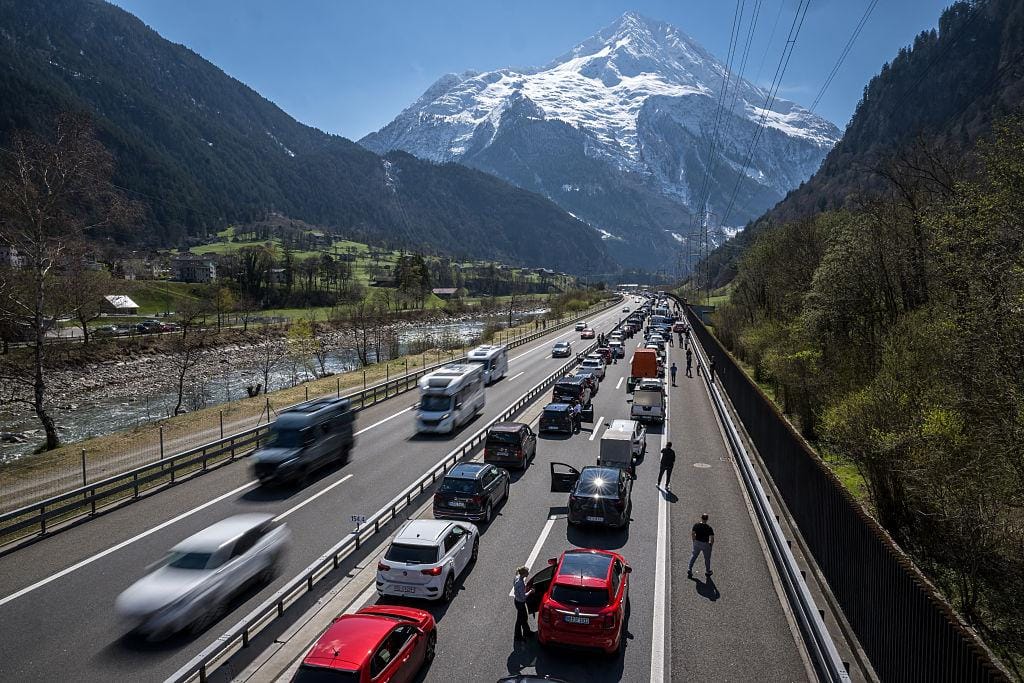
Heavy holiday traffic caused major congestion at Switzerland’s famous Gotthard Road Tunnel on Saturday, with the traffic jam at the northern entrance stretching to 20 kilometres by mid-morning.

According to the Touring Club Switzerland (TCS), drivers heading toward southern Switzerland faced delays of more than three hours and 20 minutes due to the severe congestion.

Traffic conditions worsened rapidly during the morning. In the early hours, the queue measured around 10 kilometres, but it doubled in length shortly before 10am as more vehicles entered the holiday travel routes during the Whitsun weekend.

Authorities also warned that alternative routes were experiencing heavy traffic. The A13 motorway via the San Bernardino Tunnel was already congested over a distance of approximately 17 kilometres.

The TCS advised travellers to consider diversions through the A9 Simplon route or use the Lötschberg car transport service to avoid the worst traffic conditions.

The Federal Roads Office (Astra) had already predicted exceptionally high traffic volumes during the long holiday weekend. Officials noted that the historic record at the Gotthard Tunnel remains 28 kilometres of congestion, recorded during the 2018 Whitsun period.

The Gotthard route is one of Europe’s most important north-south transport corridors and regularly experiences major congestion during peak holiday travel seasons.