Alienware Launches Its First Budget Gaming Laptop ‘Alienware 15’

Alienware has introduced its first budget-friendly gaming laptop, the Alienware 15, marking a strategic shift from its traditionally premium-priced gaming systems.

The new model aims to deliver high-performance gaming at a more accessible price point, expanding the brand’s reach into the mid-range laptop market.

The Alienware 15 comes equipped with AMD and Intel processor options, including AMD Ryzen 7 260 and AMD Ryzen 5 220 variants, along with NVIDIA GeForce RTX 4050 graphics. Users can also upgrade to an RTX 5060 configuration for higher performance.

The laptop supports up to 32GB RAM and offers storage options of 512GB or 1TB NVMe SSD, catering to both casual and serious gamers.

Its display features a 16:10 WUXGA (1920×1200) panel with a 165Hz refresh rate and 300-nit brightness, designed to enhance smooth gameplay and visual clarity during fast-paced gaming sessions.

Pricing for the Alienware 15 starts at approximately $1,299 for AMD models and $1,349 for Intel models, making it significantly more affordable than previous Alienware releases such as the Alienware 16 Aurora, which was priced around $1,690.

According to the company, the new laptop was developed through a more balanced engineering approach, focusing on where to invest in performance and where to reduce costs without compromising the core gaming experience.

Industry analysts view this move as Alienware’s attempt to compete more directly in the growing budget gaming laptop segment.


Bern Police Launch ‘Super-Recogniser’ Pilot Project to Identify Criminals.

Bern Cantonal Police is launching a pilot project that uses officers with exceptional face-recognition abilities, known as “super-recognisers,” to support criminal investigations.

The initiative follows internal testing within the police force, where around 30 officers were identified as having above-average facial recognition skills. According to a police spokesperson, roughly 10% of participants in the screening demonstrated these enhanced abilities.

Super-recognisers have the rare capacity to accurately remember and identify faces even after brief or indirect encounters. Authorities say this capability can significantly assist in locating violent offenders and improving public safety operations.

The project development was already underway when the Canton of Bern parliament approved a motion from the Centre Party in March calling for the use of super-recognisers to strengthen policing capabilities.

Officials noted that recent public order challenges, including escalated demonstrations in the canton last October, contributed to political support for the initiative.

The Bern Cantonal Police confirmed that detailed planning for the pilot is now complete and implementation is scheduled for the summer. Officers selected for the program will be deployed to support investigations where facial identification is critical.

The pilot reflects a broader trend in European policing strategies that combine human cognitive skills with modern investigative methods to improve identification accuracy and response times.

Authorities will evaluate the effectiveness of the program after its initial rollout before deciding whether to expand it across the canton.

Google Introduces “Googlebook” AI-Powered Laptop with Gemini Intelligence

Google has announced a new generation of AI-powered laptops called Googlebook, marking a major evolution beyond the Chromebook lineup. The devices are built using Gemini Intelligence and integrate both Android and ChromeOS technologies into a single unified ecosystem.

The new Googlebook laptops are designed to provide advanced artificial intelligence assistance for everyday computing tasks. A key feature called Magic Pointer allows users to interact more intelligently with content. For example, clicking a date inside an email automatically creates a calendar event, while selecting images enables instant visual organization and display.

Googlebook also introduces a feature called Create Your Widget, which allows users to build personalized dashboards by combining apps such as Gmail, Calendar, and other Google services. This enables users to manage travel plans, family events, hotel bookings, countdowns, and more from a single interface.

The devices operate fully within the Android ecosystem, allowing seamless integration between mobile phones and laptops. Users can access mobile applications directly from the laptop, such as ordering food or completing learning apps like Duolingo without switching devices.

Another feature, Quick Access, enables users to view and manage mobile files directly within the laptop’s file system, improving cross-device productivity.

Switzerland Ranks 3rd Globally in R&D Intensity

Switzerland continues to strengthen its position as a global innovation hub, with major companies ranking among the world’s top investors in research and development (R&D), according to a new EY study published on Tuesday.

The analysis of the world’s 500 largest corporate R&D spenders shows that Swiss firms achieved the third-highest research intensity globally in 2025, measured by the ratio of R&D spending to revenue. Only companies in the United States and the Netherlands ranked higher.

Swiss corporations recorded an average R&D intensity of 8.4%, significantly above the European average of 6.7%, although still below the United States, which leads with 9.2%.

In total, Swiss companies invested approximately €34 billion (CHF 31.2 billion) in innovation last year, placing Switzerland sixth worldwide in total R&D expenditure.

The study highlights the strong contribution of Basel-based pharmaceutical giants. Roche remains one of the world’s leading investors in innovation, spending €14.3 billion on R&D. Novartis also plays a key role, investing €9.9 billion and ranking among the top global companies.

According to EY analysts, medicines continue to be the most research-intensive industry worldwide, reflecting the importance of pharmaceutical innovation in Switzerland’s economy.

However, the report also highlights a growing gap between Europe and the United States. While American companies increased R&D spending by 12% in 2025, European firms saw only a 5% increase, with relatively stagnant revenue growth.

At the global level, technology giants dominate absolute R&D spending. Companies such as Amazon, Alphabet (Google), and Meta (Facebook) lead the rankings, with Amazon alone investing more than €96 billion, largely driven by artificial intelligence development.

EY concludes that global companies are prioritising innovation more than ever, with R&D budgets growing faster than overall revenues. This trend reinforces the importance of research investment in maintaining long-term competitiveness.

Geneva Police Introduce Switzerland’s First Real-Time Sign Language Support System.

Geneva has become the first city in Switzerland to introduce a real-time sign language interpretation service within its municipal police department. The new system aims to improve communication and accessibility for deaf and hard-of-hearing residents.

Starting Monday, individuals visiting police counters or interacting with officers will be able to connect instantly with professional sign language interpreters through a live video system. The service works using a QR code that officers can activate directly on their smartphones while assisting the public.

The initiative was developed in partnership with the PROCOM Foundation and marks a major step forward for accessibility in Swiss public services.

Marie Barbey-Chappuis stated that the city wants to ensure equal access to public services for everyone under fair conditions. Meanwhile, Christine Camp described the project as an important milestone for inclusive policing in Switzerland.

According to official estimates, between 20,000 and 30,000 people in Switzerland are deaf, while nearly one million residents live with some form of hearing impairment. Geneva’s new accessibility system also supports upcoming revisions to Switzerland’s federal disability equality legislation.

Experts believe this digital interpretation service could become a model for police departments and government institutions across the country.

Switzerland Plans Real-Time Tracking for Domestic Violence Offenders.

Switzerland is preparing to strengthen its response to domestic violence by introducing real-time electronic monitoring systems for offenders.

According to reports from 24 heures and Tribune de Genève, Canton Vaud plans to begin a pilot project during the second half of 2026.

Swiss authorities aim to implement a nationwide active monitoring system by 2027 through the Electronic Monitoring (EM) association, which includes 24 Swiss cantons.

Currently, most Swiss cantons use passive monitoring methods, where authorities review violations only after incidents occur. The new system will instead provide continuous, real-time supervision.

The initiative is being led by Vassilis Venizelos, president of the Electronic Monitoring association.

Under the proposed system, courts will define restricted safety zones around victims or protected locations. Offenders wearing electronic ankle bracelets will then be monitored through GPS geolocation technology.

If an offender enters a prohibited area, the system will immediately trigger an alert to a central monitoring center.

Authorities will first contact the offender and order them to leave the area. If the individual refuses to comply, police officers will intervene directly.

Supporters of the project say the new monitoring system could significantly improve victim protection and help prevent repeat domestic violence incidents.

Several cantons are expected to begin testing the technology in the coming months before broader implementation across Switzerland.

Swiss officials believe the initiative represents a major modernization of public safety measures and victim protection policies.

Apple and Intel Sign Major Semiconductor Deal as Shares Surge.

Apple Inc. and Intel Corporation have reportedly signed a major preliminary agreement that could reshape the global semiconductor industry.

According to reports from The Wall Street Journal, discussions between the two technology giants had continued for more than a year before both sides finalized a structured framework agreement.

The exact Intel technologies and semiconductor products that will be integrated into future Apple devices remain confidential. However, industry analysts believe the partnership could significantly influence future chip manufacturing strategies and hardware development.

The agreement has already triggered strong reactions in the financial markets. Investors responded positively to the news, driving a sharp increase in stock prices for both companies.

Intel shares surged by 18.26%, reaching approximately $129.64, while Apple shares rose by 1.59% to around $292.00.

The deal also signals a strategic shift for Apple, which has previously maintained semiconductor partnerships with companies including Samsung.

Market experts say the new collaboration may help Intel strengthen its position in the global semiconductor market while allowing Apple to diversify its supply chain and chip development capabilities.

The semiconductor industry continues to play a critical role in artificial intelligence, mobile devices, cloud computing, and advanced consumer electronics, making partnerships between major technology firms increasingly important.

Investors and analysts are now closely watching future announcements to determine how the partnership will impact upcoming Apple products and the broader global chip industry.

Swiss Foreign Minister Urges OSCE to Coordinate on Emerging Technologies.

Swiss Foreign Minister Ignazio Cassis has called on member states of the Organization for Security and Co-operation in Europe to develop a common and proactive approach toward emerging technologies.

Speaking at a two-day OSCE conference in Geneva, Cassis emphasized the importance of anticipating scientific and technological developments before they create political, social, or security challenges.

“If no one controls them, they will control us,” Cassis warned while referring to rapidly advancing technologies such as artificial intelligence and quantum computing.

The Swiss foreign minister stressed that the greatest danger today is not technological innovation itself, but political delays in responding to technological change.

According to Cassis, if regulations fail to keep pace with innovation, societies may face mistrust, instability, misjudgements, and rising tensions.

He noted that new technologies already influence all major dimensions of the OSCE, including military security, economic competition, civil liberties, and social cohesion.

Conference participants discussed how artificial intelligence, quantum computers, and advanced digital systems could reshape security and cooperation across Europe.

Delegates also explored how technology could help countries manage scarce resources more effectively and support international collaboration.

Switzerland is seeking to strengthen international cooperation on technology governance following initiatives introduced at the United Nations Security Council during Switzerland’s chairmanship in 2024.

Cassis also highlighted the role of a Geneva-based foundation that has worked for years on identifying technological risks and opportunities before they create wider social problems.

He clarified that the goal is not to regulate every technological development, but rather to focus on the most urgent and high-impact challenges facing societies today.

The conference reflects growing international concern over the global impact of artificial intelligence, cyber threats, digital warfare, and emerging technologies on democracy and security.

Swiss Media Industry Adopts AI Code of Conduct.

The Switzerland media industry has officially adopted a new code of conduct for the responsible use of artificial intelligence in journalism and publishing.

The initiative aims to strengthen public trust in AI technologies while ensuring ethical standards remain central to modern media practices.

According to industry representatives, the framework is based on principles outlined in a Council of Europe convention and is designed to guide media companies in using AI responsibly and transparently.

Andrea Masüger, President of the German-language publishers’ association Schweizer Medien, emphasized the importance of public confidence in journalism.

“Trust is the media’s most precious asset,” Masüger stated while discussing the need for clear ethical standards around AI-generated content and automated technologies.

The new guidelines are expected to address issues such as transparency, accountability, editorial oversight, misinformation risks, and the protection of journalistic integrity.

Media organizations across Europe are increasingly introducing AI policies as artificial intelligence tools become more common in news production, content generation, translation, and audience engagement.

Swiss publishers hope the new code will encourage responsible innovation while maintaining high standards of accuracy, independence, and credibility in the digital media landscape.

The move reflects growing international concern about the impact of AI on journalism, democracy, and public trust in information.

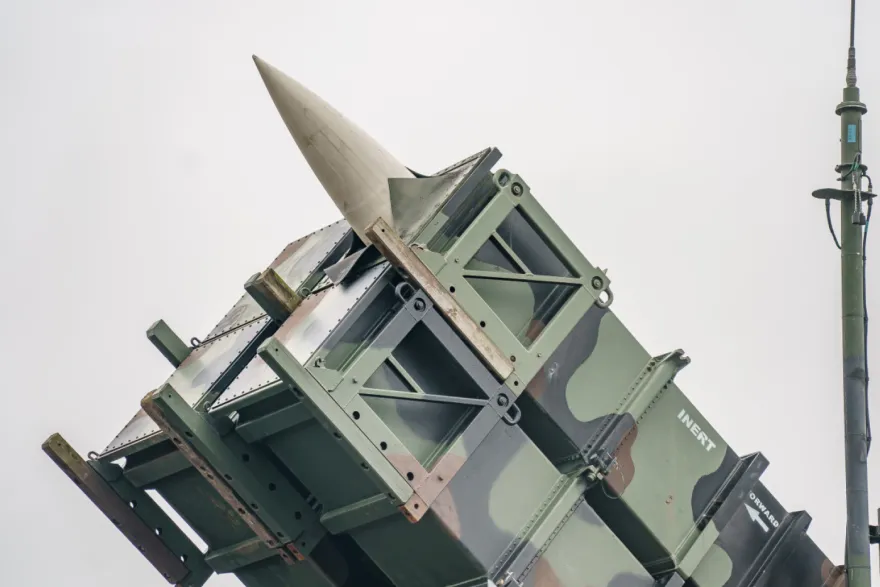
Switzerland Evaluates New Air Defence Systems.

The government of Switzerland has started evaluating alternative air defence systems to strengthen national security and modernize its military capabilities.

According to Armasuisse, officials have contacted authorities in Germany, France, Israel, and South Korea. In addition, five major defence manufacturers have also been approached to provide technical and strategic information.

Armasuisse has sent formal “requests for information” to these countries and companies. The evaluation focuses on key factors such as:

  • Delivery timelines
  • Overall costs
  • System performance
  • European production share

Officials have emphasized that local or European production—preferably within Switzerland—would be a major advantage.

This move reflects Switzerland’s effort to reassess its defence strategy amid evolving global security challenges. By comparing multiple systems, the government aims to identify the most effective and reliable solution.

Authorities will review the responses from partner countries and manufacturers before making any procurement decisions. The final choice will depend on operational efficiency, affordability, and long-term strategic value.