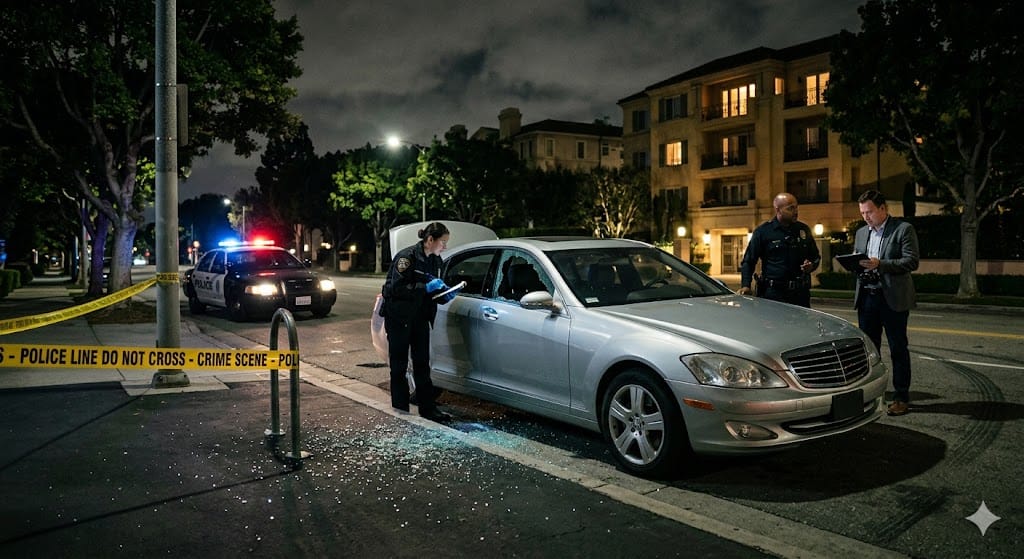
Luxury Car Theft Surges Across Switzerland.

Luxury car theft is rising sharply across Switzerland, with new data highlighting a growing concern for vehicle owners and insurers. According to AXA, the number of reported car theft cases has increased significantly in recent years.

In 2025 alone, nearly 400 vehicle theft cases were reported to AXA. The total financial damage reached approximately CHF 5 million, almost double the losses recorded before the pandemic.

The average cost per car theft has also increased. In 2025, each case resulted in an average loss of around CHF 14,000, marking a steady rise over the past decade. Experts note that the average damage value has increased by about CHF 4,000 over the last ten years.

Certain regions have been more affected than others. The cantons of Geneva, Vaud, and Basel City reported the highest number of car theft cases. Ticino also recorded above-average incidents over the past decade.

In contrast, regions such as Obwalden and Glarus reported the lowest rates of vehicle theft.

Experts suggest that proximity to international borders plays a key role in these trends. Organized criminal groups are increasingly targeting high-value vehicles and transporting them خارج the country. Urban areas, with higher vehicle density, also provide more opportunities for theft.

Insurance officials warn that the trend could continue if preventive measures are not strengthened. Vehicle owners are advised to use enhanced security systems and remain vigilant, especially in high-risk regions.
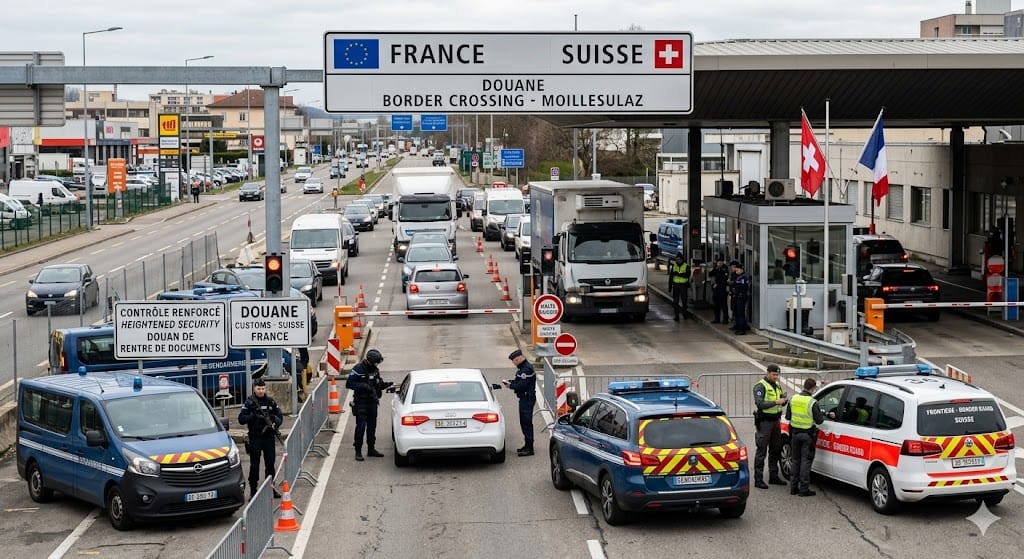
Geneva May Close Borders Ahead of G7 Summit

Authorities in Geneva have warned that some border crossings with France may be temporarily closed ahead of the upcoming G7 Summit scheduled next month in Évian.

The announcement comes from Geneva’s police leadership, who emphasized that the move is part of precautionary security planning. Officials aim to prevent potential unrest and ensure public safety during the high-profile international event.

Concerns stem partly from past incidents. During the G8 Summit 2003 held in Évian, protests in Geneva escalated into violent unrest. Demonstrations linked to anti-globalization groups led to vandalism and looting, causing significant damage to shops and luxury stores.

Authorities noted that the memory of those events still influences current security planning. As a result, they are considering stricter measures, including temporary closure of selected border points between Geneva and France.

Police officials stated that these steps are purely preventive. They aim to avoid any repeat of past violence and to maintain order during the summit period.

Residents and travelers are advised to stay updated with official announcements and prepare for possible travel disruptions. Increased police presence and enhanced security checks are also expected across the region.

Swiss Minister Says Migrants Boost Economy

A senior Swiss minister has voiced strong support for migration, highlighting its economic benefits ahead of a key national vote in Switzerland.

The debate comes as the Swiss People’s Party pushes a proposal titled “No to 10 Million Switzerland,” which aims to limit the country’s population growth. The initiative seeks to curb immigration and will be put to a public vote on June 14.

Supporters of the proposal argue that rising immigration contributes to housing shortages and places increasing pressure on transport systems and public services.

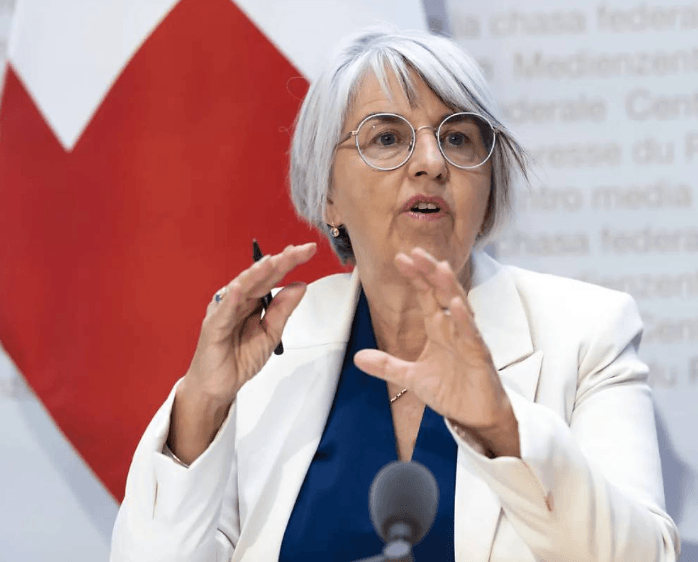
However, Swiss Interior Minister Elisabeth Baume-Schneider has publicly defended migration, emphasizing its positive impact on the national economy. She stated that foreign workers play a vital role in strengthening Switzerland’s financial system.

According to the minister, migrants significantly contribute to the country’s pension system. She noted that foreign workers pay more into the pension scheme than they receive, effectively generating a surplus that supports long-term financial stability.

Her remarks come at a critical moment as voters prepare to decide on one of the most debated migration policies in recent years. The outcome of the referendum could shape Switzerland’s future approach to immigration and economic growth.

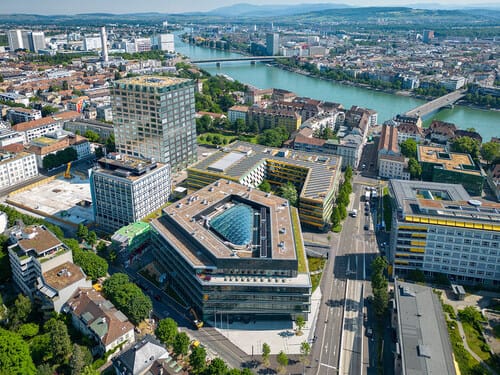
Basel Life Sciences Hub Partners with Korean Biopharmas

The Basel Area is strengthening its global position as a leading biotech hub through a new partnership with major South Korean biopharma organizations. Basel Area Business & Innovation announced a strategic collaboration aimed at helping Korean biotech companies expand into international markets.

The initiative brings together key partners including Roche Korea, Korea Health Industry Development Institute, and Korea Technology Finance Corporation. The collaboration focuses on accelerating growth opportunities for high-potential biopharma companies, particularly targeting expansion into the United States and other global markets.

Officials described the partnership as a new model of international ecosystem building. It combines market access, industry expertise, and funding support to create faster pathways for innovation-driven companies. The program will officially launch in May 2026 as a joint open innovation initiative.

Each partner will play a distinct role in the program. Roche Korea will lead company selection and explore opportunities for mentorship and collaboration. KHIDI will identify promising companies and support program operations, while KIBO will evaluate participants and facilitate access to financing. Meanwhile, Basel Area Business & Innovation will connect selected firms with infrastructure and networks within the region.

The collaboration will also provide access to the Switzerland Innovation Park Basel Area, one of Europe’s most concentrated life sciences ecosystems. This infrastructure offers startups and scaleups the resources needed to grow rapidly in a competitive global environment.

Industry leaders emphasized that innovation is increasingly global, and partnerships like this help bridge regions. By linking Korean biotech innovators with Basel’s established ecosystem, the initiative aims to accelerate breakthroughs and strengthen international cooperation.

The program is expected to evolve into a flagship initiative, deepening ties between South Korea and global biotech markets while positioning Basel as a gateway for life sciences innovation.

2.8 Magnitude Quake Near St. Gallen

A minor earthquake measuring 2.8 magnitude struck near Sankt Gallen in eastern Switzerland late night, according to the Swiss Seismological Service.

The tremor occurred on May 5, 2026, at approximately 11:00 PM local time. Seismologists reported that the quake originated at a very shallow depth of just 0.40 kilometers, which increases the likelihood of it being felt near the epicenter.

Experts noted that the magnitude, depth, and exact epicenter may be revised as additional seismic data is analyzed. However, early assessments indicate that the quake was weak and unlikely to have caused any structural damage.

Residents in nearby areas may have experienced light shaking. The town of Flums, located about 4 km from the epicenter, likely felt mild vibrations. Other nearby locations such as Vaduz and Triesen may have experienced very weak tremors.

Further regions including Appenzell and Glarus were unlikely to have felt the quake due to their distance from the epicenter.

Authorities have not reported any injuries or damage. Minor earthquakes of this scale are relatively common in Switzerland and are typically not a cause for concern.

Why the Swiss School System Stands Out Globally

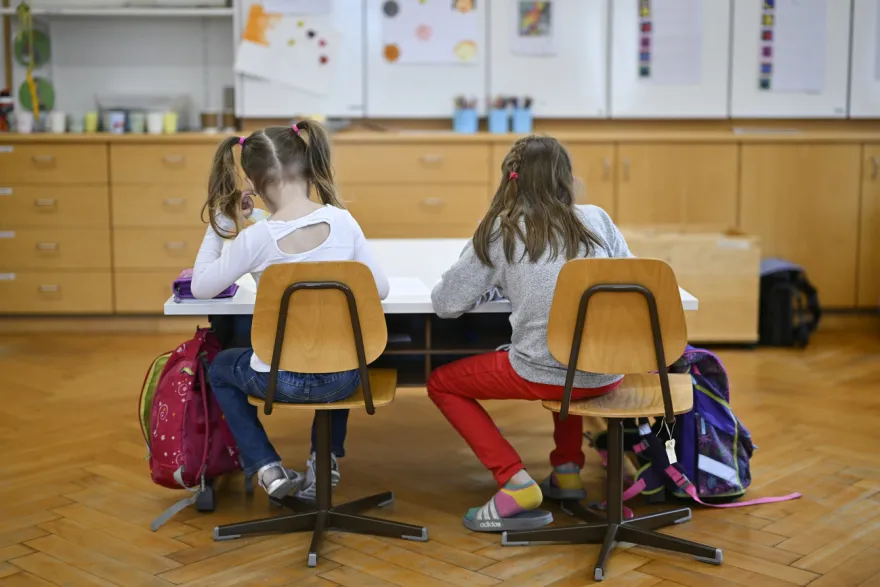
The Swiss education system is widely recognized for its high quality and cost efficiency, making it one of the most trusted public school systems in the world. Experts highlight its strong structure, long-term stability, and decentralized governance as key factors behind its success.

In Switzerland, children typically begin their education at the age of four or five. Public primary education is free and includes eleven years of compulsory schooling, starting with two years of kindergarten. This accessible system ensures equal opportunities for students across the country.

The system consistently performs well in international comparisons. Unlike many other nations, Switzerland has a relatively low percentage of private schools. This reflects the strong confidence citizens place in public education, which is seen as reliable and effective.

According to the Swiss Conference of Cantonal Ministers of Education (EDK), the system has benefited from long-term stability without major disruptions. This continuity has allowed steady improvements and consistent quality over time.

Public trust is also evident in national votes. Swiss citizens have repeatedly rejected proposals allowing unrestricted school choice. During compulsory education, most children attend assigned public schools, although families may opt for private institutions if needed.

Private schools in Switzerland mainly serve as a supplement rather than a replacement for public education. However, in certain areas such as the right bank of Lake Zurich, where many expatriates live, private schools—often offering English-language education—are more common.

A defining feature of the Swiss system is its decentralized structure. Each of the 26 cantons independently manages its education policies, allowing local adaptation and flexibility. This approach strengthens public acceptance and responsiveness to regional needs.

According to an OECD study, around 76% of Swiss citizens are satisfied with their education system—a level surpassed globally only by Finland. This strong approval reflects the system’s ability to balance quality, accessibility, and trust.

Swiss Schools Debate Phone Bans

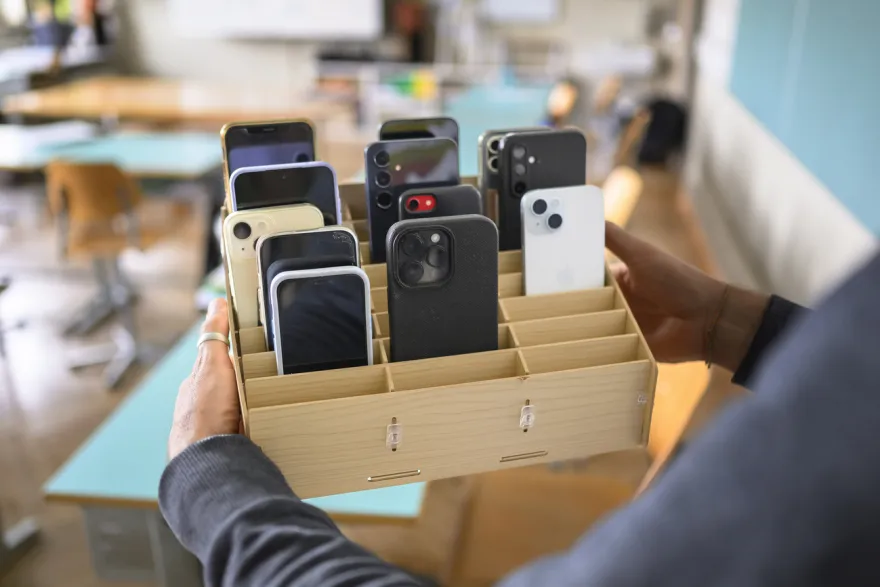
A growing number of Swiss cantons are introducing smartphone bans in schools, aiming to improve students’ concentration and social interaction. However, many teachers across Switzerland remain unconvinced that strict, blanket bans are the best solution.

In Switzerland, children begin school at the age of six. Studies show that by this age, around one in five already owns a mobile phone. By the end of primary school, this figure rises to four in five, and at lower secondary level, nearly 99% of students have access to a smartphone.

These statistics highlight how deeply mobile phones are integrated into the daily lives of children and teenagers in Switzerland. The debate now centers on whether these devices should be allowed within school environments.

While most schools already enforce internal rules on smartphone usage, Switzerland does not have a national law regulating phones in education. Instead, the system is governed at cantonal level, meaning each region and school can set its own policy.

As a result, the Swiss education system shows a fragmented approach, with different rules across municipalities and schools. Despite this, a clear trend is emerging: more schools are moving toward restricting or fully banning smartphones on school premises.

Teachers, however, argue that bans alone may not solve the underlying issues. Many believe that digital literacy education and responsible usage training may be more effective than strict prohibition.

G7 Summit: Geneva Border Controls Possible

Swiss authorities have warned that temporary border restrictions may be introduced in and around Geneva, Switzerland, ahead of the upcoming G7 Summit scheduled next month in Évian, France.

According to Geneva Police Chief Monica Bonfanti, who spoke to RTS media, several preventive security measures are being considered due to heightened risk factors linked to the international event.

Authorities stated that some of the 34 border crossing points between Geneva and France could be temporarily closed or subjected to stricter checks if the security situation worsens. Enhanced border inspections are also under consideration.

Officials are closely monitoring planned protest activities in Geneva during the summit period. Decisions are still being evaluated on whether demonstrations will be permitted, restricted, or fully prohibited depending on risk assessments.

Security agencies have also raised concerns over multiple threats, including potential cyberattacks and public disorder risks. As a result, Swiss police forces from various regions are expected to be deployed to reinforce security in Geneva.

Authorities emphasized that while strict security measures are common during major international events like the G7 Summit, the possibility of border-level restrictions highlights the seriousness of the current risk assessment. Travelers and residents are advised to stay alert and follow official updates.

Zug Tuning Car Raid: Police Seize Modified Vehicles

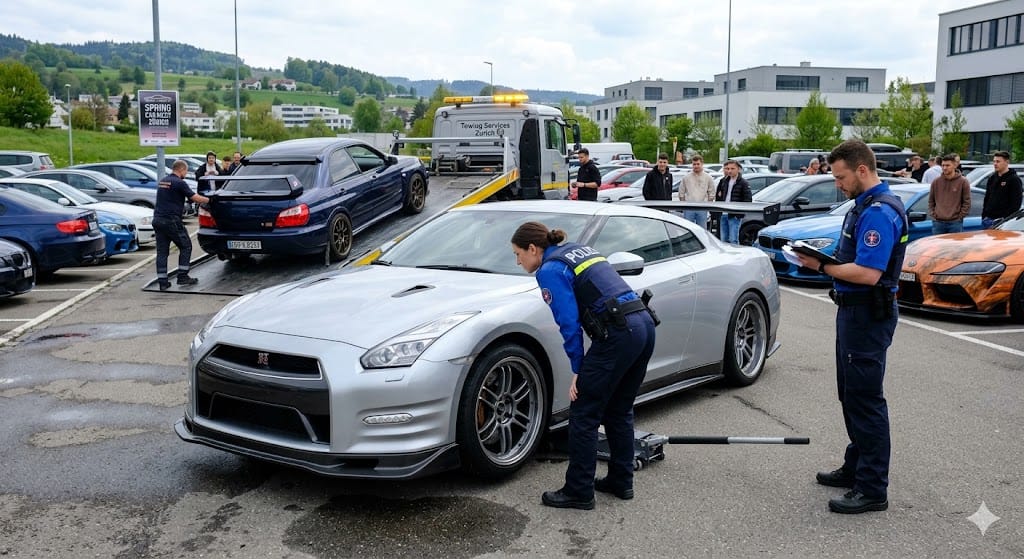
Police in the Canton of Zug, Switzerland, carried out a large-scale enforcement operation during a scheduled tuning car meet at Stierenmarkt, taking strict action against modified and non-compliant vehicles.

The event, which attracted car enthusiasts from multiple Swiss regions, was monitored by officers from the Kantonspolizei Zug in coordination with specialists from the Swiss road traffic authority. Authorities inspected around 30 vehicles to ensure compliance with Swiss road safety laws.

During the inspection, officials identified several serious violations. Four vehicles were immediately removed from circulation due to illegally modified exhaust systems that exceeded permitted noise and emission limits.

In addition, five high-performance sports cars were confiscated after suspicions of unauthorized ECU software tuning. These modifications are believed to have altered engine performance beyond legal Swiss standards.

Authorities also identified three more vehicles with general technical defects that made them unfit for road use. These cars were also taken off the road for further inspection.

Tamil Book “Vairakuduvai” Launch Event to Be Held in Bern, Switzerland

A special Tamil literary event is set to take place in Bern, where the new book titled “Vairakuduvai” will be officially launched. The event aims to promote Tamil literature and strengthen cultural ties within the Tamil community in Switzerland.

The book launch ceremony will be held on May 9, 2026, at 3:30 PM at the Tamil cultural venue located at Europaplatz B1, Bern Tamil Cultural Center. The event is expected to bring together writers, artists, and members of the Tamil diaspora.

The book “Vairakuduvai” has been authored by Th. Thilak (Kiri). The event will be presided over by Janani Karthigesu.

The program will begin with a welcome dance performance by students of Thirukoneshwara Nadanalaya. This will be followed by the welcome address delivered by Ms. Theelini Ketheeswaran.

A special blessing speech will be presented by Sivarusi Dharmalingam Sasi Kumar, adding cultural and spiritual significance to the event.

Several distinguished speakers, including Rasathurai Sivakanesan, Manimoli Kripakaran, and Aadhilakshmi Sivakumar, will deliver keynote addresses during the ceremony. The event will also include a felicitation segment honoring notable personalities for their contributions.

Cultural performances, including dance presentations led by Aadhilakshmi Sivakumar, will be featured as part of the celebrations. The event will conclude with a vote of thanks, marking the successful completion of the program.

Organizers have extended an invitation to Tamil literature enthusiasts, writers, and the general public to participate and support this important cultural and literary event, which aims to strengthen Tamil heritage and community bonds in Switzerland.