Swiss Initiative Pushes for Stronger Digital Security

A newly launched people’s initiative in Switzerland is seeking to strengthen the country’s digital security by introducing constitutional protections for cybersecurity, personal data, and digital infrastructure.

The initiative, titled “For the Digital Security of Switzerland,” was officially published in the Federal Gazette and has been launched by the Swiss Digital Pact association. Supporters argue that stronger legal safeguards are necessary to protect citizens, businesses, and public institutions from growing digital threats.

Under the proposal, a new Article 57a titled “Digital Security” would be added to the Swiss Federal Constitution. The amendment would explicitly require the federal government to establish effective security standards across Switzerland’s digital environment and ensure their implementation.

The initiative aims to create a safer digital space for the population, the economy, government institutions, and the vast amount of data generated and stored throughout the country. One of the key objectives is to improve the protection of personal information and strengthen resilience against cyberattacks.

As digital technologies become increasingly important in everyday life, concerns over data breaches, cybercrime, and online security continue to grow. Supporters believe constitutional-level protections would provide a stronger legal framework to address future digital challenges.

To move forward, the initiative must gather 100,000 valid signatures from Swiss voters by December 2, 2027. If enough signatures are collected, Swiss citizens will have the opportunity to vote on the proposal in a nationwide referendum.

The initiative reflects Switzerland’s broader ambition to position itself as a trusted and secure digital hub. Advocates argue that strengthening cybersecurity and data protection is essential for maintaining public confidence, supporting innovation, and protecting critical infrastructure in an increasingly connected world.

If approved, the proposal could become one of the most significant constitutional updates related to digital rights and cybersecurity in Switzerland’s history.


Meta Legal Action Silences Facebook Whistleblower at Hay Festival.

Facebook whistleblower Sarah Wynn-Williams was unable to speak during a panel discussion at the Hay Festival after legal warnings linked to ongoing action by Meta, the parent company of Facebook and Instagram.

Wynn-Williams, who authored the bestselling memoir Careless People, was scheduled to appear in conversation with investigative journalist Carole Cadwalladr and academic Tim Wu. However, she remained silent on stage throughout the hour-long event, following legal advice that speaking could risk further sanctions.

Her book details allegations about her experience working at Facebook, including claims related to internal company culture, political influence, and concerns about the platform’s impact on young users. Meta has strongly disputed the claims made in the publication.

During the session, Wynn-Williams was physically present but unable to speak, respond, or even gesture, as she faced restrictions stemming from an emergency legal order obtained by Meta. The order reportedly prohibits her from publicly discussing certain aspects of her book and imposes significant financial penalties for breaches.

The unusual situation drew strong reactions from the audience and speakers. Carole Cadwalladr described the moment as unprecedented, while audience members later gave Wynn-Williams a standing ovation in a show of support.

Festival organisers also referred to the moment as an act of solidarity with someone they described as being silenced under legal pressure. The event has since sparked wider debate about free speech, corporate power, and the limits of legal action in restricting public discussion.

Meta has maintained that the legal measures are necessary and continues to challenge the claims made in the whistleblower’s book through legal channels. The case highlights ongoing tensions between large technology companies and former employees who publish critical accounts of their internal operations.

As discussions around tech accountability grow, the incident at the Hay Festival has become a focal point in the broader debate over transparency, whistleblower protections, and freedom of expression in the digital age.

Google Engineer Charged Over Polymarket Bets.

US federal prosecutors have charged a Google software engineer with allegedly using confidential company data to make more than $1.2 million through prediction market bets on Polymarket.

According to the US Department of Justice, Michele Spagnuolo allegedly accessed internal Google search trend information before it became public and used the data to place profitable bets under the online alias “AlphaRaccoon.”

Prosecutors say Spagnuolo used insider knowledge connected to Google’s annual “Year in Search” rankings. Authorities claim he placed high-risk bets on unexpected names, including musician D4vd and rapper Kendrick Lamar, before official search trend results were released.

The US Department of Justice charged him with commodities fraud, wire fraud, and money laundering. Officials say insider trading threatens the integrity of emerging prediction markets and financial systems.

The case highlights growing concerns surrounding the rapid expansion of prediction market platforms like Polymarket. Regulators increasingly worry that confidential information could be exploited for gambling-style financial gains.

Google confirmed that using confidential internal data for betting violates company policy and stated that the employee has been placed on leave while investigations continue.

The complaint also states that Spagnuolo currently resides in Switzerland, adding international attention to the case. Federal prosecutors in New York say they will continue targeting corporate insiders who misuse sensitive information for personal profit.

Can Dumbphones Replace Smartphones Again?

A growing digital detox movement is encouraging people to abandon smartphones and return to simplified “dumbphones” in search of better mental health and improved focus.

The experiment, called Month Offline (MO), challenged participants in New York to spend an entire month without smartphones. Instead, they used upgraded flip phones created by dumb.co that still support essential services like WhatsApp, Google Maps, Uber, and two-factor authentication apps.

Participants joined the program hoping to reduce screen addiction and reclaim time lost to endless scrolling. Many also wanted to disconnect from social media pressure and constant digital distractions.

Unlike traditional flip phones from the past, these modern dumbphones combine minimal technology with practical everyday tools. Organisers say the goal is not to eliminate technology completely, but to remove unnecessary digital overload.

Danny Hogenkamp says the company developed the idea after noticing how device-free meetings improved creativity and productivity in his workplace following the Covid-19 pandemic.

The movement reflects a wider trend toward “digital minimalism,” where users intentionally reduce smartphone use to improve sleep, concentration, and emotional wellbeing. Studies increasingly connect lower screen time with better quality of life for both adults and children.

Critics question whether companies promoting “offline lifestyles” while selling modified devices truly support complete disconnection. However, supporters argue that balanced technology use is more realistic than fully abandoning digital tools in modern society.

As smartphone fatigue grows worldwide, the dumbphone movement continues gaining attention among younger users seeking healthier relationships with technology.

Samsung Chip Workers Set for £310K AI Bonuses.

Samsung Electronics has agreed to a major profit-sharing deal that will give memory chip workers average bonuses of around £310,000. The agreement comes as the global AI boom sharply increases demand for semiconductor chips.

The company will allocate 10.5% of operating profits from its semiconductor division directly to employee bonuses. Workers voted in favor of the deal, helping avoid a planned strike involving more than 62,000 employees.

Samsung’s chip division plays a critical role in global supply chains and accounts for a large share of South Korea’s exports. The agreement prevents possible disruptions that could have affected worldwide chip availability.

The AI industry has significantly increased demand for memory chips used in data centers. As a result, companies like Samsung, SK Hynix, and Micron have seen strong profit growth, pushing them into the $1 trillion market valuation club.

However, internal tensions may rise within Samsung, as employees in other divisions receive much smaller bonuses compared to semiconductor staff. Legal and shareholder challenges are also being considered.

Industry experts say the deal reflects a broader shift in the “AI trade,” where memory chips are becoming just as important as processors in powering artificial intelligence systems.

NASA Chooses Blue Origin for First Uncrewed Moon Mission.

NASA has selected Blue Origin to lead its first uncrewed lunar mission as part of an ambitious plan to build a $20 billion moon base.

The mission is part of NASA’s broader Artemis program, which aims to return humans to the Moon and establish a long-term lunar presence. NASA confirmed that three uncrewed lunar missions will be launched in 2026 to test critical landing systems, cargo delivery, and surface operations.

Blue Origin will launch its “Endurance” cargo lander, carrying scientific payloads to the Moon’s south pole region. The mission will focus on demonstrating advanced landing and delivery capabilities that support future human exploration.

NASA administrator Jared Isaacman stated that this step marks a new era of lunar development, emphasizing a gradual and tested approach similar to NASA’s early space programs in the 1960s.

The decision places Blue Origin ahead of SpaceX for the first mission, although both companies will continue competing for future Artemis landing contracts.

NASA confirmed that this mission is part of a larger plan involving more than a dozen lunar launches in the coming years, building the foundation for a permanent lunar base.

AI Brings Mixed Impact to Swiss Company Workforce.

Artificial intelligence is rapidly transforming workplaces across Switzerland, but its overall impact on jobs remains uncertain. A new survey conducted by EY reveals that Swiss companies are increasingly adopting AI technologies while still evaluating their long-term effects on employees and the labour market.

According to the survey, around 7% of Swiss companies have already reduced jobs because of artificial intelligence. In addition, 11% reported that vacant positions were not replaced due to the growing use of AI systems and automation tools.

At the same time, artificial intelligence is also creating new career opportunities. Around 18% of respondents stated that their companies had introduced additional positions linked to AI development and implementation. These new roles include specialists in data science, AI engineering, automation systems, and digital transformation.

The report highlights that many organisations are still in the early stages of AI adoption. A significant 42% of respondents said they could not yet clearly assess the overall impact of AI on their workforce. Researchers believe this reflects the ongoing transition as companies experiment with new technologies and workplace models.

The use of AI in Swiss companies has become highly widespread. Only 3% of surveyed employees said the use of artificial intelligence was prohibited within their workplace. Most companies now use AI tools pragmatically to support everyday business tasks.

Approximately 72% of respondents said they mainly use AI as a productivity assistant in daily work activities. Employees commonly rely on AI for brainstorming ideas, creating first drafts, organising information, and improving workflow efficiency.

In addition, 47% of participants reported that they already trust artificial intelligence in selected business applications. This growing confidence suggests that AI integration is becoming more accepted across multiple industries in Switzerland.

The survey included responses from 604 employees working in Swiss companies of different sizes, providing insight into how businesses are adapting to the rapidly changing digital economy.

Experts believe Switzerland’s labour market may continue evolving as AI technology develops further, balancing concerns over automation with opportunities for innovation and new digital professions.

Scotland ‘Green’ Data Centres Raise AI Emissions Concerns.

Scotland’s policy promoting “green datacentres” is facing criticism after new analysis raised concerns that it ignores the rising carbon emissions linked to artificial intelligence workloads.

A report by Action to Protect Rural Scotland (APRS) warns that the definition of “green datacentres” in current policy is outdated and does not reflect the rapid growth of AI technologies such as large-scale models and tools like ChatGPT.

The Scottish government has positioned datacentres as a key part of its economic strategy, supported by renewable energy availability and major investment plans across the country. However, critics argue that the current framework fails to fully account for real-world emissions.

According to APRS, more than a dozen datacentre projects are seeking approval in Scotland, including large AI-focused developments near Glasgow. Collectively, these facilities could consume over 6.2GW of electricity—surpassing Scotland’s peak winter energy demand.

The concern is that many projects may label themselves as “green” despite relying on diesel backup generators and potentially shifting to gas-powered energy due to delays in grid connections.

Officials also highlight that the current planning framework (NPF4) was developed before the explosion of generative AI demand and has not been updated to reflect today’s energy-intensive computing needs.

Environmental campaigners argue that this gap could allow high-emission infrastructure to receive favourable approval under “green” classifications, potentially undermining Scotland’s net-zero targets.

The Scottish government maintains that it aims to attract sustainable investment while supporting economic growth and aligning with climate goals.

Maextro S800 Features Self-Parking Tech.

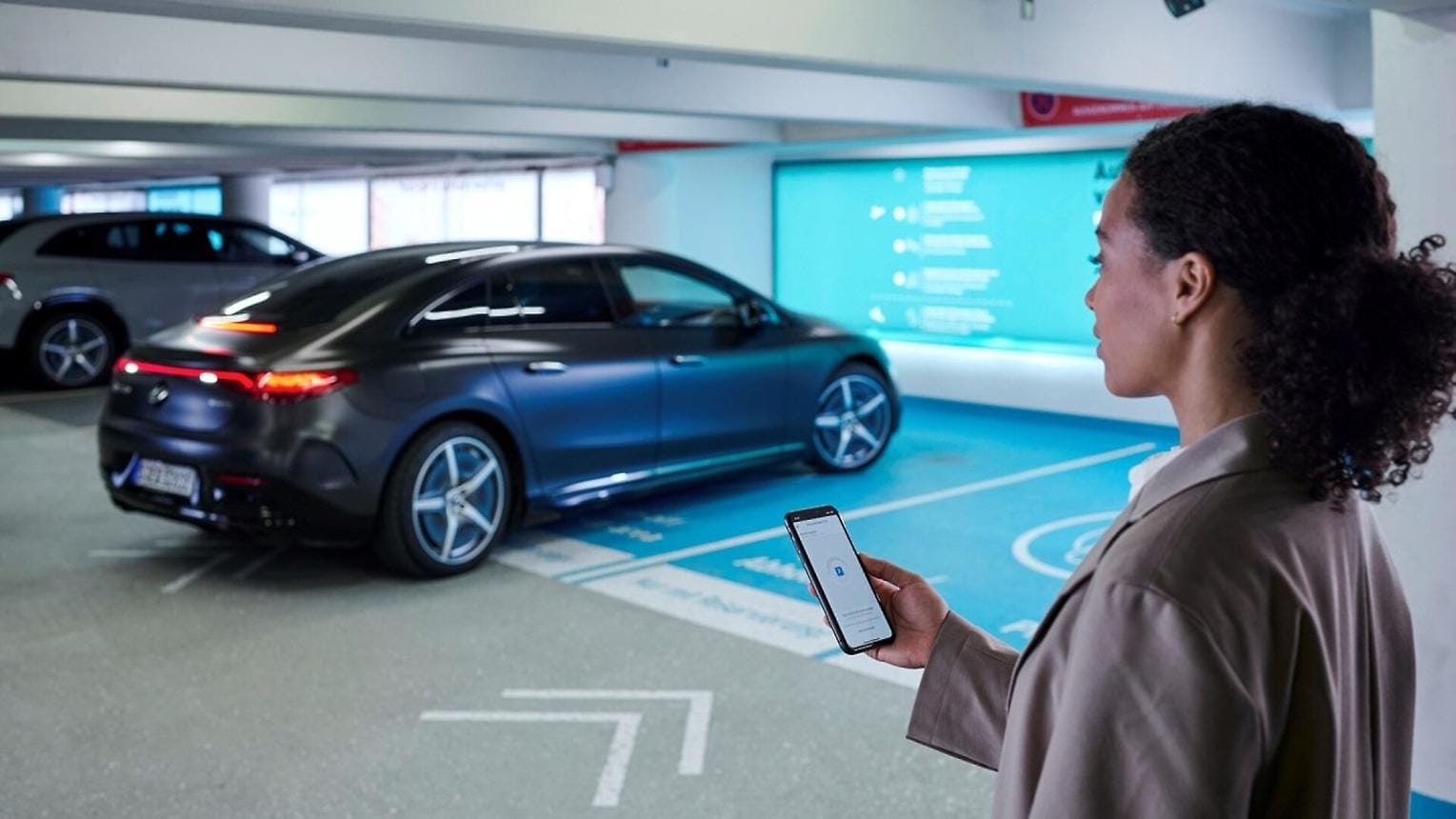
The Maextro S800 introduces advanced self-parking technology powered by Huawei’s ADS (Advanced Driving System), making parking safer and more convenient for drivers. The system allows the vehicle to perform fully automatic parking without requiring driver input, using a combination of sensors, cameras, radar, and LiDAR to accurately detect available parking spaces and surrounding obstacles.

One of its key features is remote parking, which enables drivers to control the vehicle through a smartphone or key fob. This is especially useful in tight parking areas where opening doors may be difficult. The car can also move forward or backward autonomously to adjust its position or exit narrow spaces using a summon function.

In addition, the Maextro S800 supports intelligent parking memory, allowing it to recognize previously used parking spots and automatically park itself in familiar locations. It can handle multiple parking types, including parallel, perpendicular, and angled spaces with high precision.

The AI system continuously analyzes the environment in real time, making decisions on steering, braking, and acceleration. This reduces the risk of human error and enhances safety in complex parking scenarios. Overall, the Maextro S800’s self-parking technology represents a major step toward fully autonomous driving, combining convenience, innovation, and smart mobility in one premium electric vehicle.

Ferrari Unveils First Full Electric Luxury Sports Car “Luce” in Rome.

Italian luxury sports car manufacturer Ferrari has officially entered the electric vehicle era by unveiling its first fully electric model, named “Luce,” in Rome.

The name “Luce,” meaning “light” in Italian, represents a new direction for the brand as it shifts toward sustainable high-performance mobility while preserving its luxury identity.

The new electric supercar can reach a top speed of 193 mph (310 km/h), positioning it among the most powerful electric performance vehicles ever introduced in the luxury segment. The vehicle is priced at approximately €500,000.

The design of Luce was developed with contributions from Jony Ive through his design studio LoveFrom, adding a strong focus on minimalist luxury and futuristic aesthetics.

Under the leadership of CEO Benedetto Vigna, Ferrari has invested heavily in its new “e-building” facility in Maranello to support the production of electric vehicles.

Ferrari has spent the last decade developing hybrid technologies, and the launch of Luce marks its bold transition into full electrification. However, industry experts continue to debate whether electric powertrains can fully replicate the emotional driving experience of traditional V12 engines.

Competitors such as Lamborghini have delayed their own full EV plans until 2030, while Ferrari has also postponed its second EV model to 2028, reflecting the cautious approach taken by luxury sports car manufacturers.

Despite this, Luce is not designed purely for mass sales but rather to redefine the concept of “luxury electric performance” in the global automotive market.

Meanwhile, Chinese EV leader BYD continues to expand aggressively in the electric vehicle sector, increasing global competition.

Deliveries of the Ferrari Luce are expected to begin in October 2026, marking a significant milestone in the company’s electrification journey.