Hantavirus Case Treated at Zurich University Hospital.

A man infected with hantavirus is currently receiving treatment at the Zurich University Hospital, according to the Swiss government. Authorities emphasized that there is no danger to the general population.

The patient was previously a passenger aboard the cruise ship MV Hondius, where several hantavirus cases were reported during a voyage in the Atlantic Ocean.

According to the Federal Office of Public Health, the man returned to Switzerland at the end of April after traveling in South America with his wife. He later developed symptoms and was immediately isolated upon arrival at Zurich University Hospital.

Laboratory testing conducted at the reference facility at Geneva University Hospital confirmed infection with the virus. His wife has not shown symptoms but has entered precautionary self-isolation.

Health authorities are currently investigating whether the patient had contact with other individuals after returning to Switzerland.

Officials stated that the risk to the Swiss population remains low. The European variant of hantavirus is typically transmitted through contact with infected rodents, while human-to-human transmission is extremely rare and mainly associated with the Andes virus strain.

The FOPH noted that hantavirus infections are uncommon in Switzerland, with only zero to six cases reported annually in recent years, most of which are linked to infections acquired abroad.

Meanwhile, the MV Hondius cruise ship, operated as part of luxury expedition voyages, has been linked to a wider outbreak affecting nearly 150 passengers and crew from multiple countries. Several deaths have been reported, and some patients are receiving intensive care treatment internationally.

The outbreak developed during a long expedition route from South America toward Antarctica and across the South Atlantic, raising concerns among global health authorities, including the World Health Organization, which continues to assess the situation.

Nestlé Confirms Nespresso Production Will Stay in Switzerland.

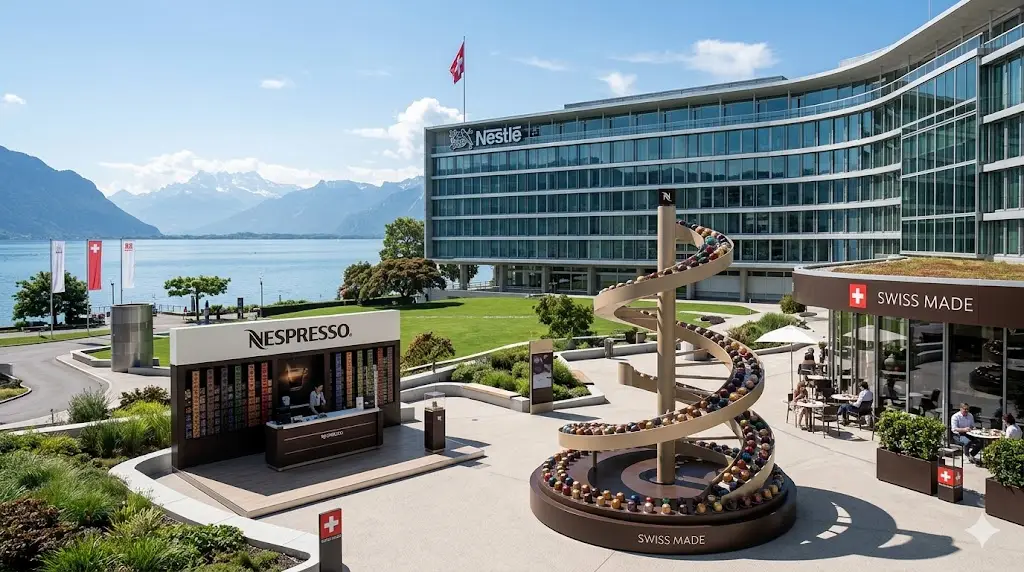
Nestlé has confirmed that it will continue producing Nespresso capsules in Switzerland despite growing concerns over United States import tariffs.

Speaking to CH Media, Nestlé CEO Philipp Navratil stated that the company has no plans to move Nespresso capsule production outside Switzerland.

Nestlé, headquartered in Vevey, is currently reviewing options related to possible reimbursement of US customs duties. However, the company stressed that relocating manufacturing operations is not under consideration.

Navratil explained that Nestlé remains focused on long-term business stability and adapting to changing global market conditions rather than reacting to short-term political pressures.

Commenting on tariffs and trade barriers, he emphasized that the company continues to invest despite the additional costs created by international trade tensions.

The decision is seen as a positive signal for Switzerland’s manufacturing sector and workforce, particularly as global companies increasingly review supply chains and production locations due to economic uncertainty.

Nespresso remains one of Nestlé’s most recognized premium brands worldwide, and Switzerland continues to play a central role in the company’s coffee production and innovation strategy.

Industry observers note that maintaining production in Switzerland also reinforces the premium image and “Swiss-made” identity associated with Nespresso products globally.

Swiss Government Warns Food Waste Remains Too High.

The Switzerland government has warned that food waste levels across the country remain far too high, despite ongoing national efforts to reduce waste by 2030.

In an interim report released on Wednesday, authorities revealed that food waste declined by only around 5% between 2017 and 2024, falling well short of the targeted 25% reduction by 2025.

Switzerland launched its national action plan against food waste in 2022, aiming to cut avoidable food losses in half by the year 2030. While some sectors have shown measurable improvement, officials say overall progress remains too slow.

The retail industry achieved the strongest results, reducing food waste by approximately 20% through improved inventory management, discount systems, and food redistribution initiatives.

However, Swiss households continue to lag behind, remaining one of the biggest contributors to unnecessary food waste. Authorities say consumer behavior, over-purchasing, and poor meal planning remain major challenges.

The government emphasized that reducing food waste is essential for environmental protection, resource conservation, and climate goals, as discarded food contributes significantly to greenhouse gas emissions.

Officials are now calling for stronger public awareness campaigns and greater cooperation between households, businesses, and food service sectors to accelerate progress toward the 2030 target.

Food waste reduction has become a major sustainability issue across Europe as governments seek to improve resource efficiency and reduce environmental impact.

Switzerland Reintroduces French Border Checks for G7 Summit

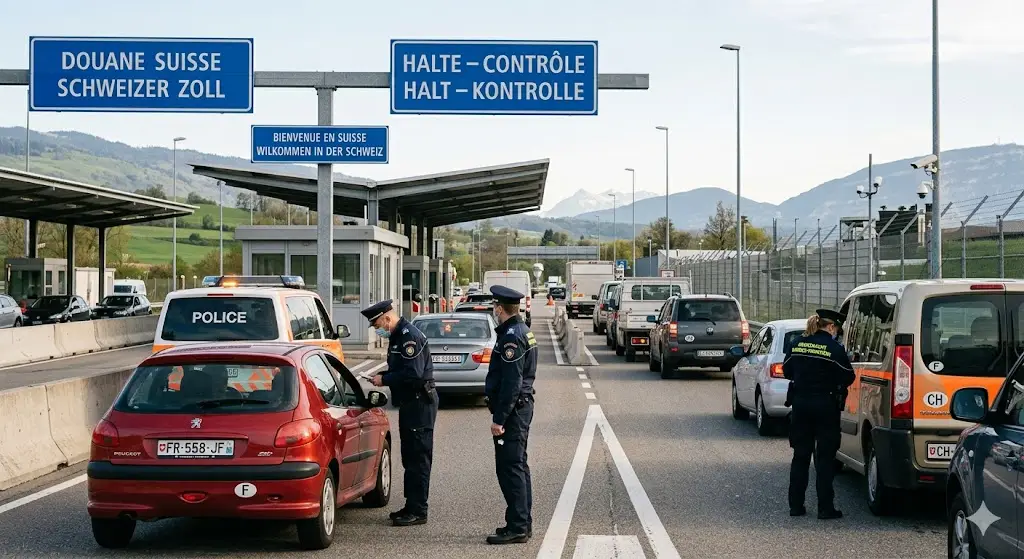
Switzerland will temporarily reintroduce border checks along parts of its border with France ahead of the upcoming G7 Summit 2026 in Évian.

The Swiss government confirmed on Wednesday that the temporary controls will remain in effect from June 10 to June 19 as part of heightened security measures surrounding the summit.

Although the G7 meeting will take place in Évian, Swiss authorities stated that nearby regions including Geneva, Lausanne, and the wider Lake Geneva area face increased security risks during the international gathering.

Officials noted that previous G7 summits have sometimes resulted in violent protests, acts of sabotage, public disorder, and property damage. Authorities also highlighted concerns linked to the current geopolitical climate and the large concentration of international organizations based in Geneva.

The request to temporarily restore border controls was submitted by the Canton of Geneva, reflecting growing concerns about public safety and regional security during the summit period.

The G7 Summit is scheduled to take place from June 15 to June 17, bringing together leaders from major industrialized nations to discuss global political, economic, and security issues.

Swiss authorities are expected to increase police presence and strengthen monitoring around border crossings, transportation hubs, and sensitive areas during the event.

Swiss Luxury Property Prices Continue to Rise

Luxury real estate prices in Switzerland continued to rise in 2025, although the pace of growth has started to slow, according to a new report by UBS.

The bank’s latest “UBS Luxury Property Focus 2026” report shows that Swiss luxury properties increased in value by an average of 3% over the past year. Despite the rise, growth in the luxury market was lower than the overall property market.

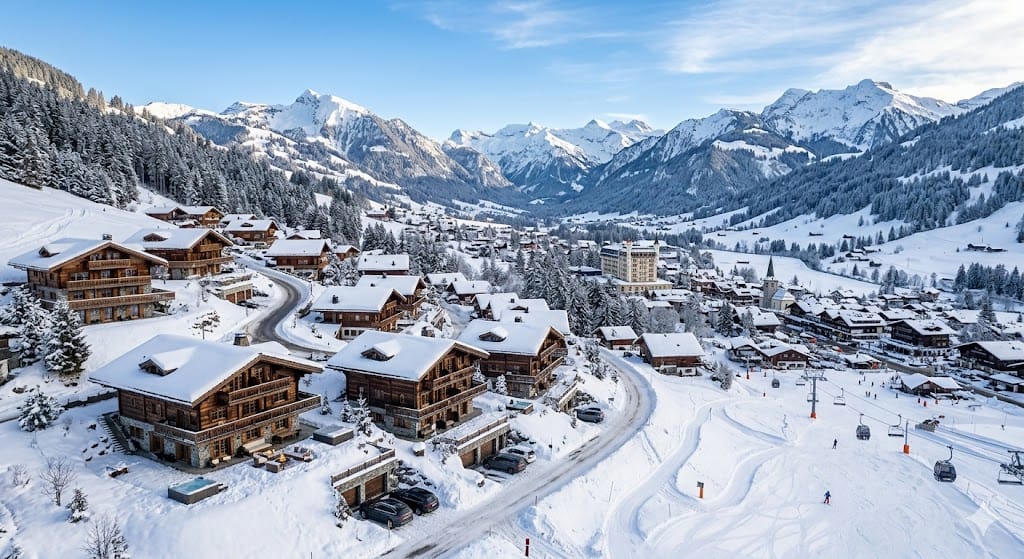
Luxury homes in mountain resort regions remained especially popular among wealthy buyers, particularly international investors seeking premium alpine properties.

According to the report, luxury property prices in Swiss mountain destinations climbed by around 6% last year, driven largely by demand from affluent foreign buyers.

St. Moritz remained the most expensive luxury property market in Switzerland, with average prices reaching approximately CHF52,000 per square metre.

It was followed by Gstaad and Verbier, where luxury real estate prices averaged around CHF45,000 per square metre.

UBS analysts noted that while demand for premium Swiss real estate remains strong, the market may soon stabilize as price growth slows and affordability pressures increase.

Switzerland’s political stability, secure economy, and attractive alpine lifestyle continue to make the country one of Europe’s most desirable destinations for high-end property investment.

Switzerland remains one of Europe’s most sought-after locations for luxury real estate investment due to its political stability, robust economy, and appealing alpine lifestyle.

Switzerland’s political stability, secure economy, and attractive alpine lifestyle continue to make the country one of Europe’s most desirable destinations for high-end property investment.

Switzerland Warns of Worsening Security Situation

The Switzerland government has warned that the country’s security situation has deteriorated significantly over the past year amid rising geopolitical tensions across Europe and the Middle East.

In its latest national security report released on Wednesday, Swiss authorities stated that growing international instability is increasing pressure on Switzerland to contribute more actively to European security efforts.

The report highlights that Switzerland is being directly affected by Russia’s hybrid warfare strategies, including cyber threats, disinformation campaigns, and espionage activities. Officials also noted that the ongoing conflict in the Middle East continues to create broader security risks and political instability.

According to the government, global geopolitical developments are now having a direct impact on Switzerland’s internal security environment.

Authorities warned that the terrorist threat remains heavily influenced by jihadist movements, while violent extremism from both far-left and far-right groups continues to pose risks inside Europe.

Swiss President Meets Pope Leo XIV at Vatican.

Guy Parmelin met with Pope Leo XIV at the Vatican on Wednesday morning ahead of the swearing-in ceremony of the Pontifical Swiss Guard.

During the meeting, both leaders discussed plans for the construction of new barracks for the Swiss Guard within the Vatican. The project is expected to begin next year as part of preparations for the 500th anniversary of the historic Sack of Rome on May 6, 1527.

The anniversary commemorates the sacrifice of 147 Swiss Guards who lost their lives while defending Pope Clement VII against the forces of Emperor Charles V during the attack on Rome.

President Parmelin emphasized the symbolic importance of beginning construction work on May 6, aligning the project with the historic anniversary celebrations.

However, the Vatican is still awaiting approval from UNESCO before major construction can proceed. Since the Vatican is a UNESCO-listed heritage site, international authorization is required for significant infrastructure work.

Parmelin stated that Switzerland hopes to cooperate closely with the Vatican in preparing for the anniversary events, describing them as highly significant for both the Catholic Church and Switzerland’s national heritage.

79-Year-Old Man Loses CHF 40,000 in Romance Scam

A 79-year-old retired man in Winterthur has lost more than CHF 40,000 after becoming the victim of a suspected romance scam, according to local police.

The Stadtpolizei Winterthur confirmed the arrest of two suspects linked to the case. Investigators say the victim became acquainted earlier this year with two women from Romania, who later visited him at his home.

Authorities stated that the relationship quickly developed into an emotionally close and romantic connection. During this period, the suspects allegedly requested financial support by claiming to face urgent personal problems, including housing debt, medical expenses for a family member, and notary fees.

Over several meetings, the elderly victim reportedly transferred or handed over more than CHF 40,000 to the individuals involved.

The man later became suspicious and filed a complaint with Winterthur police, prompting a detailed investigation.

On April 24, police arrested a 29-year-old woman with German-Romanian dual citizenship and a 36-year-old Turkish man while they allegedly attempted to collect an additional CHF 6,500 from the victim.

Both suspects are currently under investigation for repeated fraud offences and have been handed over to prosecutors.

Switzerland to Cover Hospital Bills for Crans-Montana Fire Victims

The government of Switzerland has confirmed that it will cover hospital treatment costs for Italian victims of the Crans-Montana fire, ensuring that families will no longer receive medical billing statements.

Swiss President Guy Parmelin announced the decision during an official visit to Rome, where he met Italian President Sergio Mattarella and Foreign Minister Antonio Tajani.

The discussions were described as open and constructive, focusing on improving cross-border cooperation and addressing concerns related to emergency medical billing for disaster victims.

Parmelin confirmed that Switzerland will handle any treatment costs not covered by insurance through its national victim support system. He also stated that the practice of sending hospital bill copies to victims’ families will be discontinued to prevent further distress.

Authorities from both countries will continue close coordination to ensure fair and compassionate handling of such cases in the future. Swiss officials emphasized that the priority is to provide support and dignity to those affected by the tragedy.

The decision comes as part of broader efforts to improve humanitarian response protocols in cross-border emergencies. Parmelin also noted that the Swiss Federal Council will align its procedures with existing legal frameworks while ensuring better communication between authorities.

During his visit, the Swiss President also attended preparations for the swearing-in ceremony of the Swiss Guard at the Vatican and is expected to meet Pope Leo XIV.

Swiss Travel Safety Concerns Rise in 2026

A new survey reveals that people in Switzerland are becoming increasingly concerned about safety when travelling abroad, even as demand for holidays remains strong.

Despite growing concerns, travel demand continues to recover. The proportion of people reducing or avoiding travel has dropped from 61% last year to 49%, indicating that a majority of Swiss residents still plan to travel abroad.

The survey highlights that political instability and global conflicts are the main factors influencing travel decisions. Around two-thirds of respondents cited these risks, leading to a noticeable shift toward European destinations, while interest in North America has declined.

Travel habits are also evolving. The preference for private cars has decreased significantly—from 67% two years ago to 51% today. Cars are now almost equally preferred alongside airplanes (51%) and trains (50%), reflecting a more balanced approach to transportation.

The study was conducted between February and March, covering more than 1,000 participants across Switzerland’s German-, French-, and Italian-speaking regions, along with additional TCS members.