Swiss Cantonal Banks Hold More Capital Than Required

Swiss cantonal banks are holding substantially more equity capital than required by law, according to a new study by Zurich-based Independent Credit View (I-CV). The findings highlight the strong financial position of these regional institutions, even as public attention remains largely focused on major banks such as UBS.

The study reveals that Switzerland’s 24 cantonal banks have continued to expand steadily, with total assets growing by more than 3% annually. Combined, these banks now manage total assets worth approximately CHF839 billion, surpassing the CHF501 billion held by UBS’s Swiss business operations.

A bank’s total assets include customer deposits, investments, mortgages, and loans. As these figures increase, banks are generally expected to maintain sufficient capital reserves to absorb potential losses and ensure financial stability. According to the report, cantonal banks are maintaining capital buffers significantly above the minimum legal requirements.

Financial experts view these additional reserves as a sign of strength and resilience. Strong capital levels help banks withstand economic downturns, market volatility, and unexpected financial shocks. They also provide greater confidence for customers, investors, and regulators.

Despite their growing size and importance within the Swiss financial system, cantonal banks often receive less public scrutiny than global banking giants such as UBS. However, their collective balance sheet now represents a major component of Switzerland’s banking sector.

The report suggests that while the debate around banking regulations frequently focuses on systemically important institutions, cantonal banks have quietly built substantial financial safeguards over many years.

Analysts note that maintaining higher-than-required capital levels may help support long-term stability, particularly during periods of economic uncertainty. As Switzerland continues to strengthen its financial sector, cantonal banks remain a key pillar of the country’s banking and lending system.

The study also highlights the important role these institutions play in regional economic development by providing mortgages, loans, and financial services to households and businesses across Switzerland.

Lady O Becomes First Swiss Winner of The Voice France.

Swiss singer Lady O has made history by becoming the first Swiss artist to win the French version of The Voice. The 19-year-old performer from the canton of Vaud secured victory in the 2026 edition of the popular television singing competition, broadcast on French channel TF1.

Coached by renowned French musician Florent Pagny, Lady O impressed both judges and viewers throughout the competition with her powerful vocals and unique artistic style. Her victory marks a significant achievement for Swiss music on an international stage.

During the grand finale, Lady O opened the show with a memorable performance of Tina Arena’s “Aller Plus Haut.” She later captivated the audience with her original song “Little Me,” showcasing her talent not only as a singer but also as a songwriter and producer.

The young artist also delivered impressive renditions of Billie Eilish’s “The Greatest” and Ginette Reno’s “Un peu plus haut, un peu plus loin,” further demonstrating her versatility and emotional depth as a performer.

Known off-stage as Oriane, Lady O comes from a family of winemakers in canton Vaud. Despite never receiving formal musical training, she developed her skills independently from a young age. Inspired by her father, a bassist, and her brother, a drummer, she built a self-taught career rooted in creativity and passion.

Today, Lady O writes, composes, and produces her own music, making her one of the most promising young talents in the French-speaking music world. Her victory on The Voice France is expected to open new opportunities and bring international recognition to the rising Swiss star.

The achievement has been widely celebrated across Switzerland, with many praising her dedication, originality, and remarkable journey from a self-taught musician to a national and international success story.

Swiss Lakes Hit Record High Temperatures in May.

Switzerland’s lakes are experiencing unprecedented warmth, with many recording their highest-ever temperatures for the month of May. According to recent reports, 26 of the country’s 32 largest lakes have reached record surface temperatures, highlighting the growing impact of warmer weather and climate change.

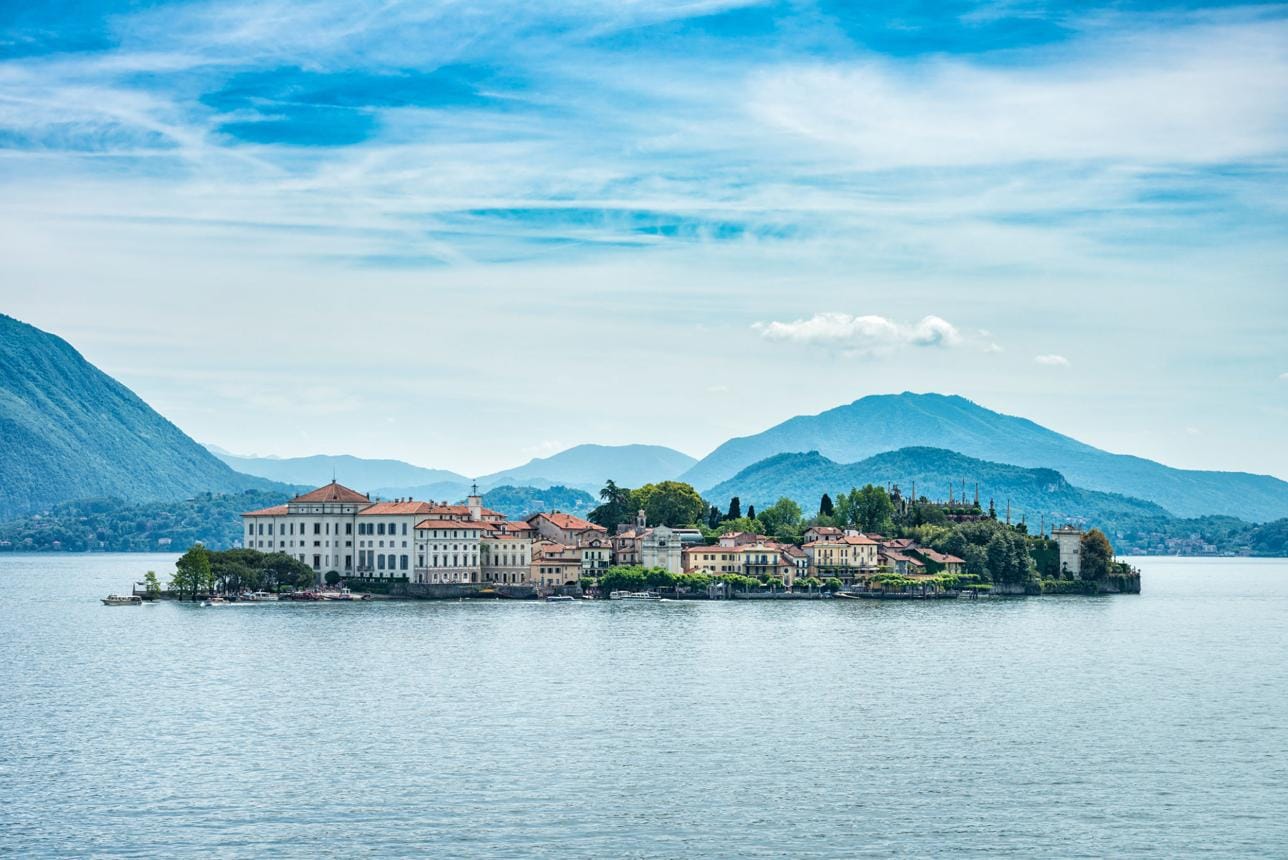
Several well-known lakes, including Lake Zurich, Lake Geneva, Lake Maggiore, Lake Lucerne, and Lake Brienz, have all recorded unusually high temperatures. On Saturday, many lakes exceeded 20°C, a level typically associated with warmer summer periods rather than late spring.

Lake Murten recorded the highest temperature at 24.6°C, followed by Lake Geneva at 23.6°C. Lake Zurich reached 22.4°C, while Lake Maggiore measured 21.8°C. Lake Lucerne and Lake Biel also exceeded seasonal averages, both recording temperatures of 20.3°C.

Scientists warn that warmer lake water can create environmental and health challenges. Higher temperatures encourage the growth of blue-green algae, bacteria, and cercaria, commonly known as duck fleas. These microscopic larvae can trigger allergic skin reactions and severe itching in swimmers.

Researchers from the Swiss Federal Institute of Aquatic Science and Technology (Eawag) believe that duck fleas could become more widespread in Swiss lakes during future summers as water temperatures continue to rise.

The warming trend also threatens aquatic wildlife. Cold-water fish species such as trout and char require oxygen-rich environments to survive. Experts explain that prolonged water temperatures above 20°C can become dangerous for these species, affecting their growth, health, and survival rates.

Climate specialists warn that rising lake temperatures are placing increasing pressure on freshwater ecosystems across Switzerland. As extreme weather patterns become more frequent, scientists are closely monitoring lake conditions and their impact on biodiversity.

The record-breaking temperatures serve as another reminder of the environmental challenges linked to a warming climate and the need for continued conservation efforts to protect Switzerland’s natural resources.

Thousands Rally Against Rising Rents in Zurich.

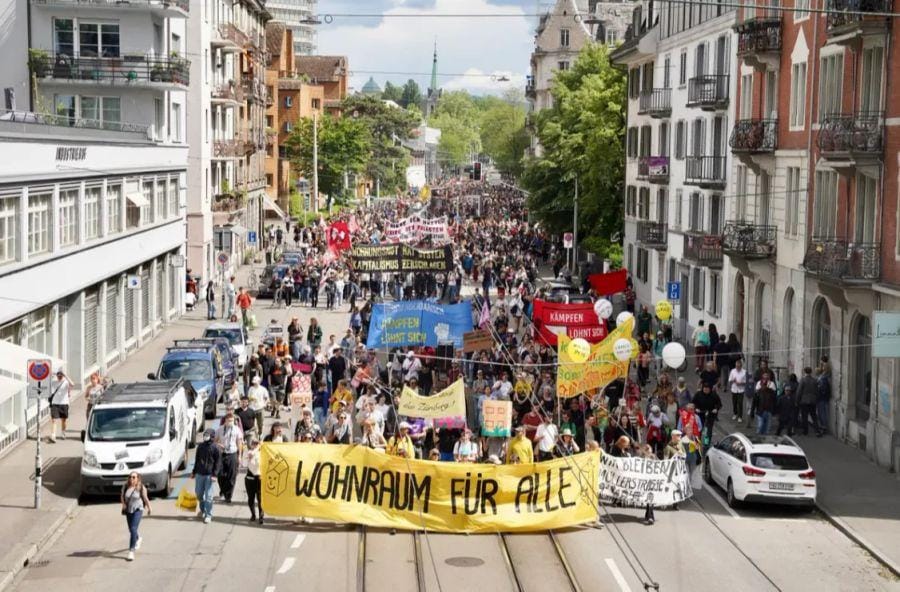
Thousands of people took to the streets of Zurich on Saturday to protest against rising housing costs, gentrification, and the growing shortage of affordable homes. Organisers estimated that around 2,500 demonstrators joined the authorised march, calling attention to what they described as a city increasingly becoming unaffordable for ordinary residents.

The demonstration began at Hardplatz and moved through several key areas of Zurich, including Hardbrücke, Escher-Wyss-Platz, Limmatplatz, and Langstrasse before ending at Kasernenwiese. Protesters carried banners and flags displaying messages such as “Housing is a basic right for all” and criticism of luxury real estate developments that many believe are driving up living costs.

A symbolic float featuring an “Immo-Hai” or “real-estate shark” led the march, representing concerns about property speculation and profit-driven housing policies. Throughout the demonstration, speakers highlighted the increasing rental prices in different neighbourhoods and accused landlords and investors of prioritising profits over affordable housing.

Participants also expressed concern about lease terminations and renovation projects that often result in significantly higher rents. Organisers argued that long-term residents are being forced out of their communities as neighbourhoods undergo rapid transformation and become increasingly expensive.

The protest coalition, made up of local groups, residents, and housing activists, criticised both property companies and political leaders. They claimed that despite years of public debate and promises from local authorities, affordable housing remains out of reach for many Zurich residents.

Zurich police maintained a strong presence throughout the event, while traffic disruptions affected several roads and public transport routes. Despite isolated incidents involving graffiti, pyrotechnics, and water balloons, the demonstration remained largely focused on raising awareness of the city’s housing challenges.

The protest reflects growing concerns across Switzerland’s largest city, where rising rents and limited housing availability continue to fuel public debate about the future of affordable urban living.