Swiss Luxury Property Prices Continue to Rise

Luxury real estate prices in Switzerland continued to rise in 2025, although the pace of growth has started to slow, according to a new report by UBS.

The bank’s latest “UBS Luxury Property Focus 2026” report shows that Swiss luxury properties increased in value by an average of 3% over the past year. Despite the rise, growth in the luxury market was lower than the overall property market.

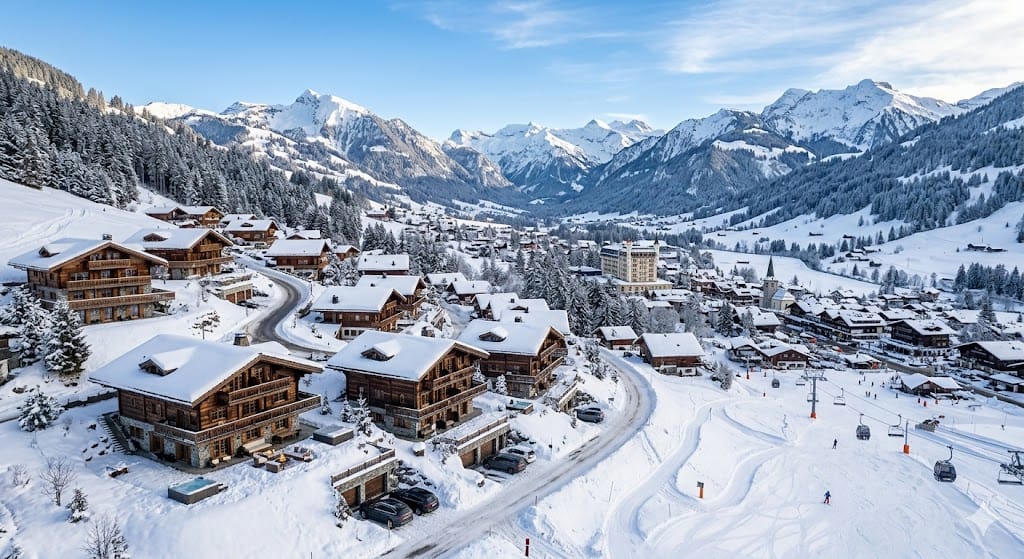
Luxury homes in mountain resort regions remained especially popular among wealthy buyers, particularly international investors seeking premium alpine properties.

According to the report, luxury property prices in Swiss mountain destinations climbed by around 6% last year, driven largely by demand from affluent foreign buyers.

St. Moritz remained the most expensive luxury property market in Switzerland, with average prices reaching approximately CHF52,000 per square metre.

It was followed by Gstaad and Verbier, where luxury real estate prices averaged around CHF45,000 per square metre.

UBS analysts noted that while demand for premium Swiss real estate remains strong, the market may soon stabilize as price growth slows and affordability pressures increase.

Switzerland’s political stability, secure economy, and attractive alpine lifestyle continue to make the country one of Europe’s most desirable destinations for high-end property investment.

Switzerland remains one of Europe’s most sought-after locations for luxury real estate investment due to its political stability, robust economy, and appealing alpine lifestyle.

Switzerland’s political stability, secure economy, and attractive alpine lifestyle continue to make the country one of Europe’s most desirable destinations for high-end property investment.

Switzerland Warns of Worsening Security Situation

The Switzerland government has warned that the country’s security situation has deteriorated significantly over the past year amid rising geopolitical tensions across Europe and the Middle East.

In its latest national security report released on Wednesday, Swiss authorities stated that growing international instability is increasing pressure on Switzerland to contribute more actively to European security efforts.

The report highlights that Switzerland is being directly affected by Russia’s hybrid warfare strategies, including cyber threats, disinformation campaigns, and espionage activities. Officials also noted that the ongoing conflict in the Middle East continues to create broader security risks and political instability.

According to the government, global geopolitical developments are now having a direct impact on Switzerland’s internal security environment.

Authorities warned that the terrorist threat remains heavily influenced by jihadist movements, while violent extremism from both far-left and far-right groups continues to pose risks inside Europe.

Swiss President Meets Pope Leo XIV at Vatican.

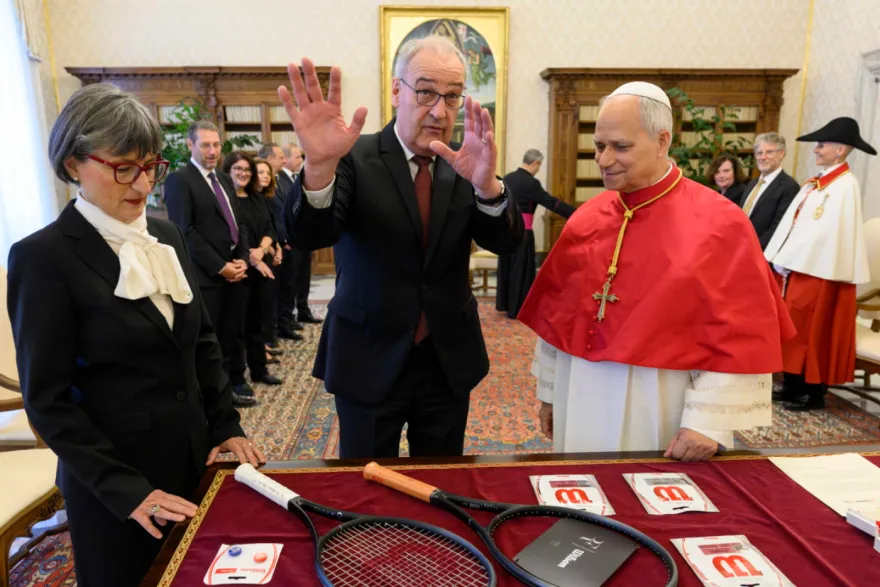
Guy Parmelin met with Pope Leo XIV at the Vatican on Wednesday morning ahead of the swearing-in ceremony of the Pontifical Swiss Guard.

During the meeting, both leaders discussed plans for the construction of new barracks for the Swiss Guard within the Vatican. The project is expected to begin next year as part of preparations for the 500th anniversary of the historic Sack of Rome on May 6, 1527.

The anniversary commemorates the sacrifice of 147 Swiss Guards who lost their lives while defending Pope Clement VII against the forces of Emperor Charles V during the attack on Rome.

President Parmelin emphasized the symbolic importance of beginning construction work on May 6, aligning the project with the historic anniversary celebrations.

However, the Vatican is still awaiting approval from UNESCO before major construction can proceed. Since the Vatican is a UNESCO-listed heritage site, international authorization is required for significant infrastructure work.

Parmelin stated that Switzerland hopes to cooperate closely with the Vatican in preparing for the anniversary events, describing them as highly significant for both the Catholic Church and Switzerland’s national heritage.

79-Year-Old Man Loses CHF 40,000 in Romance Scam

A 79-year-old retired man in Winterthur has lost more than CHF 40,000 after becoming the victim of a suspected romance scam, according to local police.

The Stadtpolizei Winterthur confirmed the arrest of two suspects linked to the case. Investigators say the victim became acquainted earlier this year with two women from Romania, who later visited him at his home.

Authorities stated that the relationship quickly developed into an emotionally close and romantic connection. During this period, the suspects allegedly requested financial support by claiming to face urgent personal problems, including housing debt, medical expenses for a family member, and notary fees.

Over several meetings, the elderly victim reportedly transferred or handed over more than CHF 40,000 to the individuals involved.

The man later became suspicious and filed a complaint with Winterthur police, prompting a detailed investigation.

On April 24, police arrested a 29-year-old woman with German-Romanian dual citizenship and a 36-year-old Turkish man while they allegedly attempted to collect an additional CHF 6,500 from the victim.

Both suspects are currently under investigation for repeated fraud offences and have been handed over to prosecutors.

Switzerland to Cover Hospital Bills for Crans-Montana Fire Victims

The government of Switzerland has confirmed that it will cover hospital treatment costs for Italian victims of the Crans-Montana fire, ensuring that families will no longer receive medical billing statements.

Swiss President Guy Parmelin announced the decision during an official visit to Rome, where he met Italian President Sergio Mattarella and Foreign Minister Antonio Tajani.

The discussions were described as open and constructive, focusing on improving cross-border cooperation and addressing concerns related to emergency medical billing for disaster victims.

Parmelin confirmed that Switzerland will handle any treatment costs not covered by insurance through its national victim support system. He also stated that the practice of sending hospital bill copies to victims’ families will be discontinued to prevent further distress.

Authorities from both countries will continue close coordination to ensure fair and compassionate handling of such cases in the future. Swiss officials emphasized that the priority is to provide support and dignity to those affected by the tragedy.

The decision comes as part of broader efforts to improve humanitarian response protocols in cross-border emergencies. Parmelin also noted that the Swiss Federal Council will align its procedures with existing legal frameworks while ensuring better communication between authorities.

During his visit, the Swiss President also attended preparations for the swearing-in ceremony of the Swiss Guard at the Vatican and is expected to meet Pope Leo XIV.

Swiss Travel Safety Concerns Rise in 2026

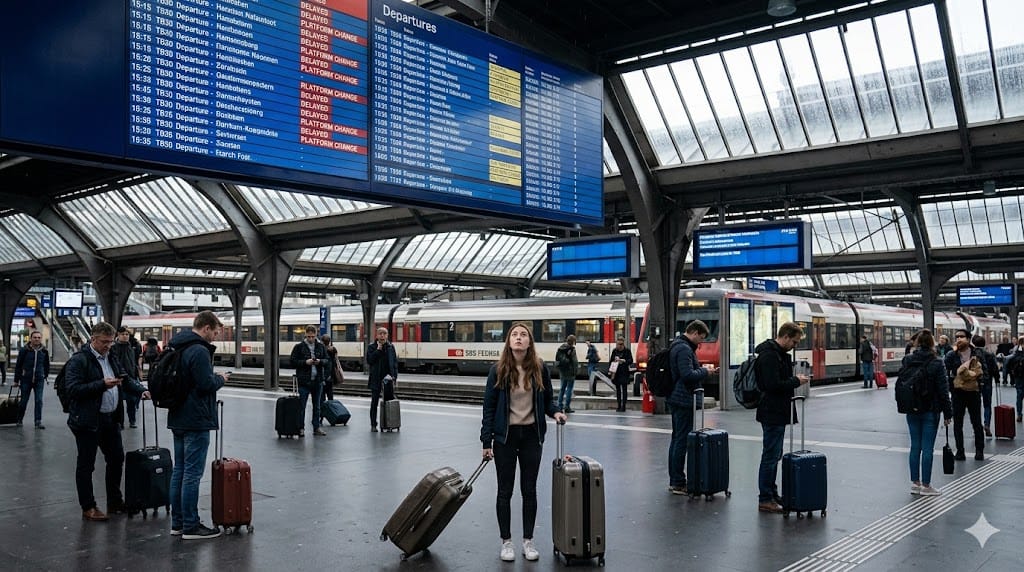
A new survey reveals that people in Switzerland are becoming increasingly concerned about safety when travelling abroad, even as demand for holidays remains strong.

Despite growing concerns, travel demand continues to recover. The proportion of people reducing or avoiding travel has dropped from 61% last year to 49%, indicating that a majority of Swiss residents still plan to travel abroad.

The survey highlights that political instability and global conflicts are the main factors influencing travel decisions. Around two-thirds of respondents cited these risks, leading to a noticeable shift toward European destinations, while interest in North America has declined.

Travel habits are also evolving. The preference for private cars has decreased significantly—from 67% two years ago to 51% today. Cars are now almost equally preferred alongside airplanes (51%) and trains (50%), reflecting a more balanced approach to transportation.

The study was conducted between February and March, covering more than 1,000 participants across Switzerland’s German-, French-, and Italian-speaking regions, along with additional TCS members.

Swiss Fitness Memberships Reach Record High

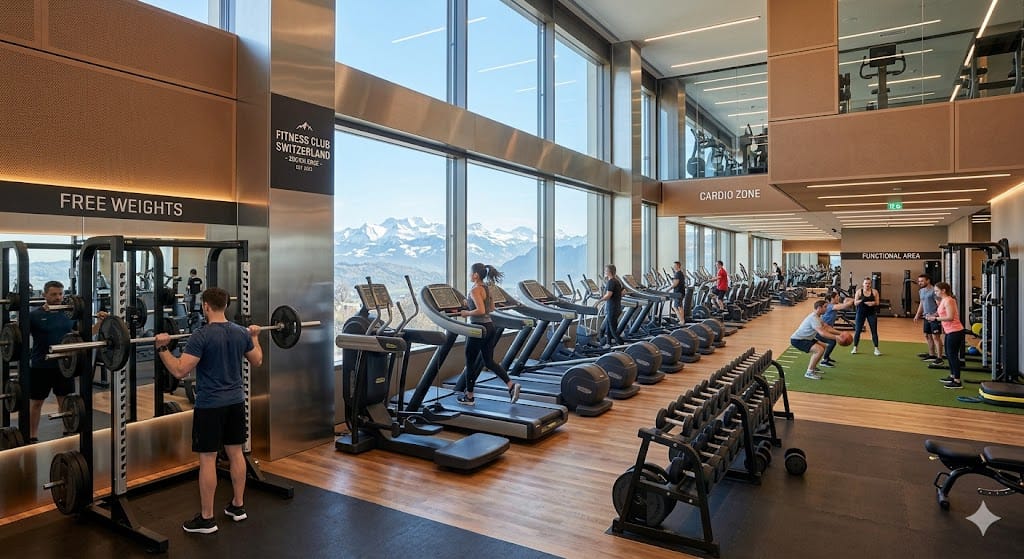
Fitness participation in Switzerland has reached a new record, with gym memberships and industry revenue rising significantly over the past year, according to the latest Key Data Study 2026.

The report shows that around 1.45 million people were registered in fitness centres last year—roughly one-fifth of the adult population. This growth has contributed to a 4.4% increase in industry turnover, bringing total revenue to approximately CHF 1.36 billion.

The data also indicates a steady rise in the number of fitness centres across the country, reflecting growing demand for health and wellness services.

Young adults aged 20 to 29 were the most active group in gym memberships. Industry body Swiss Active linked this trend to a broader “health megatrend,” particularly influencing younger generations who are more focused on fitness, lifestyle, and wellbeing.

Demand has increased for services such as personal training, nutritional guidance, and wellness coaching. However, the study also found a slight decline in participation in digital training programs and group fitness classes.

Experts say the rise in gym participation reflects a stronger national focus on preventive health, physical fitness, and mental wellbeing, especially among younger adults.

The Swiss fitness industry continues to expand as lifestyle changes and health awareness drive more people toward structured exercise routines.

Gotthard Pass Reopens Ahead of Holiday Traffic.

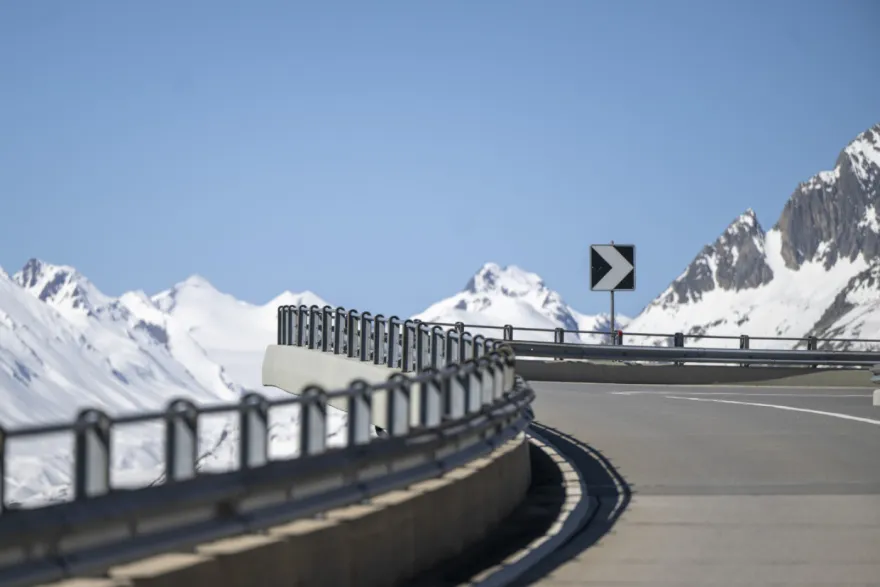
The Gotthard Pass in Switzerland will reopen to road traffic on Friday at 11 a.m., earlier than expected due to favourable weather conditions.

The Federal Roads Office confirmed that clearing and repair work progressed faster than planned because of low snowfall this season. As a result, the winter closure of the pass will be lifted ahead of the busy holiday travel period.

The reopening is expected to ease traffic on the heavily used north–south route along the A2 motorway, especially during the upcoming Ascension and Whitsun holiday weekends.

With the pass reopening, the seasonal extension at the Göschenen exit will also return to operation. The extended three-kilometre lane, starting near Wassen, is designed to reduce congestion and prevent traffic from diverting into nearby villages.

On the southern side, a special traffic lane at Airolo will also be activated to manage holiday traffic flow more efficiently.

Authorities stated that these measures aim to improve safety and reduce congestion along one of Switzerland’s most important transit routes, which connects northern and southern Europe through the Alps.

The early reopening is expected to benefit both local commuters and international travelers using the route during the peak travel season.

WSL Study Outlines Five Possible Futures for Switzerland

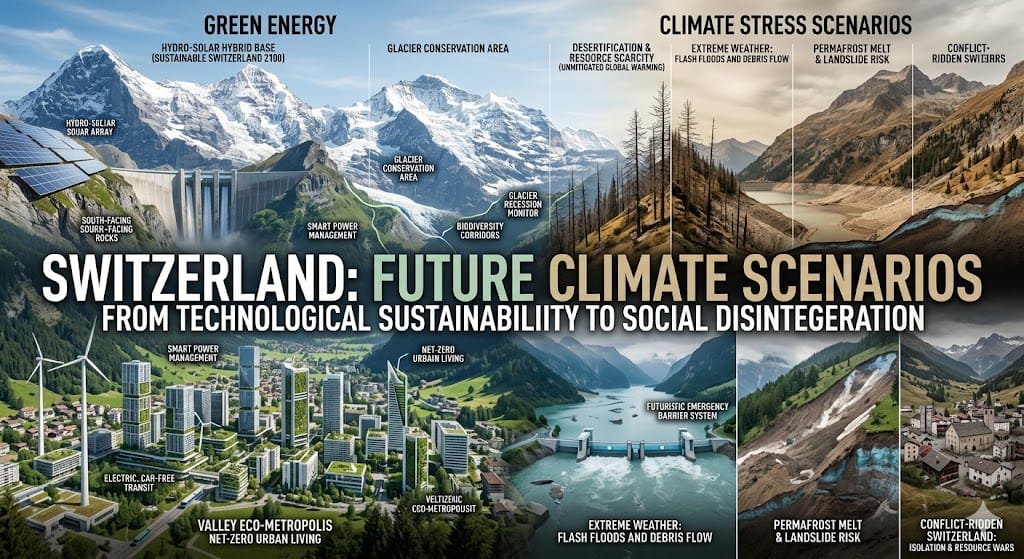
Researchers at the Swiss Federal Institute for Forest, Snow and Landscape Research have developed five possible future scenarios for Switzerland, exploring how society, the economy, and the climate could evolve by the year 2100.

The study highlights that it is impossible to predict Switzerland’s exact future. However, understanding different development paths is crucial because social, political, and economic changes directly affect resource use, infrastructure, and climate impact.

To build these scenarios, researchers collaborated with around 60 scientists from 20 institutions. A computer model was used to generate consistent projections based on global climate frameworks developed by the Intergovernmental Panel on Climate Change.

Three of the five scenarios are based on global Shared Socioeconomic Pathways, ranging from a highly technological, renewable-energy-driven society to a fragmented future marked by inequality and weakened state structures.

In the most divided scenario, society splits between a wealthy elite and a disadvantaged majority, while another scenario predicts long-term reliance on fossil fuels, resulting in severe environmental damage and high economic costs later in the century.

Two additional Switzerland-specific scenarios were also developed. One describes a country that prioritizes economic growth through fossil fuels before facing environmental consequences. The other focuses on social cohesion and well-being over pure economic expansion.

Lead researcher Lena Gubler emphasized that none of the scenarios are considered more likely than the others. Instead, they are designed as “if-then” models to explore possible outcomes rather than predict the future.

The National Centre for Climate Services (NCCS) has also released new data showing projected greenhouse gas emissions for each scenario up to 2100, providing a foundation for long-term climate planning and policy decisions.

Zurich Hospital Admits Fatal Heart Surgery Failures.

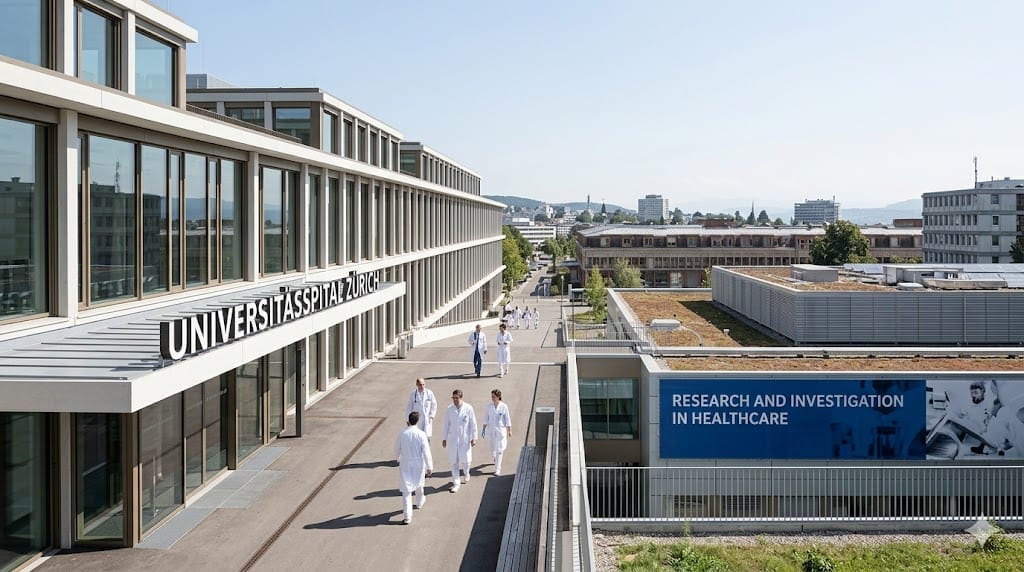
The University Hospital Zurich has confirmed serious medical failures in its cardiac surgery department, following an independent investigation covering the years 2016 to 2020.

The report reveals that between 68 and 74 excess patient deaths may have occurred during this period. Authorities have also identified 11 particularly concerning deaths and 13 cases involving improper use of medical devices, which have been reported to the public prosecutor for further investigation.

Investigators are now examining whether criminal offences were committed, as concerns grow over systemic failures in hospital management and oversight.

According to the findings, the root cause of the issues lies in a major governance breakdown. Former leadership, including cardiac surgery head Francesco Maisano, was appointed in 2014 without sufficient review of qualifications and potential conflicts of interest.

The report also highlights that hospital management at the time failed in its supervisory responsibilities, ignoring warning signs that could have prevented the crisis.

In response to the investigation, three long-standing members of the hospital board have resigned, stating the need for organizational renewal and accountability.

The University Hospital Zurich has issued a formal apology to affected patients and their families and has established a dedicated counselling service to support them.

Despite the scandal, the hospital stated that its cardiac surgery department has since improved under new leadership, with mortality rates returning to normal levels.

To prevent future incidents, the hospital is introducing stricter compliance rules, a conflict-of-interest register, and a whistleblowing system designed to improve transparency and patient safety.