Lucerne Traffic Crackdown: Distraction Leads to Heavy Fines

Police in Lucerne carried out a large-scale traffic enforcement operation targeting driver distraction as part of a road safety awareness campaign.

The operation, led by Kantonspolizei Luzern on April 29, 2026, focused on the message “Distraction can cost lives.” Officers conducted inspections at multiple locations across the canton to improve road safety and reduce accidents.

During the checks, authorities inspected around 250 vehicles and 270 individuals. Speed monitoring was also conducted at several points to identify violations.

Police recorded a total of 18 offenses, including 17 violations of road traffic laws and one case of speeding. In addition, officers issued 196 fines for various traffic offenses.

Notably, 44 cases were directly linked to driver distraction. Authorities identified mobile phone use and lack of attention while driving as the main causes of these violations.

Officials emphasized that such enforcement operations will continue to ensure safer roads. They reminded drivers that even minor distractions can lead to serious accidents and urged everyone to stay fully focused while driving.


Milvignes Traffic Signal Issue Frustrates Drivers in Switzerland.

Drivers in Milvignes are expressing frustration over a traffic signal that remains red for extended periods at a key road junction.

Motorists report that the red light sometimes stays unchanged for up to five minutes, causing long queues and delays during peak hours. The situation has led to growing dissatisfaction among daily commuters who rely on this route.

Some drivers have suggested reintroducing the flashing yellow signal system that was previously used during road construction. They believe this could improve traffic flow and reduce unnecessary waiting times.

However, local authorities have rejected this proposal. Officials explained that such a system could compromise the safety of cyclists, which remains a top priority in the region.

Authorities further clarified that the delays are mainly due to priority being given to tram services operating through the junction. As a result, vehicle traffic must wait longer to ensure smooth and safe tram movement.

Additionally, officials noted that there are no legal limits on maximum waiting times at traffic signals in Switzerland. They emphasized that the current system is designed with safety in mind and continues to meet required standards.

The issue has sparked an ongoing debate about balancing traffic efficiency with road safety, especially in areas with mixed transport systems.

Infosys AI Policy: No Layoffs Announced, Employees Relieved.

Infosys has reassured its employees by announcing that the company will not carry out any layoffs despite the rapid rise of Artificial Intelligence (AI) in the IT industry.

Chief Executive Officer and Managing Director Salil Parekh confirmed that Infosys is focusing on hiring and reskilling rather than reducing its workforce. He emphasized that the company aims to leverage AI technology to expand opportunities instead of cutting jobs.

This announcement has brought significant relief to thousands of employees who were worried about job security amid global tech industry layoffs.

Infosys also confirmed that it did not implement any workforce reductions last year and does not anticipate any layoffs in the near future. Instead, the company plans to continue large-scale campus recruitment, aiming to hire around 20,000 fresh graduates this year.

Parekh explained that while entry-level job roles are evolving, AI will expand job opportunities rather than reduce them. He highlighted that the company is actively training engineers to work with AI tools, enabling them to build, evaluate, and improve AI-generated code.

Meanwhile, several global IT companies such as TCS, HCLTech, Oracle, and Cognizant have recently undertaken restructuring and job cuts, raising concerns across the sector.

Despite these trends, Infosys stated that AI currently contributes about 5.5% of its revenue and is growing rapidly. The company expects AI to become a major driver of future growth rather than a threat to employment.

Swiss Police Stop French Customs Vehicle in Geneva

Swiss police in Geneva stopped a vehicle carrying French customs officers after noticing it was using flashing blue lights similar to an emergency police vehicle.

Authorities observed the vehicle traveling with prominent blue emergency-style lights activated, which prompted immediate action from Swiss law enforcement. The vehicle was registered in France, leading officers to conduct a detailed inspection.

During the investigation, police confirmed that the passengers were French customs officials returning from a training session held near an airport. Although they were on official duty, the use of blue flashing lights in Swiss territory without authorization violated local traffic regulations.

Swiss authorities reminded the officials that all road users, including foreign government personnel, must strictly follow Swiss traffic laws while operating within the country. The officers were issued a formal warning and allowed to continue their journey after the check.

Swiss police emphasized their strict enforcement of road safety rules, noting that even minor misuse of emergency-style signals is taken seriously to ensure public safety and order.

Canada PR Fee Increase: New Immigration Charges Announced for 2026.

Immigration, Refugees and Citizenship Canada has officially announced an increase in Permanent Residency (PR) application fees, affecting thousands of immigration applicants worldwide.

As of April 30, 2026, Canada has raised processing fees across multiple immigration programs, including Express Entry, Provincial Nominee Programs (PNPs), and family sponsorship categories. Most categories have seen an increase of approximately 4% to 5%.

Applicants who submitted their applications before April 30 but chose to pay the Right of Permanent Residence Fee (RPRF) later are now required to pay the updated higher fee. This change applies even if the application was already in progress but the payment was not completed before the deadline.

However, applicants who submitted their full application along with the required fees before April 30 and received confirmation from Canadian immigration authorities do not need to take any further action. Their applications will continue to be processed under the previous fee structure.

The IRCC stated that these adjustments are part of periodic updates to align immigration service costs with administrative and processing requirements. The increase is expected to impact new applicants planning to apply for Canadian permanent residency in 2026.

Immigration consultants advise applicants to carefully check updated fee structures before submitting new applications to avoid unexpected costs.

YouTube Rolls Out Picture-in-Picture (PiP) for All iPhone Users Worldwide.

YouTube has officially expanded its Picture-in-Picture (PiP) feature to all iPhone and iPad users worldwide, making multitasking easier for millions of users.

Previously, this feature was limited to the United States and only available for YouTube Premium subscribers. With the new global rollout, even free users can now watch non-music videos in a small floating window while using other apps.

The PiP feature allows users to minimize a YouTube video into a resizable window that can be moved anywhere on the screen. Users can continue watching content while browsing, chatting, or using other applications simultaneously.

To activate the feature, users simply swipe up or exit the YouTube app. The video automatically continues playing in a floating window without interruption, improving multitasking efficiency on mobile devices.

However, access differs based on subscription type. YouTube Premium Lite users can use PiP only for long-form non-music videos, while full Premium subscribers get access to PiP for both music and non-music content.

YouTube has confirmed that the global rollout will continue over the coming months. The company expects this update to significantly improve user experience and make video consumption more flexible and convenient across mobile devices.

Swiss May 1 Protests Planned Across 50 Locations Over Living Costs.

Trade unions across Switzerland are preparing large-scale May 1 demonstrations in response to rising living costs and stagnant wages. Organizers confirm that protests will take place in around 50 locations nationwide, with strong participation expected from workers and union leaders.

The Swiss Trade Union Federation stated that low real wages combined with high living expenses are pushing workers to take to the streets. Union representatives will deliver speeches throughout the day, highlighting concerns over income inequality and social pressure on households.

The largest demonstration will take place in Sechseläutenplatz, where a major rally is scheduled to begin at midday. Zurich’s event is traditionally the biggest May 1 gathering in the country, attracting thousands of participants each year.

Several high-profile political figures are also expected to attend. Swiss government ministers Beat Jans and Elisabeth Baume-Schneider will appear at different rallies, where they are expected to address key social and economic concerns.

Organizers emphasize that the protests aim to draw attention to wage stagnation, housing costs, and inflationary pressure affecting Swiss households. Union leaders are calling for stronger government action to protect purchasing power and improve working conditions.

Authorities are preparing for large crowds across multiple cities, as May 1 remains one of the most significant dates for labor movements in Switzerland.

Swiss Fire Tragedy: LAVI Centres Overwhelmed with 700 Support Cases

Swiss support services are experiencing a major surge in demand after a devastating New Year’s Eve fire in Crans-Montana that killed 41 people. Victims and families are actively seeking legal, financial, and psychological assistance across Switzerland.

The LAVI centres, which provide free victim support services, are currently managing nearly 700 active cases. Around 400 of these cases come from the canton of Valais, where the tragedy occurred. Authorities confirm that the demand for support has increased sharply since January 2.

Sonia Golay, manager of LAVI centres in Valais, stated that victims immediately contacted support services to understand their rights. She confirmed that families are requesting guidance on legal procedures, financial compensation, and psychological care available under Swiss law.

International families, including those from Australia, Belgium, Italy, and France, have also reached out. They are seeking clarity on civil legal proceedings in Switzerland and asking how the justice system will handle cross-border victim cases.

Families are also raising practical concerns, including transport costs, accommodation support, and long-term assistance for affected relatives. These issues have added further pressure on support services already handling a large caseload.

To manage the crisis, LAVI centres have received additional state funding since January. This support has enabled the recruitment of extra staff to handle the growing number of requests. So far, LAVI has distributed approximately CHF 400,000 in emergency financial aid to affected families.

Authorities continue to coordinate victim assistance efforts while ensuring that all families receive legal and emotional support following the tragedy.

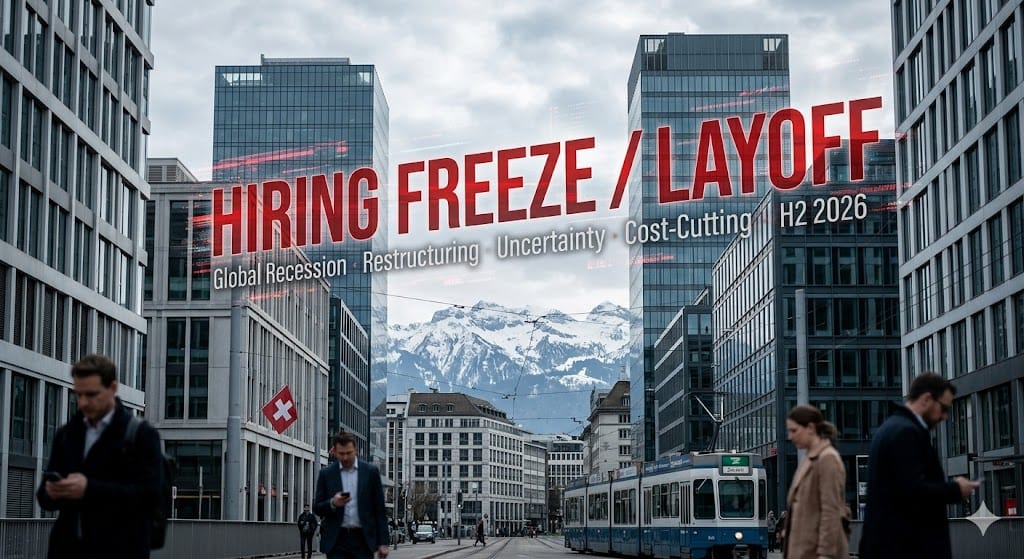
Swiss Job Market Shock: Major Layoffs Hit Leading Companies.

Switzerland’s job market is experiencing growing pressure as several major companies announce significant layoffs. Recent decisions by firms operating in Lucerne and other regions have raised concerns about employment stability across the country.

In Lucerne, two companies have confirmed workforce reductions this week. Andritz Beutler AG has announced that it will lay off 50 employees. Meanwhile, Serge Ferrari Tersuisse SA will cut 62 jobs in Emmenbrücke. Both companies stated that their foreign parent organizations in Germany and France made the final decisions.

Earlier, credit card provider Swisscard also revealed plans to reduce 40 positions in its Zurich office starting May 1. These announcements reflect a wider trend of restructuring across Switzerland’s corporate sector.

Between 2025 and 2026, several major companies are expected to eliminate thousands of jobs. Insurance giants Helvetia Insurance and Baloise Group plan to cut between 1,400 and 1,800 jobs after their merger process. Global banking group UBS is also reducing around 3,000 positions as part of its restructuring strategy. Logistics leader Kuehne + Nagel is planning to remove approximately 2,000 roles worldwide.

International organizations in Geneva, including United Nations agencies, are also implementing job cuts. Funding reductions from the United States have heavily impacted their operations. Additionally, companies are restructuring and shifting operations abroad to reduce costs and improve efficiency.

Experts say the Swiss labor market is entering a challenging phase as global economic pressures, mergers, and digital transformation reshape employment structures.

Switzerland Chicken Consumption Surge Drives Imports Higher

Chicken consumption in Switzerland has increased significantly over the past few years, reflecting a major shift in dietary habits. Consumers are choosing poultry more frequently, making it one of the most popular meat options in the country.

In 2024, the average per capita chicken consumption reached 15.9 kilograms. This marks a 70% increase compared to the year 2000. While pork consumption has declined and beef remains stable, chicken has gained a dominant position in everyday diets.

In 2025, more than 82 million chickens were raised for meat production in Switzerland. Despite this large-scale production, domestic supply still falls short of demand. As a result, nearly one-third of chicken meat is imported from countries such as Brazil.

Restaurants and fast-food chains have played a key role in boosting chicken consumption. Chicken-based meals have become increasingly popular, and several international food brands that previously struggled in Switzerland are now succeeding by focusing on poultry offerings.

The growing demand has created new opportunities for local farmers. Many farmers are shifting from dairy production to poultry farming. While dairy farming faces price pressure, poultry farming offers more stable returns and better pricing structures.

This shift indicates a broader transformation in Switzerland’s agricultural sector. Farmers are adapting to changing consumer preferences and market conditions, ensuring a steady supply of poultry products in the future.

The rapid rise in chicken consumption highlights evolving food trends in Switzerland. As demand continues to grow, both imports and local production will play a crucial role in meeting consumer needs.