Swiss Health Insurance Premiums to Rise 5% in Autumn.

Health insurance premiums in Switzerland are set to increase by around 5% in autumn 2026, according to new projections from the Federal Office of Public Health. The announcement was made during a media briefing in Bern on Tuesday, where officials highlighted the continued rise in healthcare costs across the country.

Swiss healthcare spending has increased significantly, with costs rising by an additional CHF247 per capita last year. Authorities confirm that this upward trend is expected to continue, driven by multiple long-term factors affecting the healthcare system.

Officials from the Federal Office of Public Health stated that premium increases are closely linked to overall cost growth in the healthcare sector. On average, insurers expect costs to rise by nearly 5% in 2026, which directly influences the adjustment of monthly premiums paid by residents.

Experts explain that the rise in healthcare expenses is due to several structural factors, including an ageing population, advances in medical technology, and increasing demand for healthcare services. These elements continue to place pressure on Switzerland’s insurance-based healthcare model.

Cost growth in the first quarter of the current year was recorded at approximately 2.9%, confirming that medical spending remains on an upward trajectory. Authorities have stressed that controlling costs remains a long-term challenge for policymakers and insurers alike.

The Federal Office of Public Health emphasized that while the Swiss healthcare system remains high-quality and efficient, sustained efforts are needed to manage expenditure growth and ensure long-term affordability for citizens.

As premiums continue to rise, public debate in Switzerland is expected to intensify around healthcare reform, insurance affordability, and cost control measures in the coming years.

Former Raiffeisen CEO Faces CHF1 Million Tax Penalty.

Former Raiffeisen Switzerland CEO Pierin Vincenz has reportedly been ordered to pay nearly CHF1 million in fines linked to tax evasion, according to reports published by Swiss newspaper SonntagsZeitung.

The report states that the Swiss Federal Supreme Court confirmed the sentence in a judgment that recently became legally binding. Swiss tax-related court proceedings are generally not public, which is why the case had remained largely unknown until now.

Authorities allege that Vincenz failed to declare approximately CHF3.4 million in taxable income. In addition to the financial penalty, he could also be required to pay significant backdated taxes.

During the proceedings, Vincenz denied the allegations against him.

The investigation reportedly began after tax authorities in Appenzell Ausserrhoden reviewed a criminal indictment connected to an ongoing case in Zurich and identified suspicious financial transactions.

In 2022, Vincenz and several associates were found guilty of fraud and embezzlement in a separate criminal case involving acquisitions made during his leadership at Raiffeisen. However, appeals against those convictions are still ongoing.

A February 2025 ruling by Switzerland’s highest court reportedly upheld parts of the earlier legal findings, making the latest tax penalty enforceable.

Vincenz continues to face legal scrutiny over accusations that he personally benefited from business deals conducted while serving as chief executive of Raiffeisen. Another appeal hearing in the broader case is expected to take place in August.

The case remains one of the most closely followed financial and corporate governance scandals in modern Swiss banking history.

Historic Organ Restored at Geneva’s Saint Peter’s Cathedral.

Visitors in Geneva will soon be able to experience the newly restored Metzler organ at Saint Pierre Cathedral as part of celebrations marking the 490th anniversary of the Reformation in Geneva.

The restoration project highlights the importance of preserving Switzerland’s religious and cultural heritage while bringing new life to one of the cathedral’s iconic musical instruments.

According to the Protestant Church of Geneva, special inauguration concerts are scheduled for May 29 and May 31, with an additional performance planned the following week.

The celebrations will also include several cultural events linked to the Church Assembly. On May 30, audiences will experience a performance titled “Black Church,” combining music and public discussion around cultural and spiritual themes.

Another artistic event will feature a theatrical adaptation of the book The Walking Man, exploring themes of movement, stillness, and human experience through live performance.

The restored Metzler organ is expected to become a major attraction for music lovers, tourists, and cultural visitors interested in Geneva’s historical and religious landmarks.

Saint Peter’s Cathedral remains one of Switzerland’s most significant historic churches and played a central role during the Protestant Reformation led by John Calvin in the 16th century.

Switzerland Surpasses 18,000 Public EV Charging Points

Switzerland continues to strengthen its electric vehicle infrastructure, with more than 18,000 publicly accessible charging points now available across the country.

According to the Swiss Federal Office of Energy, there were 18,284 charging points operating at 8,535 locations nationwide as of April 2026. On average, each charging location offers just over two charging points.

Canton of Zurich leads the country in total charging infrastructure, with 2,692 public charging points. It is followed by Canton of Bern with 1,891 charging points and Canton of Vaud with 1,590.

Smaller cantons reported significantly fewer public charging facilities. Appenzell Innerrhoden recorded only 31 charging points, while Appenzell Ausserrhoden had 77 and Obwalden had 109.

The report also highlighted major differences in charging point usage across Switzerland. Canton of Zug showed the highest concentration of battery electric vehicles (BEVs) per charging point, with 53 EVs sharing each public charger.

Canton of Thurgau followed with 27 BEVs per charging point, while Appenzell Ausserrhoden recorded 24.

In contrast, Graubünden had the lowest pressure on infrastructure, with only six battery electric vehicles sharing each public charging station.

The expansion of Switzerland’s charging network reflects the country’s growing shift toward sustainable mobility and cleaner transportation technologies, although regional disparities in infrastructure remain a challenge.

Switzerland Opens New Embassy in Athens.

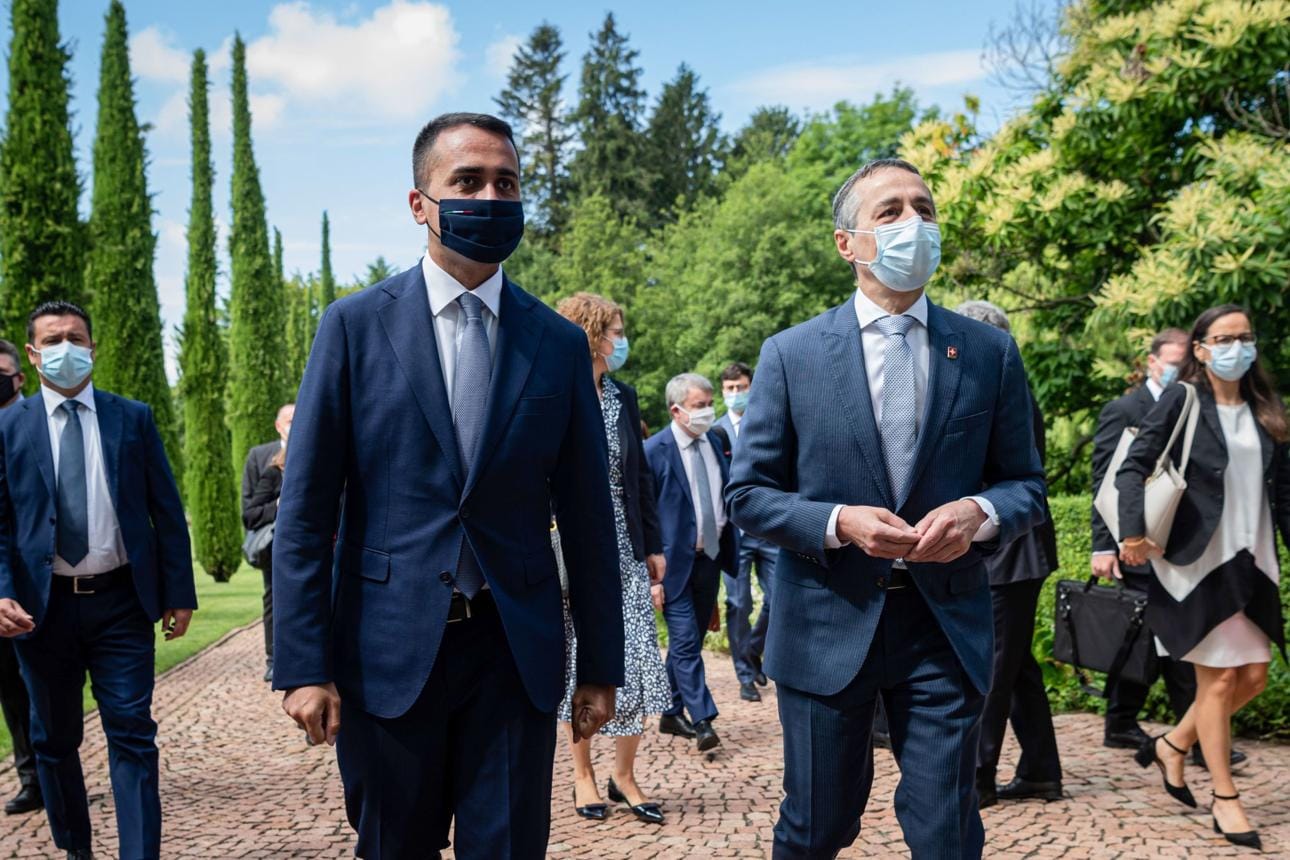
Ignazio Cassis officially inaugurated the new Swiss embassy in Athens, introducing a unique diplomatic space designed to combine culture, science, and international cooperation.

The newly opened facility has been described as a “Swiss House for Culture, Research and Diplomacy.” It brings together the Swiss embassy, the Swiss School of Archaeology in Greece, and a cultural foundation under one roof for the first time.

According to Cassis, the project represents a modern vision of diplomacy where scientific research, cultural exchange, and international relations operate together within a shared environment.

During his visit to Greece, Cassis also held official talks with Giórgos Gerapetrítis. Discussions focused on strengthening bilateral relations, economic cooperation, scientific partnerships, and cultural collaboration between Switzerland and Greece.

The ministers also reviewed the Swiss-Greek cooperation programme connected to Switzerland’s second contribution toward European cohesion and regional development.

In addition, Cassis met with Nikos Dendias to discuss regional security issues within the framework of the Organization for Security and Co-operation in Europe (OSCE), which Switzerland currently chairs.

Swiss officials noted that Greece shares Switzerland’s strong commitment to multilateral diplomacy and plays an important role in maintaining stability in the Eastern Mediterranean and Western Balkans.

The opening of the new embassy highlights Switzerland’s efforts to strengthen international partnerships through diplomacy, culture, education, and scientific collaboration.

Gotthard Tunnel Traffic Jam Reaches 20km

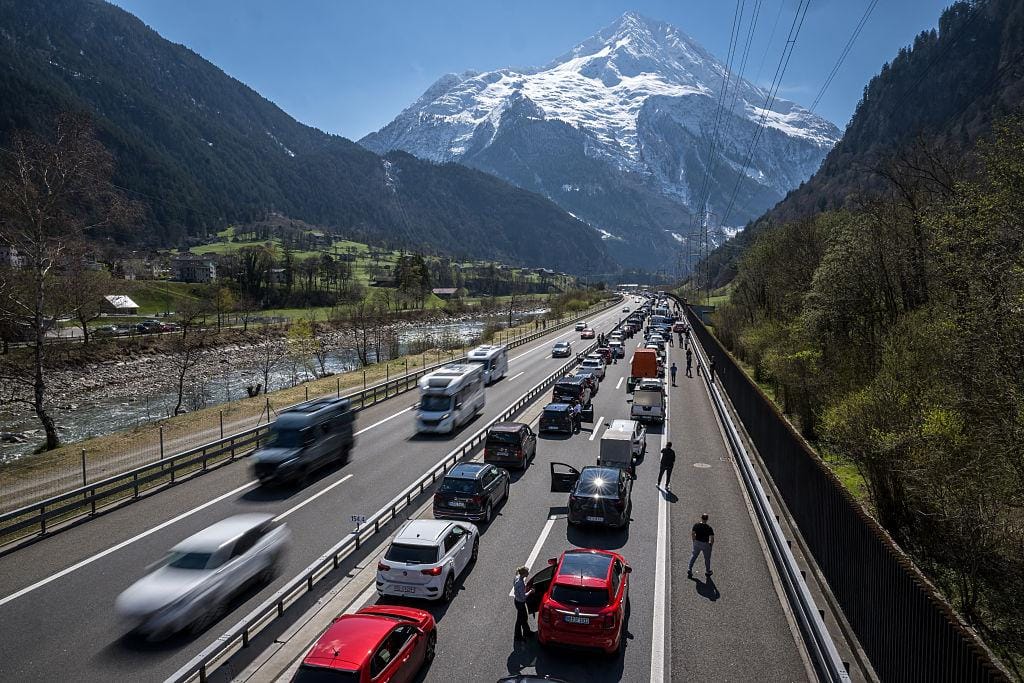
Heavy holiday traffic caused major congestion at Switzerland’s famous Gotthard Road Tunnel on Saturday, with the traffic jam at the northern entrance stretching to 20 kilometres by mid-morning.

According to the Touring Club Switzerland (TCS), drivers heading toward southern Switzerland faced delays of more than three hours and 20 minutes due to the severe congestion.

Traffic conditions worsened rapidly during the morning. In the early hours, the queue measured around 10 kilometres, but it doubled in length shortly before 10am as more vehicles entered the holiday travel routes during the Whitsun weekend.

Authorities also warned that alternative routes were experiencing heavy traffic. The A13 motorway via the San Bernardino Tunnel was already congested over a distance of approximately 17 kilometres.

The TCS advised travellers to consider diversions through the A9 Simplon route or use the Lötschberg car transport service to avoid the worst traffic conditions.

The Federal Roads Office (Astra) had already predicted exceptionally high traffic volumes during the long holiday weekend. Officials noted that the historic record at the Gotthard Tunnel remains 28 kilometres of congestion, recorded during the 2018 Whitsun period.

The Gotthard route is one of Europe’s most important north-south transport corridors and regularly experiences major congestion during peak holiday travel seasons.

Swiss Committee Backs Double Majority for EU Deal.

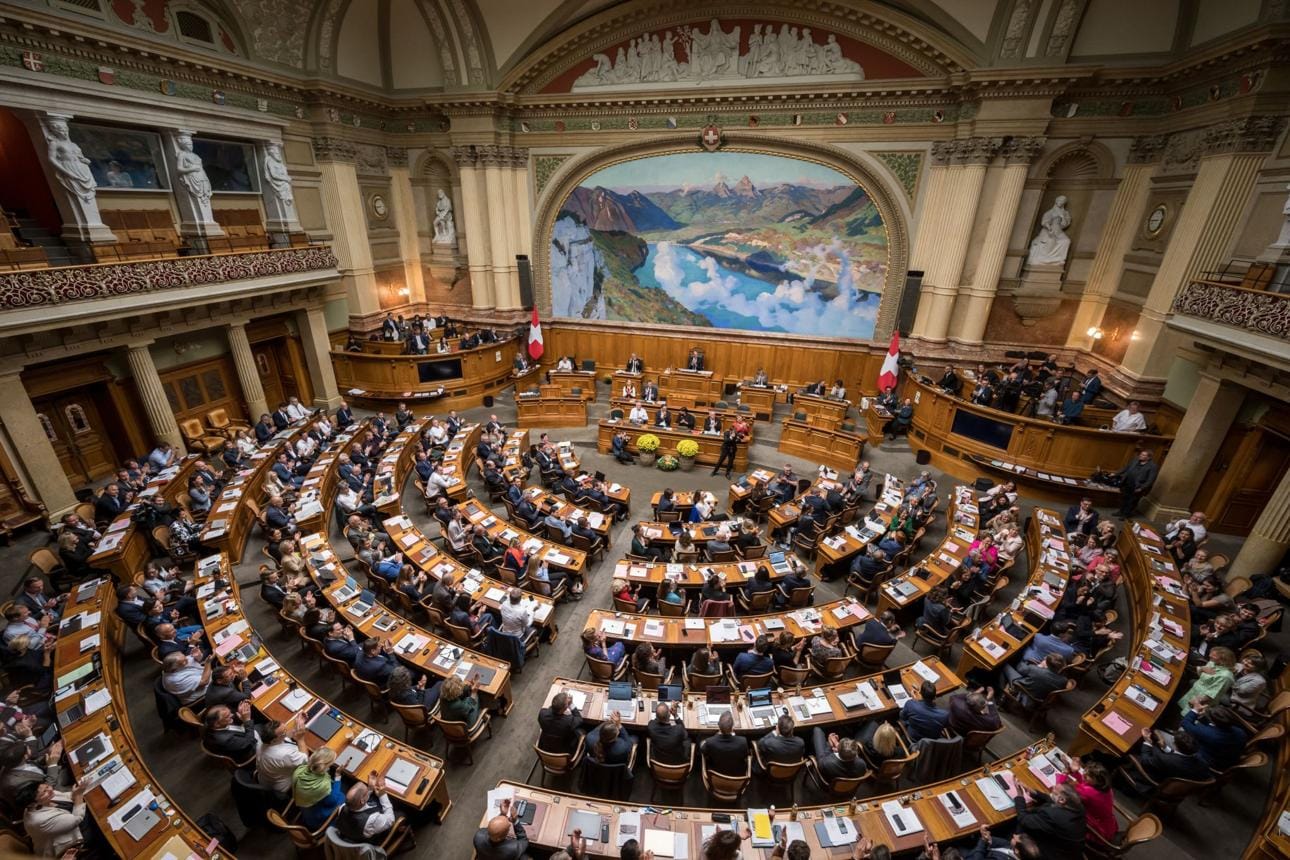
A parliamentary committee in Switzerland has supported a proposal requiring a double-majority vote—both of the people and the cantons—for the approval of the upcoming Swiss–EU agreement package.

The proposal, backed by the House of Representatives’ Committee of Political Institutions, reflects growing political debate over how major international agreements should be ratified within Switzerland’s direct democratic system.

The committee approved the plan by 15 votes to 10, stating that the agreement’s importance and constitutional implications justify a higher level of democratic approval.

Under the proposed system, the bilateral agreements between Switzerland and the European Union would need not only a majority of voters but also a majority of cantonal approval to be adopted.

The idea aligns with Switzerland’s tradition of direct democracy, where major constitutional or highly significant national decisions often require approval from both citizens and cantons.

At the same time, lawmakers are also exploring an alternative approach known as a “sui generis” referendum model, which would be a unique voting mechanism tailored specifically for this agreement package. The committee has requested further examination of this option, which was supported by a 16–9 vote.

The debate highlights the political sensitivity surrounding Switzerland’s relationship with the European Union and the constitutional questions linked to future bilateral cooperation.

Swiss Expert Rejects “10 Million Population” Fear Claim.

A Swiss population expert has stated that Switzerland is unlikely to reach the controversial 10 million population threshold, even as political debate intensifies over immigration and population growth limits.

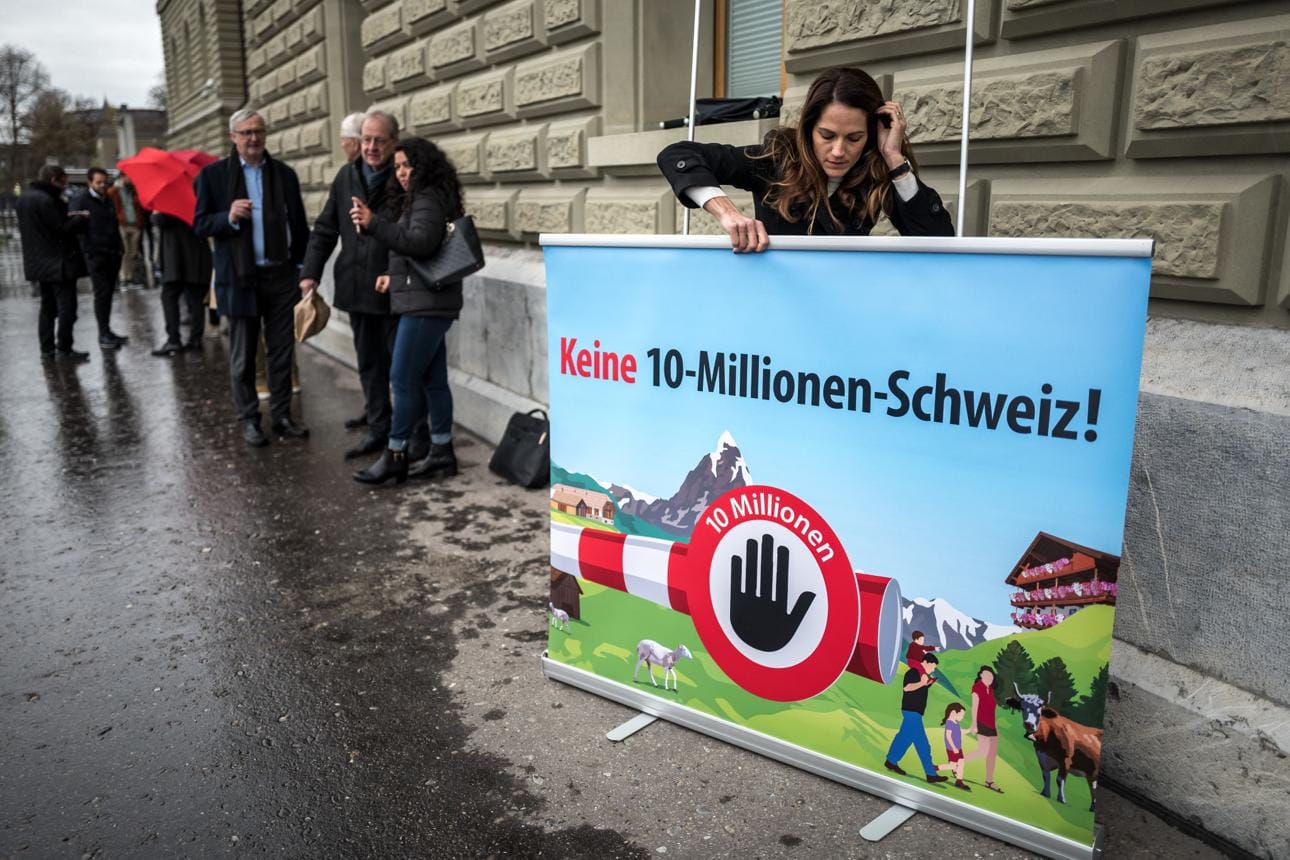
The discussion has been driven by a proposal titled “No to 10 Million Switzerland,” supported by the Swiss People’s Party, which aims to restrict population growth by limiting immigration into the country.

The initiative has gained significant public attention and is scheduled for a nationwide vote on June 14. The proposal argues that Switzerland should take stronger measures to prevent population growth from exceeding 10 million, mainly through tighter immigration controls.

However, a population specialist has challenged these concerns, stating that Switzerland is unlikely to reach the 10 million mark under current demographic trends. The expert’s remarks directly question the assumptions behind the initiative and its long-term projections.

The debate reflects broader tensions in Swiss politics over immigration, labor needs, housing pressure, and national identity. While supporters of the initiative emphasize limits on population growth, critics argue that Switzerland’s economy depends heavily on skilled migration.

As the vote approaches, the issue is expected to remain a central topic in Swiss political discourse, with strong opinions on both sides regarding the future direction of the country’s population policy.

Driverless Delivery Van Accident Kills Pensioner in Zurich.

A tragic accident in Zurich has claimed the life of a pensioner after she was struck by a driverless delivery van on a sidewalk in the city’s Höngg district.

According to Zurich city police, the elderly woman suffered life-threatening injuries after being hit on Thursday afternoon. She later died in hospital on the same evening despite medical efforts to save her.

Preliminary investigations suggest that a parked delivery van began moving unexpectedly around 1pm near the intersection of Michelstrasse and Engadinerweg. The vehicle reportedly rolled several metres onto the pavement before striking the pedestrian.

Authorities said the exact reason why the van started moving remains unclear and is currently under investigation. Police are examining whether a technical fault, mechanical failure, or other external factor may have caused the incident.

The accident has raised serious concerns about the safety of autonomous and semi-autonomous delivery systems being tested and used in urban environments across Switzerland and Europe.

Officials in Zurich have launched a full investigation to determine how the vehicle became uncontrolled and whether additional safety measures are required to prevent similar incidents in the future.

Urban mobility experts say such cases highlight the growing challenges of integrating automated delivery vehicles into busy pedestrian areas, where even minor technical errors can have severe consequences.

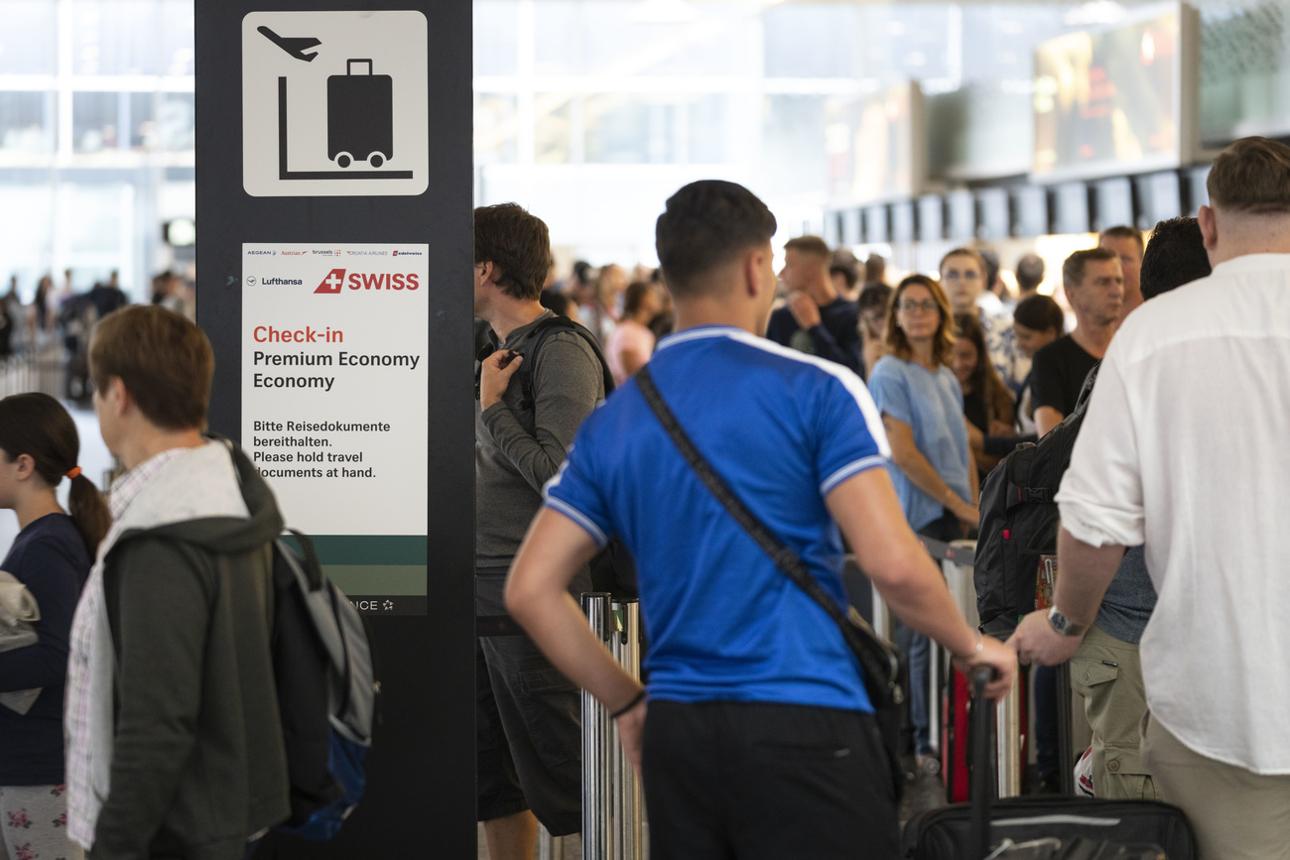
Swiss Airports Record 13.3 Million Passengers in Q1 2026.

Swiss airports recorded a strong increase in passenger traffic during the first quarter of 2026, reaching a total of 13.3 million travellers on scheduled and charter flights, including transit passengers.

According to figures published by the Federal Statistical Office, this represents an increase of around 0.7 million passengers, or 5%, compared to the same period in 2025.

The growth highlights continued recovery and expansion in Switzerland’s aviation sector, supported by rising travel demand and strong international connectivity.

Among the country’s major airports, Zurich Airport recorded the highest passenger volume, handling 6.9 million travellers. This marks a 6% increase compared to the previous year.

Geneva Airport also saw steady growth, with passenger numbers rising by 3% to 4.6 million. Meanwhile, EuroAirport Basel Mulhouse Freiburg experienced the strongest percentage increase, up 7% to 1.8 million passengers.

Aviation analysts say the increase reflects stronger international travel demand, improved airline capacity, and Switzerland’s continued role as a key European travel hub.

The data suggests that despite global economic uncertainties, Swiss air travel remains resilient, with both tourism and business travel contributing to the upward trend.