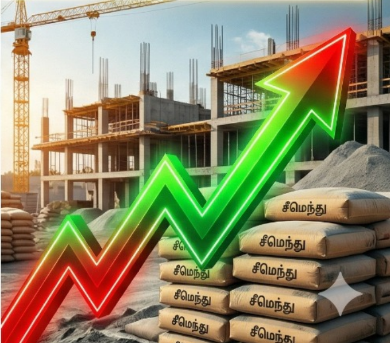
Cement Prices Rise, Adding Burden to Construction Sector in Sri Lanka.

Cement manufacturers in Sri Lanka have raised the price of cement, adding extra costs for builders. A bag of cement now costs between LKR 150 and LKR 175. The price increase is due to higher production costs, said Terlington Paul, the head of the Sri Lanka National Construction Association. This hike comes at a challenging time for the construction industry. Builders and contractors are now facing increased expenses for ongoing projects. The higher costs may slow down construction activity or lead to higher prices for clients.

Industry experts warn that if production costs continue to rise, cement prices could increase further. Contractors are encouraged to adjust budgets and project plans accordingly.The Sri Lanka National Construction Association continues to monitor the situation and works with manufacturers to balance affordability and industry sustainability.

Batticaloa Domestic Violence Victim Dies After Two Months.

A tragic Batticaloa domestic violence case has taken the life of a 31-year-old woman, police confirmed in Batticaloa. The victim, Mayilvaganam Impamalar Devi, suffered serious burn injuries during the attack. The incident happened on January 17 in Kokaddichcholai. Police said her husband allegedly poured kerosene on her and set her on fire after an argument. Doctors treated her at the hospital for several weeks. Later, she returned home when her condition improved. Sadly, her health became worse again. She died nearly two months after the Batticaloa domestic violence attack. Police are still investigating the Batticaloa domestic violence case. Officers are collecting evidence and preparing legal action.

This tragic Batticaloa domestic violence incident has shocked many people in Sri Lanka. It has also raised concerns about women’s safety in the country. Community leaders say families must act early to stop abuse. They also ask the public to support victims and report violence quickly. This Batticaloa domestic violence case is a serious warning to society. Strong action is needed to prevent similar tragedies in the future.

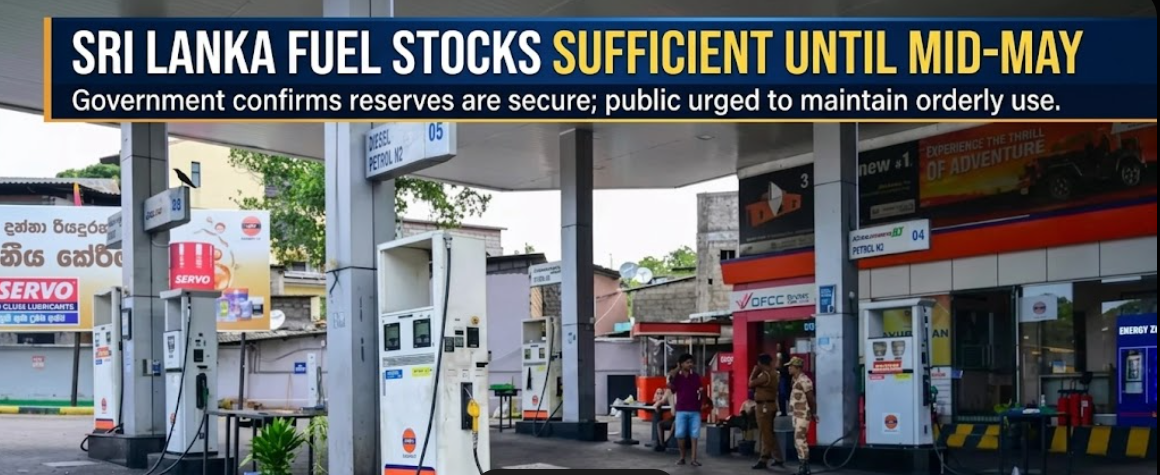
Sri Lanka Fuel Stocks Sufficient Until Mid-May.

Fuel reserves in Sri Lanka are currently sufficient to meet national demand until mid-May 2026, according to Cabinet Spokesperson and Minister Nalinda Jayatissa.

The Minister confirmed that the country’s existing diesel and petrol reserves, combined with already scheduled fuel shipments, are adequate to ensure uninterrupted fuel distribution across the island. This announcement brings reassurance to both consumers and businesses that rely heavily on stable fuel availability for daily operations and transportation.

At present, Sri Lanka holds approximately 134,000 metric tonnes of diesel in reserve. In addition to these existing stocks, an extra 124,000 metric tonnes of diesel are expected to arrive during April 2026. With these confirmed imports, authorities expect the country to comfortably meet fuel demand requirements until at least the second week of May.

Minister Nalinda Jayatissa emphasized that the government continues to closely monitor national fuel consumption trends and import schedules to maintain supply stability. These proactive measures are part of broader efforts to strengthen the country’s energy security strategy and avoid disruptions similar to those experienced during previous economic challenges.

Officials also noted that coordination between energy authorities and import agencies remains active to ensure timely deliveries and efficient fuel distribution throughout the country. This coordinated approach supports transportation services, industrial activity, and essential public services that depend on uninterrupted diesel and petrol supply.

The assurance regarding fuel availability is expected to provide confidence to citizens, businesses, and investors, particularly as Sri Lanka continues its economic stabilization process and infrastructure recovery initiatives.

Energy sector updates like these play a critical role in maintaining public trust and supporting national economic resilience during periods of recovery and development.

Oil Prices Drop Sharply After Donald Trump Signals Possible War Talks.

Donald Trump stated that negotiations aimed at ending the ongoing conflict between Israel and Iran are currently underway, triggering a sharp decline in global oil prices across Asian markets, according to international media reports.

Following the statement, Brent crude oil prices fell by 6.6%, dropping to approximately $97.56 per barrel, while US crude oil prices declined by more than 5.5%, reaching around $87.20 per barrel.

Energy market analysts say the sudden price drop reflects investor optimism that diplomatic negotiations could help reduce tensions in the Middle East region, which plays a critical role in global energy supply stability.

President Trump stated that discussions to bring an end to the conflict are “currently ongoing,” adding that the parties involved in negotiations appear highly interested in reaching an agreement.

However, officials in Tehran rejected claims that talks are taking place between the United States and Iran, describing the reports as inaccurate and misleading.

Meanwhile, military tensions between Israel and Iran continue, with both countries reportedly carrying out retaliatory attacks. Analysts warn that continued instability in the region could still influence oil price volatility despite recent market optimism.

Experts also noted that global energy markets remain sensitive to geopolitical developments in the Middle East, as the region remains one of the world’s most important oil-producing areas.

The recent decline in oil prices demonstrates how diplomatic developments and political statements from global leaders can significantly influence international commodity markets within a short period.