Mini-Shutdown Hits U.S. Homeland Security

The U.S. Homeland Security Department is experiencing a mini-shutdown, now entering its 45th day, after Democrats and Republicans failed to reach agreement on department funding. Last week, both the Senate and House of Representatives voted on different financing proposals, but no unified solution was agreed upon before the weekend.

The funding deadlock stems from a political dispute over Immigration and Customs Enforcement (ICE) operations, which are part of the department. ICE raids, carried out as part of President Donald Trump’s strict deportation policy, have drawn widespread criticism. Critics highlight violent and heavily armed federal agents, whose conduct in Minnesota in January resulted in the deaths of two U.S. citizens during Minneapolis operations.

Democrats in the Senate refused to approve the department budget, demanding reforms including a ban on mask-wearing for federal officers and mandatory body cameras for accountability. The shutdown has also halted salaries for security personnel at U.S. airports, resulting in numerous staff calling in sick. Consequently, long lines at airport security checkpoints and flight delays have affected thousands of travelers.

Experts warn that without immediate resolution, the mini-shutdown could further disrupt government services, heighten public safety risks, and exacerbate tensions between political parties over immigration enforcement. Interim measures have not yet been implemented, and the deadlock highlights the continuing challenge of balancing border security with civil rights reforms.
WTO Minister Conference Fails After Brazil Blocks U.S.

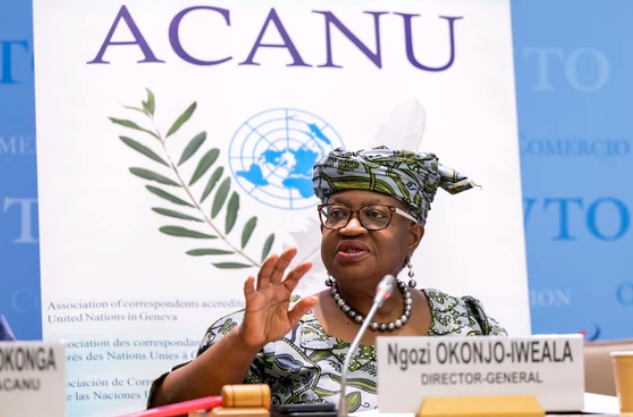
The WTO minister conference in Yaoundé was concluded without a conclusive outcome, as consensus on key trade measures was not reached. A major moratorium that prevents taxation on electronic transmissions — covering services such as streaming, downloads, digital files, and emails — has now lapsed immediately after Brazil opposed the United States’ proposal.

The United States, joined by Switzerland, had pursued a permanent resolution to extend the moratorium. This moratorium was significant for global digital trade, as it ensured that digital content and electronic transmissions remained exempt from customs duties. However, the U.S. delegation withdrew its support for another two‑year extension and instead pushed for a longer‑term solution. A compromise proposal for a five‑year extension was reportedly on the table and was believed to be acceptable to most World Trade Organization (WTO) members.

Despite this apparent consensus, Brazil blocked the proposal, demanding concessions in agricultural trade. As a result, the moratorium was unable to be adopted, and the negotiations collapsed. Observers described Brazil’s stance as retaliation related to separate tariff disputes with the United States.

The United States had aggressively lobbied member states in the weeks leading up to and during the conference. Some participants noted criticism from civil society and individual countries about U.S. tactics. A representative from a western delegation remarked that many nations attended discussions considering “what concessions they could make to the United States.” Another diplomat reported that the United States viewed the moratorium issue as a test of institutional influence after years of friction under former U.S. leadership.

The breakdown of talks in Yaoundé meant that no roadmap for WTO reform was finalized. Cameroon’s trade minister and conference chair, Luc Magloire Mbarga Atangana, attributed the lack of progress to insufficient time for negotiation. Symbolically, lightning struck near the venue on Sunday as failure became increasingly apparent, underscoring how tense negotiations had become.

In a draft agreement, WTO members committed to continuing discussions, with interim progress reports scheduled for July and December, and biannual reviews in 2027. The goal is to develop concrete reform recommendations by 2028, though details remain uncertain.

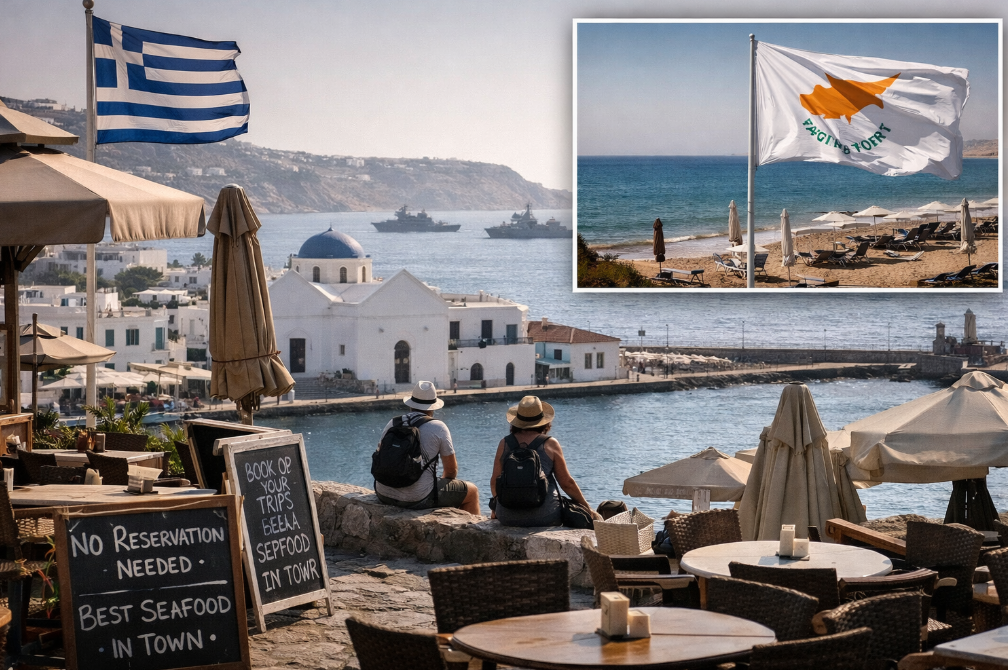
Tourism in Greece and Cyprus Affected by Middle East Conflict

Tourist bookings in Greece and Cyprus have declined ahead of the holiday season due to the ongoing Middle East conflict. While direct risks in Greece remain minimal, uncertainty about rising costs and economic developments has caused concern among hotel operators. In Cyprus, the proximity to the conflict region has intensified the effects, with the hospitality sector reporting stronger impacts. In Athens, industry representatives have observed a noticeable slowdown in reservations.

Many travelers are adopting a cautious approach, waiting to see how the economic situation evolves, according to travel agencies and hoteliers. Greece’s Tourism Minister, Olga Kefalogianni, highlighted the psychological impact of the conflict on tourists in a radio interview. She also emphasized the industry’s experience in managing crises and suggested that Greece could benefit as tourists seek destinations perceived as safe, given its distance from the conflict zone.

Cyprus has introduced a €200 million aid package to mitigate the economic effects of the Middle East crisis. Beginning in April, 30 percent of wages for employees in hotels and accommodations will be covered, supporting businesses preparing for the season amid declining bookings. Additional measures include assistance for airlines to ensure connectivity with key source markets, helping maintain the island’s tourism infrastructure.

Deadly End for Police Shooter

In the Australian state of Victoria, a wanted gunman, Dezi Freeman, has been fatally shot during a police operation. Authorities reported that a confrontation lasting approximately three hours ended with Freeman being killed by law enforcement officers.

Special units located Freeman early in the morning on a remote property near Thologolong. The gunman had been one of the most wanted criminals in the country. Over several months, hundreds of officers, supported by helicopters, drones, and K-9 units, scoured the difficult terrain in an unprecedented manhunt. Officials repeatedly warned that Freeman was considered “extremely dangerous.”

Seven months prior, Freeman opened fire on police officers on his property near Porepunkah, roughly 300 kilometers northeast of Melbourne. Two officers were killed, and another was seriously injured. Armed, Freeman escaped into dense forest, initiating a nationwide search. His wife, Amalia Freeman, who shares three children with him, publicly urged him to surrender.

Freeman was linked to the “Sovereign Citizens” movement, an ideological group comparable to Germany’s “Reichsbürger” phenomenon. Court documents and media reports described him as a convicted gun enthusiast who resisted all forms of government authority.

Police investigations continue to determine whether Freeman received assistance from associates during his months on the run. Authorities are carefully reviewing all potential connections and support networks to prevent similar threats in the future.

Humpback Whale Remains Stranded in Wismar Bay.

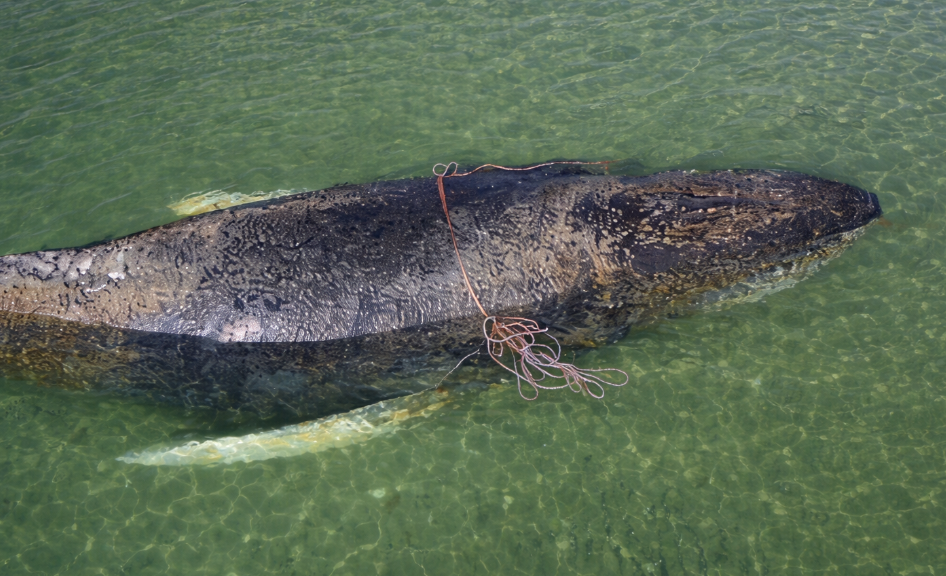
A humpback whale that became stranded off the coast of Wismar in Germany has not yet freed itself and remains in the bay, according to a spokesperson from the Wismar Water Protection Police. The situation, they noted, remains unchanged from the previous day, with the whale showing no movement. Low tide and reduced water levels have made the conditions more difficult, complicating potential rescue efforts.

Authorities are monitoring the whale closely, but further action depends on expert evaluation. Officers from the Water Protection Police, accompanied by marine biologists from Greenpeace, visited the whale early in the morning by inflatable boat to assess its condition. Decisions on whether the whale should be left undisturbed or gently encouraged to move will be made based on the situation.

During the night, the whale was continuously observed, and it was noted to be breathing. A shift system was implemented by the police to ensure that the animal was never left unmonitored. On Sunday, the German Oceanographic Museum reported that the whale appeared very weak, with a reduced breathing rate, highlighting the need for constant observation.

Currently, Wismar Bay is experiencing wind and rain, which may further affect the whale’s condition. Authorities emphasize that rescue or intervention will proceed cautiously, guided by expert advice to minimize stress and risk for the stranded humpback whale.

Swiss Court Rules Only Dairy Can Be Called “Milk”

A significant ruling from the Swiss Federal Supreme Court has clarified that the term “milk” may only be used for products derived from an animal’s udder. Plant-based alternatives, including oat, soy, and almond drinks, are now prohibited from displaying the word on packaging—even in negated forms such as “not milk.”

The case focused on an oat-based beverage marketed by Danone under its Alpro brand, sold in supermarkets like Migros and Coop. The packaging featured the tagline “Shhh… this is not milk”, with the letter “i” replaced by a droplet. Swiss authorities, including the cantonal laboratory in Zurich, determined that such labeling could mislead consumers into thinking the product was dairy due to visual cues such as the white-and-blue carton.

Under Swiss food law, plant-based substitutes must be clearly differentiated from animal products. Terms traditionally associated with meat or dairy, such as “salami,” “meatloaf,” or “milk,” are off limits for vegan alternatives. Guidance from the Federal Food Safety and Veterinary Office had already advised that even negated claims could be misleading. The Supreme Court’s decision now makes this binding nationwide, with a majority of four to one ruling against the use of “milk” for plant-based products. One dissenting judge noted that terms like “soy milk” and “almond milk” are widely understood and unlikely to confuse consumers.

Critics argue the decision is out of step with common usage, as plant-based and dairy beverages are often sold side by side and used interchangeably in everyday meals like coffee or muesli. While the ruling strengthens legal clarity, it does not rely on empirical evidence of consumer confusion. A 2024 Swiss study suggested that consumers overwhelmingly recognize plant-based drinks as distinct from dairy products.

The case reflects longstanding structural influences in Swiss law, shaped in part by agricultural and dairy interests seeking to protect traditional product names. However, the Supreme Court applies the law as written, emphasizing strict definitions of dairy-related terminology across the country. This ruling follows a previous judgment banning labels like “planted chicken” for similar reasons.

Rising Interest from Wealthy Gulf Residents in Switzerland

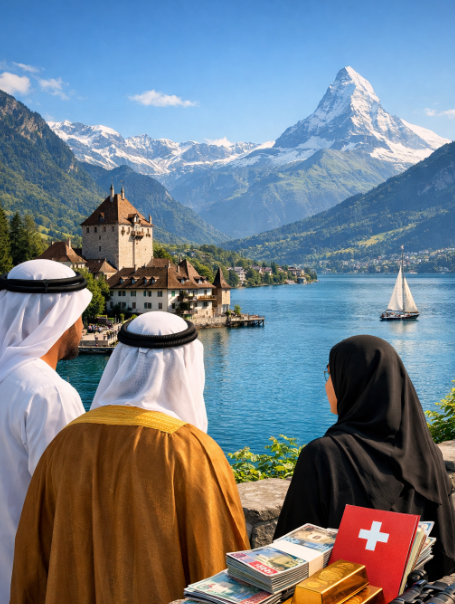
Interest in Switzerland is being shown by wealthy residents of Dubai and the broader Gulf region, as a safe destination for storing wealth and possibly relocating. Although it is too early to declare an exodus, signs of shifting attention are being detected by advisors and financial professionals.

Transfers of funds to Swiss banks are already reported to be underway, according to Patrick Akiki of PWC Switzerland. Accounts are being opened, but the process is being slowed by regulatory scrutiny. Swiss banking institutions now apply strict checks to incoming capital, and the setup procedures are time‑consuming. Other advisers have reported similar activity, though most are declining to comment publicly. Swiss banks themselves have remained largely silent on the trend.

Switzerland’s appeal is not limited to the financial sector. Prospective clients are seeking information about residence options, private schooling systems, property purchase and rental rules, and how Switzerland’s lump‑sum tax regime functions. Under this system, foreign nationals who do not seek employment in Switzerland agree to a predetermined fixed tax payment in exchange for residency.

While a sense of panic has not been identified, many wealthy UAE residents are said to be observing Switzerland closely, according to another wealth manager. Switzerland already serves as a key hub for wealth from the Gulf. Nearly a quarter of assets managed in Swiss institutions reportedly originate from the region, Deloitte data suggests. As the Gulf’s longstanding strengths—security, public services, and high quality of life—are being evaluated, Switzerland’s stable franc and tranquil reputation continue to attract confidence.

How long regional tensions persist is expected to influence future movement. Should geopolitical pressures continue, the appeal of Gulf financial centers may diminish further — and Switzerland, along with other competitors, could benefit from the shift.

Surakimu Lanka Program Launched to Save Energy Nationwide

The “Surakimu Lanka” national energy conservation program has been officially launched across Sri Lanka to encourage responsible electricity usage during a period of expected energy supply pressure.

The initiative has been introduced by the Sri Lanka Sustainable Energy Authority to support national efforts aimed at reducing electricity consumption, especially during peak evening hours.

Under the program, the public has been advised to switch to low-capacity lighting solutions such as LED bulbs. These energy-efficient alternatives have been recommended as a practical step to reduce household electricity demand nationwide.

Furthermore, citizens have been encouraged to minimize unnecessary electricity usage between 6:00 PM and 10:00 PM, which has been identified as the peak demand period.

The conservation campaign has been introduced in response to concerns about possible disruptions in fuel and energy supplies caused by the ongoing Middle East conflict.

In addition, forecasts related to the expected El Niño weather pattern have been considered when planning the initiative, as energy demand may increase during extended dry conditions.

The “Surakimu Lanka” program will remain active for the next five months, during which nationwide awareness activities and conservation guidance will be implemented.

As a result, improved energy stability is expected to be supported while reducing pressure on national electricity supply systems during the high-demand season.

Authorities have stated that public cooperation will be considered essential for the success of this national conservation effort.

Global Gold Prices Surge Sharply in International Market.

Global gold and silver prices recorded a sharp increase in the international market today (March 29, 2026). This sudden surge reflects growing investor demand and ongoing economic uncertainty across global financial markets.

According to the latest reports, the price of one ounce of gold has reached $4,493.79, marking a significant rise compared to previous trading sessions. Analysts state that geopolitical tensions and inflation concerns continue to drive investors toward safe-haven assets like gold.

At the same time, silver prices also experienced a strong upward movement. One ounce of silver is currently trading at $69.77, showing increased demand in both industrial and investment sectors.

Over the past few days, domestic gold prices have fluctuated due to these global trends. Experts predict that jewelry gold prices may continue to change in the coming days, especially as international market volatility remains high.

Furthermore, economists highlight that currency fluctuations and global trade uncertainty play a major role in influencing precious metal prices. As a result, both investors and consumers are closely monitoring market developments.

Sri Lanka to Launch Digital ID Cards by 2026 to Simplify Public Services.

Sri Lanka is preparing to introduce a modern digital identity system that will transform how citizens access both public and private services. The government plans to roll out the first digital ID cards by the third or fourth quarter of 2026, marking a major step toward the country’s digital transformation journey.

Deputy Minister of Digital Economy, Eranga Weeraratne, confirmed this initiative while addressing the national digital identity program. He stated that the project will improve efficiency, strengthen security, and enhance accessibility across multiple sectors.

Authorities aim to re-register all national ID holders within the next two years in order to build a unified and advanced identity system across the country. This new framework will replace outdated identification methods with a secure and scalable digital infrastructure, ensuring better service delivery and system integration.

The new digital ID cards will include advanced security features designed to protect user data. Biometric information such as fingerprints will be securely stored using encryption technologies. As a result, the system will reduce identity fraud risks while maintaining high levels of data protection.

In addition, the digital ID system will make accessing public services much easier for citizens. People will no longer need to visit government offices for routine identity verification. Instead, they will be able to confirm their identity remotely when using banking services, welfare programs, and official documentation processes.

The government also plans to introduce the system gradually. Both digital and traditional ID cards will operate together during a transition period. This approach will ensure that public services continue without disruption while allowing citizens enough time to adapt to the new system.

Overall, Sri Lanka’s digital ID initiative represents a major step toward building a fully digital economy. By combining convenience, security, and efficiency, the new system is expected to improve everyday life for citizens while modernizing the country’s national infrastructure.