

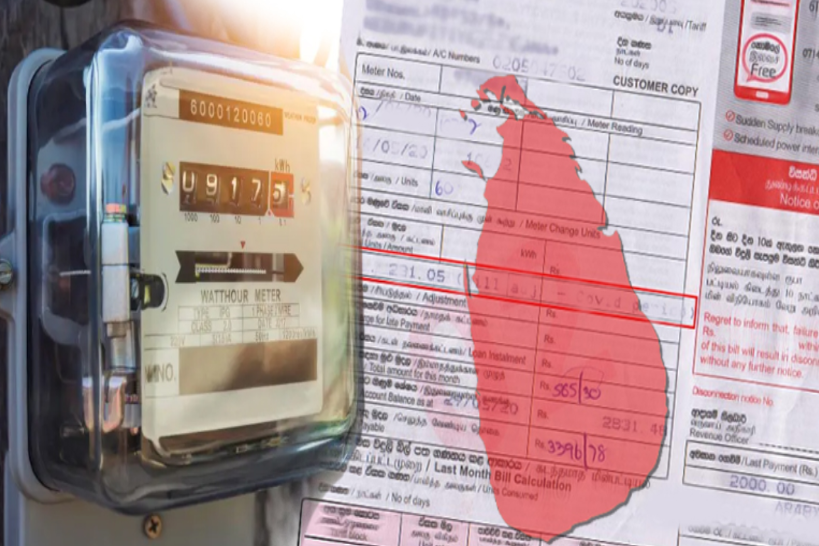

Electricity Tariffs Increased in Sri Lanka From Today.
Electricity tariffs in Sri Lanka have been increased from today following approval granted by the Public Utilities Commission of Sri Lanka.
According to the announcement, revised electricity charges have been implemented across multiple sectors, including domestic users, industrial consumers, hotels, and government institutions. The tariff adjustment has been introduced in response to rising national electricity generation costs.
Domestic Electricity Tariff Revisions Announced
Under the new structure, electricity charges for domestic users have been increased at different percentage levels depending on consumption categories.
For households consuming below 30 units, the tariff has been increased by 4.3%, and the new rate has been set at Rs. 15 per unit.
Meanwhile, for users consuming 30–60 units, the tariff has been increased by 6.9%, and the revised rate has been fixed at Rs. 45 per unit.
Similarly, electricity usage between 61–90 units has also been increased by 6.9%, with the updated charge reaching Rs. 120 per unit.
Furthermore, consumption between 91–180 units has been increased by 7.2%, and the tariff has been revised to Rs. 420 per unit.
For electricity usage above 180 units, the highest increase of 25% has been implemented.
Industrial, Government and Hotel Sectors Also Affected
Electricity tariffs for key economic sectors have also been revised under the new pricing structure.
Charges for the industrial sector have been increased by 8.7%, while tariffs for hotels have been increased by 9.9%.In addition, electricity charges for government institutions have been increased by 14.4%, according to the official update.
Special Consideration Given to Religious Institutions
For religious institutions, electricity consumption below 180 units has remained unchanged under the revised tariff system.
However, electricity usage above 180 units has been subjected to a 9.6% increase, as confirmed by the authorities.
It has been stated that the decision was taken after considering the current electricity generation costs and the financial sustainability of the national power sector.