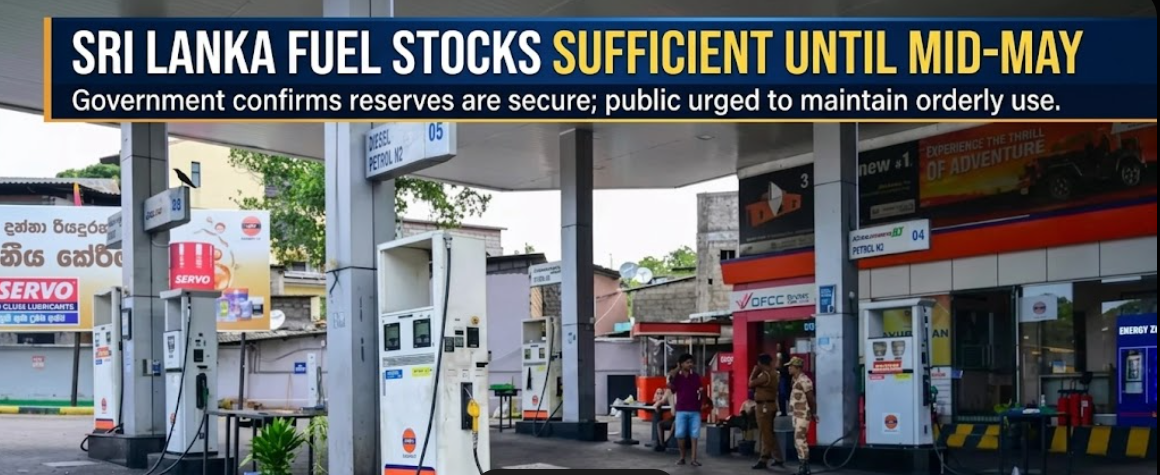
Fuel reserves in Sri Lanka are currently sufficient to meet national demand until mid-May 2026, according to Cabinet Spokesperson and Minister Nalinda Jayatissa.
The Minister confirmed that the country’s existing diesel and petrol reserves, combined with already scheduled fuel shipments, are adequate to ensure uninterrupted fuel distribution across the island. This announcement brings reassurance to both consumers and businesses that rely heavily on stable fuel availability for daily operations and transportation.
At present, Sri Lanka holds approximately 134,000 metric tonnes of diesel in reserve. In addition to these existing stocks, an extra 124,000 metric tonnes of diesel are expected to arrive during April 2026. With these confirmed imports, authorities expect the country to comfortably meet fuel demand requirements until at least the second week of May.
Minister Nalinda Jayatissa emphasized that the government continues to closely monitor national fuel consumption trends and import schedules to maintain supply stability. These proactive measures are part of broader efforts to strengthen the country’s energy security strategy and avoid disruptions similar to those experienced during previous economic challenges.
Officials also noted that coordination between energy authorities and import agencies remains active to ensure timely deliveries and efficient fuel distribution throughout the country. This coordinated approach supports transportation services, industrial activity, and essential public services that depend on uninterrupted diesel and petrol supply.
The assurance regarding fuel availability is expected to provide confidence to citizens, businesses, and investors, particularly as Sri Lanka continues its economic stabilization process and infrastructure recovery initiatives.
Energy sector updates like these play a critical role in maintaining public trust and supporting national economic resilience during periods of recovery and development.