

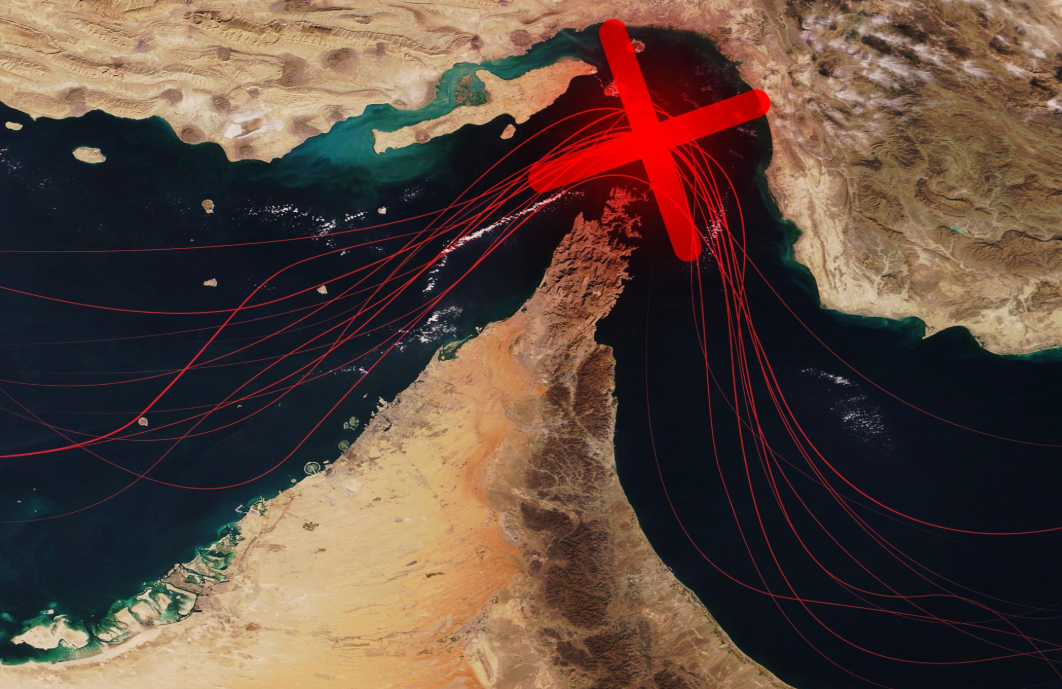

Strait of Hormuz Closure Threatens Global Oil Supply Routes.
The closure of the Strait of Hormuz has raised serious concerns about global energy security as tensions continue to escalate across the Middle East. The narrow waterway plays a critical role in transporting oil supplies to international markets.
Recent attacks on commercial vessels in the region forced shipping companies to avoid key routes. As a result, Iran’s move to close the Strait of Hormuz has disrupted one of the world’s most important oil transit corridors.
Energy producers have already started searching for alternative export routes. Saudi Aramco confirmed plans to redirect millions of barrels of crude oil through pipelines leading to the western Saudi port of Yanbu on the Red Sea coast.
Data released by Kpler showed that daily oil exports from Yanbu have more than doubled this month compared with last year’s average levels. Analysts say this increase reflects urgent efforts to stabilize supply chains.
However, the Red Sea route now faces growing security risks. Since late 2023, Iran-aligned Houthis have carried out repeated attacks on commercial vessels in the Red Sea following regional military tensions involving Hamas and Israel. Shipping companies have responded by rerouting vessels around the southern tip of Africa. This longer route increases travel time by several weeks and significantly raises fuel, insurance, and crew costs.
Earlier this month, the United Kingdom Maritime Trade Operations warned that threats to commercial shipping in the Red Sea remain serious. Officials described the situation as a major risk to global trade stability. Experts now caution that continued disruptions in both the Strait of Hormuz and Red Sea shipping lanes could reshape global oil supply networks and increase pressure on international energy markets.