Sri Lanka Fuel Crisis: Doctors Demand Holiday

The Doctors Union (AMS) has formally requested the Sri Lankan government to declare Saturdays as holidays due to the ongoing fuel shortage and rising fuel prices. The union highlighted that doctors working in remote areas face long commutes multiple times a day, leading to significantly higher transportation costs.

While other government employees have received increased fuel allowances, doctors reportedly lack adequate transport compensation, causing growing dissatisfaction among medical professionals. This situation poses a risk to essential healthcare services, particularly in rural and underserved regions.

To address the crisis, the union proposed immediate measures: declaring Saturdays as official holidays, revising the working week, adjusting transport allowances to reflect current fuel prices, and providing stable compensation for extra duties performed by specialized medical personnel. The union emphasized the need for urgent negotiations with authorities to ensure uninterrupted healthcare services and protect patient care during this fuel crisis.

Sri Lanka Issues Fuel QR Code Warning.

The Sri Lankan Petroleum Authority warned citizens about fuel QR code fraud and urged them to consume fuel responsibly under the national QR distribution system. Professor Vasantha Athukorale of Peradeniya University told the public to avoid unnecessary fuel usage during this critical period.

Over 6 million citizens registered for the QR code system, so authorities emphasized that everyone must follow the regulations strictly. Officials also instructed politicians and citizens to stop spreading false reports that could worsen the fuel crisis.

The Criminal Investigation Department (CID) actively investigates individuals who create fraudulent fuel QR codes. Investigators aim to stop misuse and ensure equitable fuel allocation across the country.

Officials stressed that the public must cooperate to maintain fair fuel access and prevent shortages. Citizens should follow all QR code rules, use fuel efficiently, and report suspicious QR code activity immediately.

Ampara Council Urges Efficient Energy Use.

The Ampara Attalaischenai Council has issued strict guidelines urging the efficient use of electricity and fuel across its offices, libraries, and public sports grounds. Council Commissioner A.S.M. Uvais emphasized that these measures aim to reduce resource wastage and lower the council’s financial burden during current challenging conditions.

Officials and staff have been instructed to switch off unnecessary lights and fans in offices and libraries when not in use. Additionally, natural daylight should be maximized to minimize electrical consumption. At public sports grounds, floodlights should only be used for essential activities and switched off immediately after events conclude.

For fuel consumption, the council advised minimizing unnecessary travel and careful use of council-owned vehicles and machinery. Commissioner Uvais further requested that both departmental staff and the public actively cooperate with these energy and fuel efficiency measures to support sustainable operations. These steps reinforce the council’s commitment to responsible resource management and financial prudence while promoting community participation in energy conservation initiatives.

Advanced Level Exam Results and Next Application Dates

The Sri Lanka Department of Examinations has announced the results of the 2025 Advanced Level (A/L) examinations. The exams originally began on November 10, 2025, but some subjects were postponed due to the Thidwa Cyclone. These postponed exams were conducted from January 12 to January 20, 2026, and all examinations concluded on January 16, 2026. Approximately 300,000 candidates participated in the 2025 A/L examinations, highlighting the significant scale of this national academic assessment. Students and parents are advised to check official portals for detailed results and subject-wise performance.

Meanwhile, applications for the next session of Advanced Level exams have opened from July 1, 2026, and the closing date is July 24, 2026. Candidates are encouraged to submit their applications on time to avoid delays in processing. The Department of Examinations continues to emphasize the importance of timely application submissions and advises students to follow official notifications for updates on exam schedules and results.

Japan Releases Oil Reserves to Ease Energy Supply Crisis.

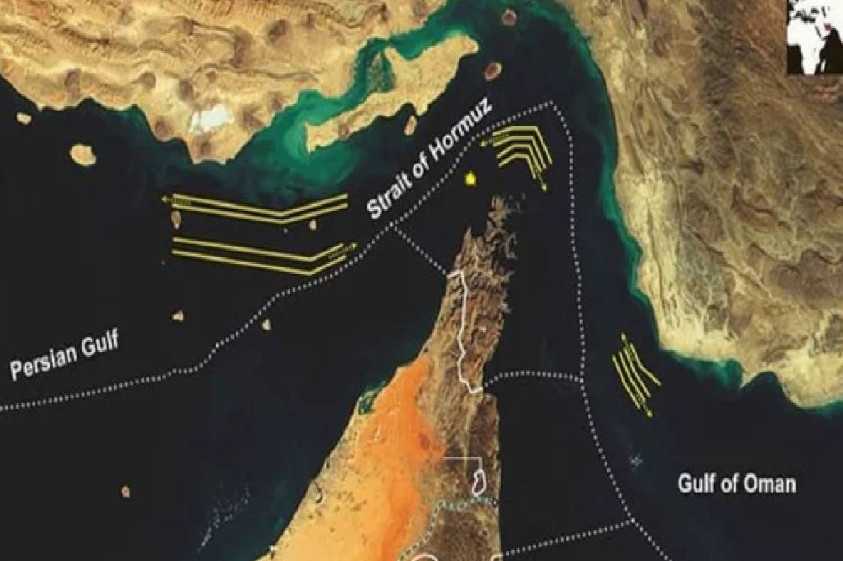
Japan has begun releasing crude oil from its national strategic reserves to stabilize fuel supply disruptions caused by rising tensions linked to the conflict involving Iran, the United States, and Israel. Government officials confirmed that approximately 8.5 million kilolitres of crude oil will be released to support domestic demand for about 30 days.Japan depends on the Middle East for more than 90% of its crude oil imports. However, disruptions affecting shipments through the Strait of Hormuz have created serious supply risks. As a result, authorities moved quickly to protect energy stability and prevent further price increases.

Oil distribution started from the Kikuma storage terminal located in Ehime Prefecture. Officials also confirmed that additional releases will continue from eight more storage sites before the end of March. Furthermore, authorities plan to release additional supplies from storage facilities in Nagasaki Prefecture and Kagoshima Prefecture in early April.

The government will supply crude oil worth approximately 540 billion yen (about $3.4 billion) to four major wholesale distributors, including ENEOS. Meanwhile, petrol prices in Japan recently reached a record level of 190.80 yen per litre. Therefore, the government continues to provide subsidies to reduce pressure on consumers.

By the end of 2025, Japan maintained strategic reserves equal to about 254 days of domestic consumption, totaling nearly 470 million barrels of oil. However, officials warned that supply shortages are also affecting naphtha, a key material used in producing plastics and synthetic fibers. Authorities continue monitoring the situation closely to maintain industrial stability.

Chicken, Egg Prices Surge Amid Fuel Hike

Rising fuel prices in Sri Lanka have pushed up the cost of chicken and eggs. A single egg now sells for LKR 40, while one kilogram of chicken with skin costs over LKR 100.

Small eggs sell at LKR 37, medium eggs at LKR 39, and large red eggs reach LKR 41 per egg.

Ajith H. Gunasekara, President of the Sri Lanka Livestock Producers Association, explained that higher fuel and gas costs have severely affected poultry farming. Farmers use gas to keep chicks warm, but rising fuel prices have disrupted this process, increasing operational costs.

Chicken with skin now sells at LKR 1,200 to LKR 1,250 per kilogram in the market.

The daily supply stands at around 700 metric tons, while monthly demand reaches approximately 22,000 metric tons.

Rising diesel prices have reduced the number of fishing boats, lowering fish supply. Additionally, higher prices for pork, beef, and goat meat have increased demand for chicken, making poultry products more profitable.

Gunasekara highlighted that poultry farming currently offers better returns, despite rising production costs

Gold Prices Rise Slowly in Sri Lanka:

Gold buyers in Sri Lanka expected a big surge, but the increase came gradually. The All Ceylon Jewellers Association reported that gold prices rose by LKR 8,000 in a single day on 25 March 2026.

Currently, 24-carat gold sells at LKR 393,000 per pound, while 22-carat gold goes for LKR 361,500 per pound. The price per gram is LKR 49,125 for 24-carat gold and LKR 45,188 for 22-carat gold.

Globally, the gold market showed an upward trend today. In the international market, gold rose by 2.94% in the morning session and reached $4,539.52 per ounce. Investors and buyers should monitor both local and international gold markets, as prices may continue to fluctuate in the coming days.

Cement Prices Rise, Adding Burden to Construction Sector in Sri Lanka.

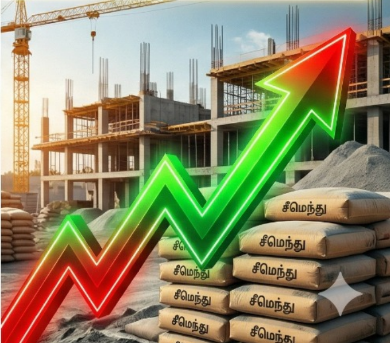
Cement manufacturers in Sri Lanka have raised the price of cement, adding extra costs for builders. A bag of cement now costs between LKR 150 and LKR 175. The price increase is due to higher production costs, said Terlington Paul, the head of the Sri Lanka National Construction Association. This hike comes at a challenging time for the construction industry. Builders and contractors are now facing increased expenses for ongoing projects. The higher costs may slow down construction activity or lead to higher prices for clients.

Industry experts warn that if production costs continue to rise, cement prices could increase further. Contractors are encouraged to adjust budgets and project plans accordingly.The Sri Lanka National Construction Association continues to monitor the situation and works with manufacturers to balance affordability and industry sustainability.

Sri Lanka Fuel Stocks Sufficient Until Mid-May.

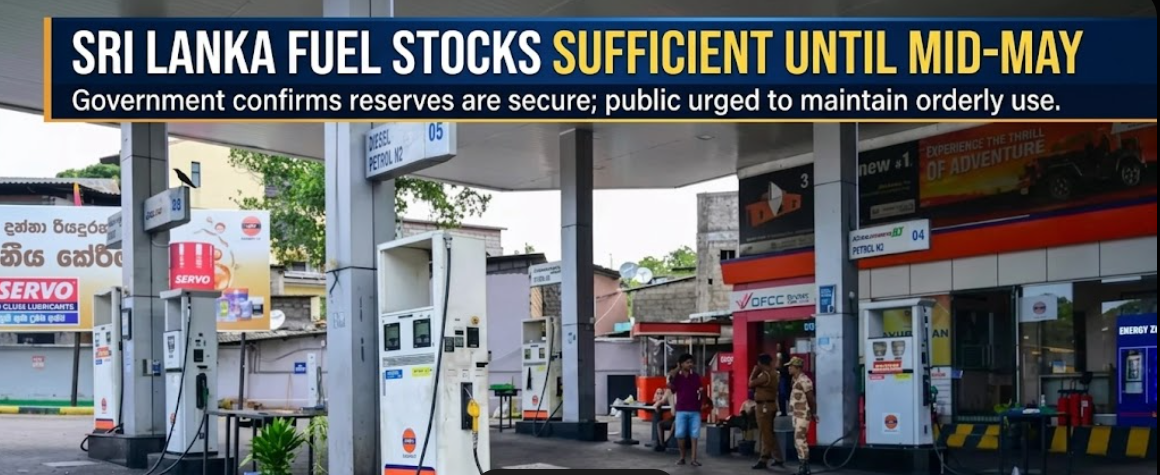
Fuel reserves in Sri Lanka are currently sufficient to meet national demand until mid-May 2026, according to Cabinet Spokesperson and Minister Nalinda Jayatissa.

The Minister confirmed that the country’s existing diesel and petrol reserves, combined with already scheduled fuel shipments, are adequate to ensure uninterrupted fuel distribution across the island. This announcement brings reassurance to both consumers and businesses that rely heavily on stable fuel availability for daily operations and transportation.

At present, Sri Lanka holds approximately 134,000 metric tonnes of diesel in reserve. In addition to these existing stocks, an extra 124,000 metric tonnes of diesel are expected to arrive during April 2026. With these confirmed imports, authorities expect the country to comfortably meet fuel demand requirements until at least the second week of May.

Minister Nalinda Jayatissa emphasized that the government continues to closely monitor national fuel consumption trends and import schedules to maintain supply stability. These proactive measures are part of broader efforts to strengthen the country’s energy security strategy and avoid disruptions similar to those experienced during previous economic challenges.

Officials also noted that coordination between energy authorities and import agencies remains active to ensure timely deliveries and efficient fuel distribution throughout the country. This coordinated approach supports transportation services, industrial activity, and essential public services that depend on uninterrupted diesel and petrol supply.

The assurance regarding fuel availability is expected to provide confidence to citizens, businesses, and investors, particularly as Sri Lanka continues its economic stabilization process and infrastructure recovery initiatives.

Energy sector updates like these play a critical role in maintaining public trust and supporting national economic resilience during periods of recovery and development.

Oil Prices Drop Sharply After Donald Trump Signals Possible War Talks.

Donald Trump stated that negotiations aimed at ending the ongoing conflict between Israel and Iran are currently underway, triggering a sharp decline in global oil prices across Asian markets, according to international media reports.

Following the statement, Brent crude oil prices fell by 6.6%, dropping to approximately $97.56 per barrel, while US crude oil prices declined by more than 5.5%, reaching around $87.20 per barrel.

Energy market analysts say the sudden price drop reflects investor optimism that diplomatic negotiations could help reduce tensions in the Middle East region, which plays a critical role in global energy supply stability.

President Trump stated that discussions to bring an end to the conflict are “currently ongoing,” adding that the parties involved in negotiations appear highly interested in reaching an agreement.

However, officials in Tehran rejected claims that talks are taking place between the United States and Iran, describing the reports as inaccurate and misleading.

Meanwhile, military tensions between Israel and Iran continue, with both countries reportedly carrying out retaliatory attacks. Analysts warn that continued instability in the region could still influence oil price volatility despite recent market optimism.

Experts also noted that global energy markets remain sensitive to geopolitical developments in the Middle East, as the region remains one of the world’s most important oil-producing areas.

The recent decline in oil prices demonstrates how diplomatic developments and political statements from global leaders can significantly influence international commodity markets within a short period.